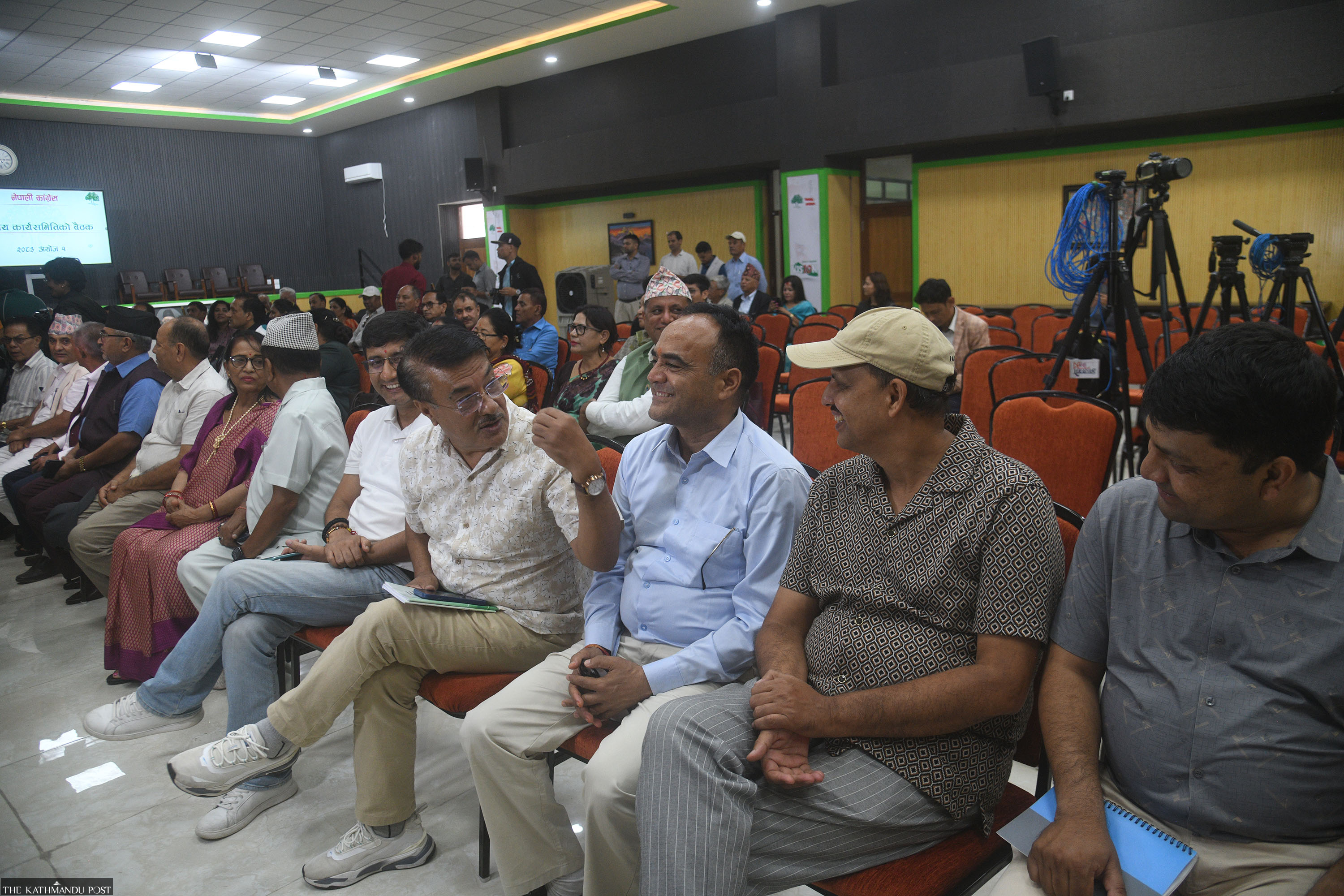
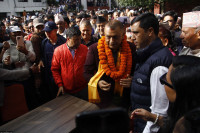
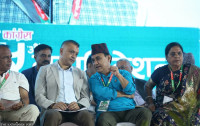
Senior leader Purna Bahadur Khadka's decision to choose dialogue over a split in the party has drawn dozens of Deuba loyalists to Sanepa for the general convention process.Participants of the Nepali Congress Central Working Committee meeting held in Sanepa, Lalitpur, on Thursday. Deepak KC/TKP
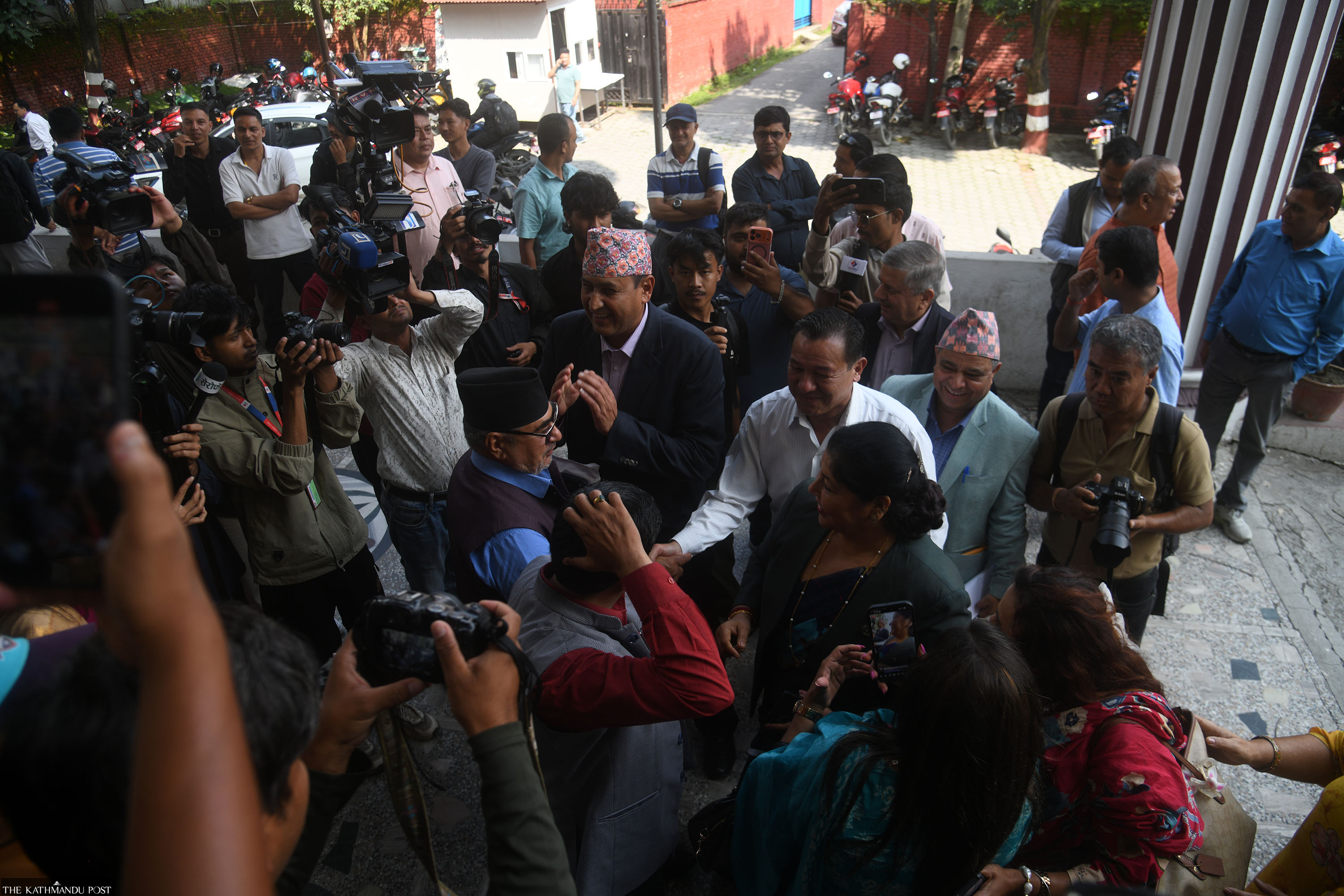
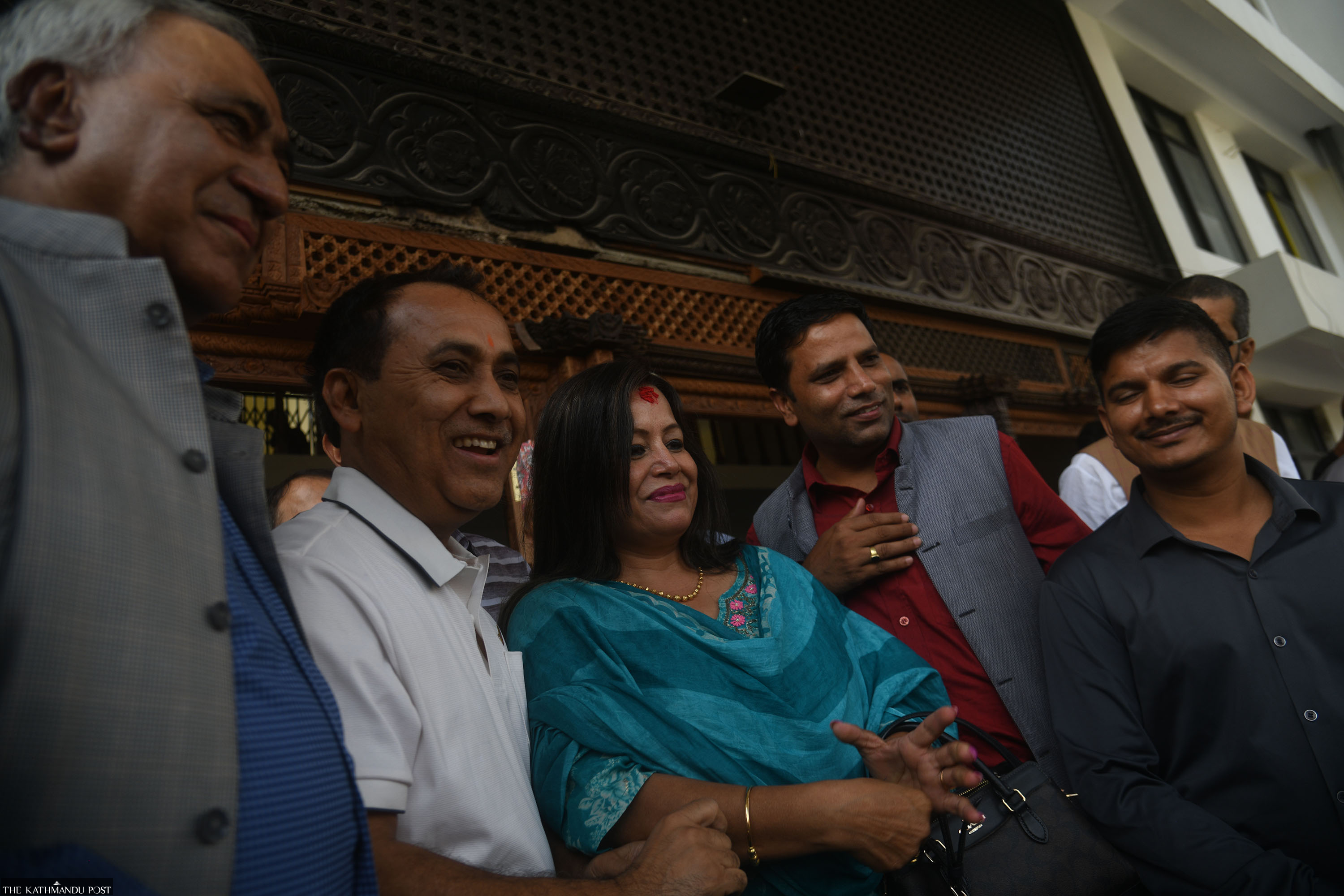
Many leaders who were once trusted aides of former Nepali Congress president Sher Bahadur Deuba have defected to the establishment faction led by the incumbent party chief Gagan Thapa. They reached the Congress central office in Sanepa on Thursday to join the general convention process being led by Thapa.
What prompted Deuba's own trusted aides to leave his side was largely a matter of timing and shifting allegiance within the party. A factor was then-acting president Purna Bahadur Khadka's refusal to spearhead a split in the party and his decision to open dialogue with President Thapa. A large number of leaders, including Deuba's trusted aides, subsequently rallied behind Khadka. Those leaders have now been accommodated in the central working committee led by Thapa.
Deepak KC/TKP
At a Congress meeting held on October 14 last year following the Gen Z movement, Deuba announced that he would take a break from active politics and handed acting president’s responsibility to Khadka, then a vice-president. The situation changed after Deuba returned from Singapore on August 12.
The Deuba faction had planned a grand welcome for him at the airport, with leaders Min Bishwakarma and Mohan Basnet leading the reception. According to Bishwakarma, the plan was to take Deuba directly from the airport to his residence, where all Congress leaders would meet him. From the second or third day, leaders of other political parties would also be invited, with the aim of establishing Deuba as a focal point for party unity.
Bishwakarma said leaders including Khadka went directly to Deuba’s residence from the airport as planned.
He recalled that Deuba was taken to Chundevi, where the President's nameplate had apparently been hidden beforehand, and staff said they too did not know about it. When word came that he was on his way, they hurriedly nailed it to the wall and set up his office.
"That room had not been opened before," Bishwakarma recalled, adding that staff had never checked it despite being told that it would be Deuba's seat.
Deuba also delivered a brief speech from the veranda of the house in Chundevi where his contact office was established.
“He made the speech irrelevant. At a time when there was no context for it, he criticised Gyanendra Shah. That also made his colleagues uncomfortable,” Bishwakarma said about the former king who once sacked Deuba as prime minister. The Constituent Assembly in 2008 removed Shah as king and paved the path towards turning Nepal into a secular federal republic. Many Congress leaders are sympathetic to the agenda of reestablishing Nepal as a Hindu state.
As a dispute continued in the party over whether to hold a regular or special general convention, Deuba himself had sought to distribute election tickets to candidates for the March 5 election. His move further fuelled Khadka’s dissatisfaction after Deuba sent his own signature to the Election Commission for that purpose.
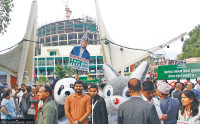
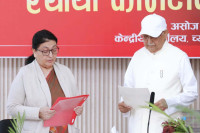
Nepali Congress vice-chair Bishwa Prakash Sharma welcomes party leaders from erstwhile Deuba faction to the party's central offic in Sanepa on Thursday. Deepak KC/TKP
Although Khadka had been given the responsibility of acting president, he did not enjoy the full confidence of Deuba’s “core” group. There were suspicions that he was close to Thapa and Bishwa Prakash Sharma, who revolted to hold the party’s special general convention as its general secretaries.
After the Supreme Court on April 17 recognised the special general convention and Thapa’s election as party president as legitimate, the Deuba-Khadka faction found itself on the defensive. Leaders from the Deuba faction then raised the need for efforts towards unity and prepared an eight-point proposal. Khadka, as well as the Deuba and Shekhar Koirala factions, agreed to the demands.
The main demand was to accommodate the 111 office-bearers and members of the then central working committee led by Deuba who had been left out following the special general convention.
While talks were underway, the Deuba faction began separate activities, preparing to hold conventions in all seven provinces and a national gathering from August 14 to 16. Khadka, however, wanted to become the coordinator of the gathering on the condition that he would not lead the party towards a split. But without his consent, Shashank Koirala was appointed coordinator on August 1.
“Khadka’s position was that if the party was not going to split, he was ready to work as coordinator in his capacity as acting president, but he would not go to the extent of declaring a new party,” Bishwakarma said.
It was following this stance that Shashank was brought forward in place of Khadka.
Leaders from the erstwhile Deuba faction attend a meeting at the party's central office in Sanepa on Thursday. Deepak KC/TKP
After the Supreme Court on August 7 agreed to review its April 17 verdict, the Deuba faction’s immediate effort to form a separate party was halted. The national gathering was then held from August 14 to 16. But Khadka’s dissatisfaction remained. He gradually distanced himself from the Deuba faction, saying that the conduct of the gathering and its decisions had not proceeded as he had envisioned.
The decisive turn came after the process for the 15th general convention began. Although the Deuba-Khadka faction petitioned the court seeking to halt the convention, no interim order was issued. This created a situation in which two parallel general convention processes could move forward, raising the prospect of a vertical split in the Congress.
Leaders concerned about party unity once again began talks.
It was in this situation that Khadka and Thapa began communication. Dialogue also intensified with other leaders, including Koirala. President Thapa himself visited Khadka’s residence for discussions. He conveyed that he was prepared to address Koirala’s five-point and Khadka’s eight-point proposals. Thapa also said he was ready to hold the general convention through a mechanism led by someone outside the current leadership.
An agreement was reached to allow renewed but not updated active members to participate in the general convention, accommodate the office-bearers and members of Deuba’s former central working committee who had been left out following the special convention, and include all factions in committees and structures related to the general convention.
“We informed them that there was nothing left to object to,” Thapa told the central working committee meeting. “After that, dialogue with then acting president Purna Bahadur Khadka moved forward, and today this environment has been created.”
The agreement created an environment for around 40 office-bearers and members of Deuba’s former central working committee who had remained in his faction to join the establishment side led by Thapa. Apart from Khadka and Thapa, then joint general secretary Mahalakshmi Upadhyay ‘Dina’, who was also in the Deuba faction, played a significant role in the process.
Bishwakarma said an agreement was reached after three rounds of meetings with Thapa. He said the decision should not be understood simply as “leaving Deuba and going to Gagan”, but as an effort to unite the party.
“Rather than saying that we went to Sanepa, it should be understood that we went there to bring the party together. Even those who have not come have felt pressure that the disputes should be resolved from within the Congress rather than by forming another party,” he said.
Another leader, Arjun Narsingh KC, urged Thapa not to be satisfied with the agreement reached so far. He said efforts should begin to bring former president Deuba, leaders aligned with him and fellow leader Koirala into an understanding.
Party chief Thapa has described Thursday’s central working committee meeting as final. Most of the leaders who had been central members from the Deuba faction attended the meeting. Some were unable to attend because they had already left for their respective districts in connection with the convention.
Thapa has said he wants to invite Deuba as the chief guest at the convention’s inaugural event.
“I will keep trying until October 2. Let us all make a joint effort. It is our responsibility to try to bring Sher Bahadur dai to the convention,” Thapa said.




 24.79°C Kathmandu