As many as 176 foreign students will sit Nepal’s integrated entrance examination for medical education this year, as the country continues to struggle to attract international students despite reserving a third of its medical education seats for them.
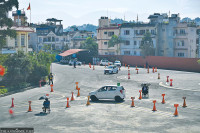
According to the Medical Education Commission, students from India, Bangladesh, the Maldives, and other countries will take the examination, which begins Saturday. According to Arjun Dhakal, information officer at the commission, the examination will be held at 269 centres across 78 venues in Kathmandu, Lalitpur, and Bhaktapur.
For the 2027 academic session, a total of 9,691 seats have been allocated across 16 medical education programmes. A total of 77,359 students have applied to sit the entrance examinations, including 176 foreign applicants.
Last year, 146 foreign students took the common entrance examination.
The Medical Education Act reserves 33 percent of the total seats in medical education institutions for foreign students. However, enrolment figures show that demand from abroad remains far below the number of seats available, even as the government, universities and medical colleges seek to attract more international students.
In 2026, of the 9,273 seats available across medical education programmes, 2,428 were allocated to foreign students. But only 746 foreign students enrolled, filling around 30 percent of the reserved seats, and leaving 1,682 vacant.
These unfilled seats are subsequently made available to Nepali students under the paying category, allowing domestic applicants to secure admission beyond the number of seats initially allocated to them.
Foreign students can enrol in Nepal’s medical colleges through two routes. They can pass the common entrance examination conducted by the Medical Education Commission or qualify through India’s National Eligibility cum Entrance Test, commonly known as NEET, which Nepal recognises for admission.
Indian students account for around 90 percent of foreign applicants seeking admission to Nepal’s medical colleges, according to the commission. Dhakal said the number of students who qualify through India’s examination and subsequently seek admission in Nepal has historically exceeded the number who sit the Nepali entrance test.
“The process is already under way for students who have passed NEET and want to enrol in Nepal. More students seek admission after passing the examination in India than come here to sit our entrance examination,” said Dhakal.
The number of foreign students sitting Nepal’s examination alone, therefore, does not reflect the total number who may eventually enrol. However, overall enrolment figures show that Nepal has struggled to fill its foreign quota.
For the 2026 academic session, of the 9,273 seats allocated, 8,550 were filled, bringing overall enrolment to about 92 percent of the capacity.
The shortfall in foreign enrolment was particularly evident in the paying category. Although only 3,970 seats were initially allocated to Nepali students who pay tuition fees, 5,114 secured admission. Vacant foreign-quota seats were transferred to the domestic paying category, creating additional opportunities for Nepali applicants.
Scholarship seats also remained unfilled in 2026. Of the 2,771 seats allocated for scholarships, 2,609 students enrolled, accounting for around 94 percent of the total. Commission officials say some scholarship seats remain vacant because there are no eligible applicants in certain inclusion categories.
Foreign students show a strong preference for the Bachelor of Medicine and Bachelor of Surgery (MBBS), while demand for other medical education programmes remains limited.
Of the 746 foreign students enrolled in 2026, 742 were admitted to MBBS programmes. Enrolment of foreign students in nursing, pharmacy, and most other courses was negligible or non-existent, said Dhakal.
This preference contrasts with the structure of Nepal’s medical education system, which allocates seats across 16 programmes.
Nepali students, too, show strong demand for MBBS and Bachelor of Dental Surgery (BDS) programmes, while enrolment in several other disciplines tends to fall below the available capacity. Consequently, competition remains intense for domestic students seeking admission in the paying category, even as seats in other programmes remain vacant.
The mismatch between available seats and student preferences has become a recurring feature of medical education admissions.
Nepal’s struggle to attract foreign students comes amid a substantial outflow of Nepali students seeking medical education abroad. According to the commission, 4,741 Nepali students obtained permission to study abroad at different levels of medical education over the past three years. During the same period, 1,859 students enrolled in medical education programmes in Nepal.
Of the Nepali students who received permission to study abroad, 1,677 chose India, accounting for nearly half of the total. Around 1,350 students went abroad specifically to study MBBS and nursing.
The figures point to contrasting trends in Nepal’s medical education sector: foreign enrolment remains concentrated in a limited number of programmes, while many Nepali students continue to pursue medical qualifications in other countries.
The commission has increased the number of seats in government medical colleges by 418 compared with last year. The expansion is expected to increase the availability of seats across different categories, including free and scholarships seats and those reserved for foreign students.
The common entrance examinations will continue through November 4, with the commission scheduling separate examinations for different programmes. The MBBS examination will be held on October 31, followed by BDS on November 1, nursing on November 2, and programmes including Bachelor of Medical Microbiology, Bachelor of Nursing Science, and Bachelor of Pharmacy on November 3. The Bachelor of Public Health examination will take place on November 4. All examinations are scheduled from 11am to 2pm at designated centres.




 16.98°C Kathmandu