Swarnim Wagle calls for a reset in Nepal-India ties, says era of anti-India nationalism is over
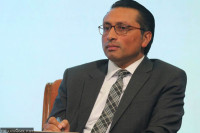
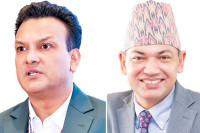
In an interview with The Hindu, the finance minister says Kathmandu wants to focus on trade, connectivity, energy, and reconstruction while constructively addressing contentious issues such as the boundary dispute. Photo: Courtesy of The Hindu
Finance Minister Swarnim Wagle has said the Balendra Shah government wants to reset ties with India in the changed political context, with reconstruction, connectivity, trade, air routes and energy among the key areas of bilateral engagement.
Wagle, who returned to Kathmandu on Saturday after a three-day visit to New Delhi at the invitation of his Indian counterpart Nirmala Sitharaman, said the new administration does not intend to avoid difficult issues such as the boundary dispute, but wants to address them “constructively”.
In an interview with Suhasini Haidar, diplomatic editor of The Hindu, Wagle said the Shah government wants a “reset” in Nepal-India relations, moving away from old nationalist rhetoric and focusing on economic opportunities, greater connectivity, integration into Indian supply chains and an updated bilateral trade treaty.
Wagle said the government wants to move beyond what he described as the old practice of equating Nepali nationalism with anti-Indianism. “The old era of jingoism and equating Nepali nationalism with anti-Indianism is over,” he said.
Wagle said the government would continue to raise contentious issues such as the boundary dispute, but would address them “constructively” without allowing them to dominate the bilateral relationship. Since the formation of the new government, Prime Minister Shah, Foreign Minister Shisir Khanal, Wagle and Rastriya Swatantra Party president Rabi Lamichhane have all said the dispute should be resolved through diplomatic talks and negotiations rather than by mobilising public sentiment on the streets.
Asked about a possible visit by Prime Minister Shah to India, Wagle said Shah’s first bilateral foreign visit is expected to be to India before the end of 2026.
Sources in Kathmandu said Shah is likely to make a bilateral visit to India between the Dashain and Tihar festivals.
Wagle also defended Shah’s unconventional political style, saying the prime minister should not necessarily be judged by the standards applied to earlier generations of politicians.
The finance minister acknowledged India’s concerns about Chinese involvement, particularly in Nepal’s energy sector, and said Nepal has to operate in a changing geopolitical environment while pursuing its own interests. “Nepal has to work within this ‘new geopolitical reality’,” he said when asked about Nepal’s increasing engagement with China.
Asked about India’s reluctance to buy electricity from Nepali projects involving Chinese funding, Wagle said this was a “real new geopolitical reality” that Nepal has to accept and work around.
He cited Chinese lending globally between 2009 and 2019 and said Nepal received “zero” of that major Chinese bank lending, despite perceptions that China was financing or bankrolling major Nepali projects.
According to Wagle, China’s smaller community development programmes in Nepal are roughly comparable to India’s, at around Rs8 billion, but China has not provided the kind of large-scale additional financing for flagship projects that perceptions of Chinese influence might suggest.
He said Chinese engagement is concentrated mainly in tourism and some infrastructure financing, while acknowledging Chinese involvement in telecommunications and other areas. He argued that perceptions in India that China is “taking over” Nepal are exaggerated.
Wagle described China’s role in the Pokhara airport project as ambiguous, noting that China describes it as a Belt and Road Initiative project even though the project was agreed before the BRI. Even including the Pokhara airport, he put Chinese financing at about $260 million.
Wagle said India has not told Nepal to exclude Chinese companies from every sector. Rather, what has been communicated to Kathmandu is that India has concerns particularly about Chinese involvement in projects from which India would procure electricity.
He said the fact that this position is now explicit is useful because Nepal can plan accordingly.
Wagle also said he sensed “an element of paranoia” in the way China-related stories are covered in the region. His argument was that there is a considerable gap between perceptions of Chinese domination of Nepal and the actual scale of Chinese financing.
On engagement with India, Wagle called for progress on air routes, rail links, integrated checkposts and roads connecting Nepali border towns with the Indian hinterland. Wagle also called for an update to the Nepal-India trade treaty, saying he raised the issue with both Indian Foreign Minister S. Jaishankar and Finance Minister Sitharaman.




 24.56°C Kathmandu