Government says ending mandatory tender notices in private media does not curb press freedom
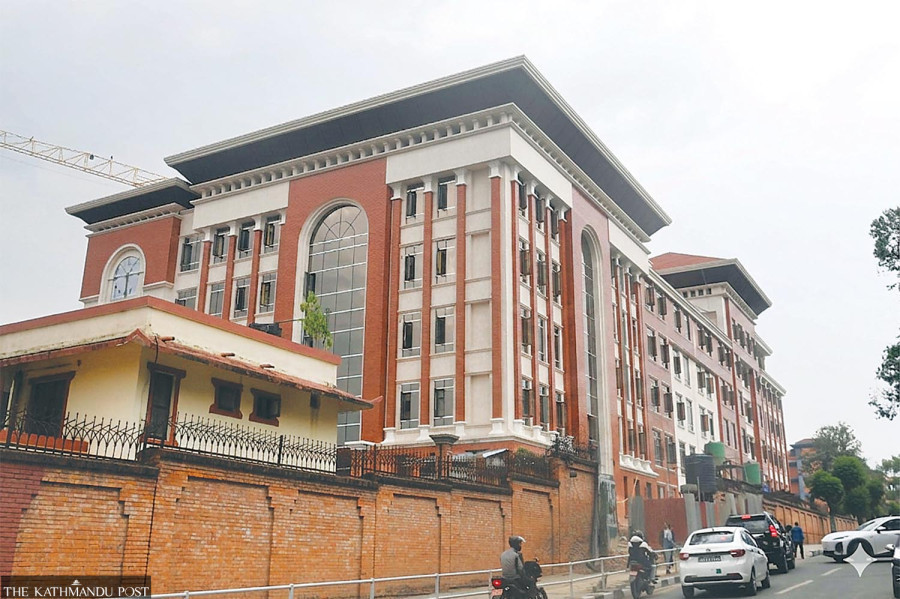
It tells the Supreme Court that publishing bids through government media avoids duplication, while petitioners argue the change infringes constitutional rights. Supreme Court of Nepal File Photo
The government has told the Supreme Court that removing the legal requirement for government agencies to publish tender notices in private media does not violate freedom of expression or press freedom.
In written responses to a petition challenging amendments to the Public Procurement Act, 2007, the government argued that publishing tender notices is not part of the constitutional right to free expression. It has asked the court to dismiss the petition.
Lawyers Ananta Raj Luitel and Ram Prasad Pudasaini had filed the petition at the Supreme Court’s Constitutional Bench on May 26, arguing that the amendment removing the requirement to publish government tender notices in private media was unconstitutional. The amended law allows such notices to be published through government media platforms instead.
The Office of the Prime Minister and Council of Ministers, the Ministry of Law, Justice and Parliamentary Affairs, and the Ministry of Information and Communication recently submitted separate written responses to the top court.
The government said the amendments to Sections 14, 30 and 40 of the Public Procurement Act were intended to make the procurement process simpler and more accessible for service providers, while maintaining integrity and transparency and preventing unfair competition.
It also argued that Parliament acted within its constitutional authority in amending the law, saying the constitution gives the legislature the power to enact and amend legislation.
The government said the amendment does not prevent newspapers and other media outlets from independently publishing or broadcasting news, opinions and analysis.
“Freedom of expression has no connection with advertising,” the government argued in its response, maintaining that the amendment does not restrict the constitutional guarantees of press freedom, freedom of expression or the right to communication.
The government also said publishing tender notices both in private and government media was duplicative. The amendment therefore provides for such notices to be published only through government media, it said.
The petition was filed after the government amended the Public Procurement Act to remove the requirement for government tender notices to appear in private media. The petitioners argue that the change infringes constitutional protections relating to press and expression.
While the case was pending before the Supreme Court, the House of Representatives and National Assembly approved the amendment. President Ramchandra Paudel authenticated it on July 9.
Following the amendment’s approval, Luitel and Pudasaini filed a supplementary petition seeking to have the amended provisions struck down.
On August 12, the Supreme Court’s Constitutional Bench issued a show-cause order directing the government to respond to the petition within seven days.




 18.81°C Kathmandu