Landslide survivors and rescuers fall ill in Rolpa
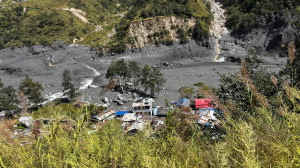
Days of exposure to rain, poor shelter and inadequate food are taking a toll on people affected by the deadly Kotalbara landslide that killed 13. Landslide survivors in Kotalbara, Thabang Rural Municipality-5, take shelter at a health post after nightfall. Courtesy of Dhukaman Roka Magar
Residents displaced by a deadly landslide in Rolpa and those involved in the rescue effort are beginning to face health problems after days of exposure to rain, poor living conditions and inadequate food and rest. Many displaced families are still sleeping away from their homes, while some rescuers have fallen ill after spending days searching for bodies and survivors.
Health workers in Thabang Rural Municipality-5 say people forced to live in temporary shelters are reporting various health problems. Those involved in the rescue operation have also become physically weak after working continuously in wet conditions following the landslide that killed 13 people in Kotalbara last week.
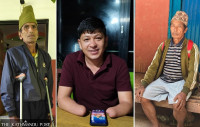
Duk Pun Magar, 54, is among those who have fallen ill. A resident of Nanbang in Uwa, Pun Magar spent two to three days after the landslide helping search for the dead, injured and missing, recover bodies and arrange safe shelter for survivors.
He is now receiving treatment for typhoid at the health post in Kotalbara. He had a fever from the start of the rescue operation but kept working because the search-and-rescue effort was the priority.
“I was in Kotalbara on that terrifying evening of August 12. I saw and experienced the landslide from close range,” Pun Magar said. “I managed to escape with my life, but I could not save many others.”
He said the heavy rain and sudden roar of the landslide gave people little time to react.
“On one side there was heavy rain, and on the other came the landslide with a huge, terrifying roar. We barely had time to save ourselves,” he said.
Pun Magar and other rescuers continued working in the rain after the landslide, searching beneath collapsed houses for bodies and helping survivors move to safer places. Many spent long hours soaked through and often went without regular meals.
“We even had to eat junk food to keep our hunger at bay,” Pun Magar said. “Because we could not eat on time, our bodies became weaker, and I eventually fell ill.”
He has been receiving treatment since Monday. Health worker Nim Subedi said his condition had improved after treatment began. Many other people involved in the rescue operation have also fallen ill, Subedi said.
Bimarsa Gharti Magar, another health worker at the health post, said displaced people were also being brought in for treatment after developing health problems while staying outside their homes.
“We have urged everyone to remain alert given the situation after the landslide,” Bimarsa said. “We have also advised residents of Upper Uwa and nearby villages who have been forced to stay outside their homes to take their health seriously.”
The health concerns come as residents continue to live under the threat of further landslides. The disaster in Kotalbara has left surrounding communities deeply traumatised, and many residents say they become frightened as soon as rain begins.
Around five or six families living near Kotalbara leave their homes after dark and take shelter at the local health post. They return home during the day to work in their fields and eat their meals.
“We have asked those who find it difficult to stay in their homes to take shelter at the health post,” Subedi and Bimarsa said. “They can eat, spend the night there and avoid the risk of another landslide.”
Several families in Uwa Thulogau are also spending their nights at nearby schools, while others have moved temporarily to relatives’ homes.
“People are still frightened. Those who feel at risk spend the night at schools, while some consider relatives’ homes safer and stay there,” said Dhukaman Roka Magar, a local community leader and social worker. “For now, there are no other alternatives available.”
Some families continue to stay in their homes, while others have been advised to spend the night in their cattle sheds. Those taking shelter elsewhere return home during the day to carry on with their daily work.
The continuing rain has made the situation more difficult. Residents say the loss of homes and relatives in the neighbouring settlement remains fresh in their minds, while the possibility of another landslide keeps them from sleeping comfortably in their homes.
Six or seven families, including those of Jaman Roka Magar, Ajambar Pun Magar, Lata BK, Fista BK, Naumala BK and Bujhimala BK of Uwa Thulogau, have been spending every night elsewhere in search of safer shelter.
Moving away from homes where they have lived for years has created additional difficulties. Families in the Kotalbara area, including those of Man Kumari Pun Magar, Farki Gharti Magar, Karmajit Pun Magar, Mek Roka Magar and Junosh Roka Magar, have also been forced to seek alternative shelter.
“We stay at home during the day, but we do not dare sleep there at night or when it starts raining,” said resident Sanju Pun Magar. “When I remember the sound of the landslide and what happened that night, I am afraid it could happen again.”
Residents are using schools, the health post, relatives’ homes and cattle sheds as temporary shelters. With no permanent safe accommodation available, their daily lives have become a cycle of spending the day at home and the night in temporary shelters.
Following the heavy loss of life in Kotalbara, residents have urged the government to reassess the risks facing the settlement and arrange temporary as well as long-term relocation to safer areas.
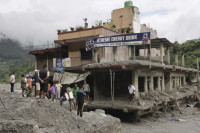
The landslide killed 13 people and damaged at least six houses, cattle sheds, shops and other structures, according to Rolpa Chief District Officer Ganga Bahadur Chhetri.
Three or four of those killed had no immediate family members, Chhetri said, complicating efforts to provide relief.
“In such cases, rather than simply providing relief, we first need to identify their relatives. If there are none, we have to find another option,” he said. “But we need the final findings of the investigation before making a decision.”
Chhetri also said it was unfortunate that relief supplies had not reached Kotalbara in the quantities expected and that the single-door system announced by the local administration had not been fully implemented.
He said the authorities needed to relocate displaced families to safer areas, with local, provincial and federal governments working together on the plan. The local units, he added, would have to play a central role in managing the landslide victims and their relocation.




 12.65°C Kathmandu