Hundreds of homes in eastern Rolpa at risk from landslides
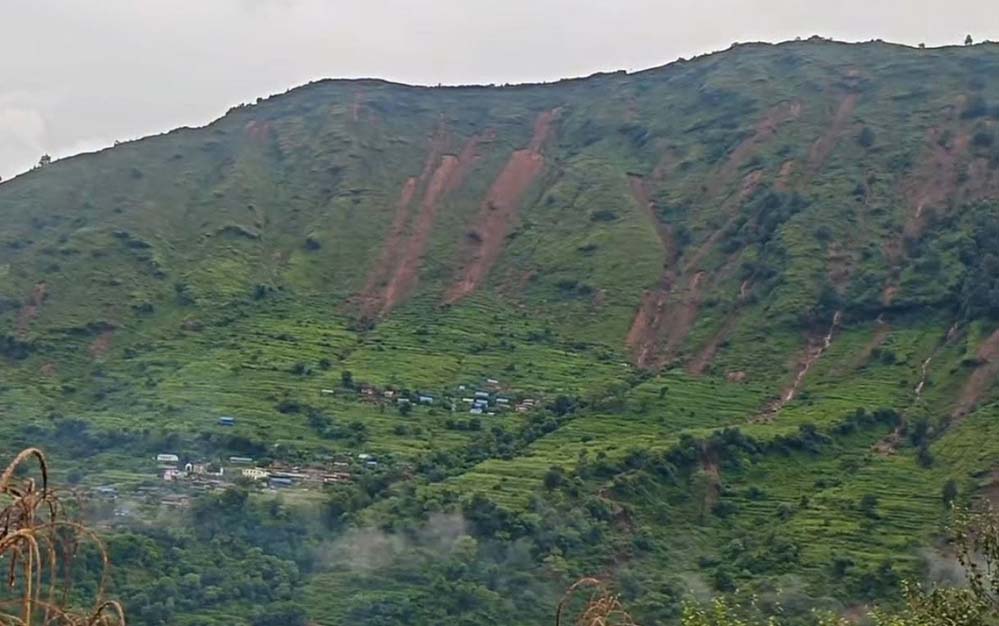
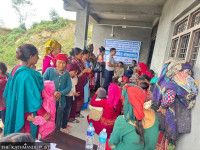
Cracks have opened across hillsides and beneath settlements after days of heavy rain, raising fears that entire villages may have to be relocated. Phuliban village in Rolpa. Courtesy of Balkuram Pun Magar
Hundreds of homes in eastern Rolpa face the threat of displacement after heavy rain triggered landslides and opened cracks across hillsides and beneath settlements.
The settlements at risk include Seram, Ghusbang and Gam in Sunchhahari Rural Municipality, and Uwa in Thabang Rural Municipality. A team led by the chief district officer has concluded that some of the settlements may have to be relocated.
Heavy rain throughout Thursday night heightened the landslide risk across much of eastern Rolpa. Homes in Seram and Ghusbang in Sunchhahari-1 are considered particularly vulnerable.
Dhani Man Roka, chairman of the ward, said cracks had appeared across the hills above the settlements.
“After raining throughout the night, the hillside above the village has split apart. Mud and debris have flowed down towards the settlement, while the ground below the village has also been torn open by landslides. It is no longer safe to stay there,” he said.
Roka said he and his family had moved to a safer open area near the forest after mud and debris flowed towards their home. He said he had advised other residents to take shelter in cattle sheds, forests and caves.
“We used a loudspeaker on Friday to tell residents not to stay in their homes because we fear more rain tonight. We have warned everyone to find a safe place to spend the night,” he said.
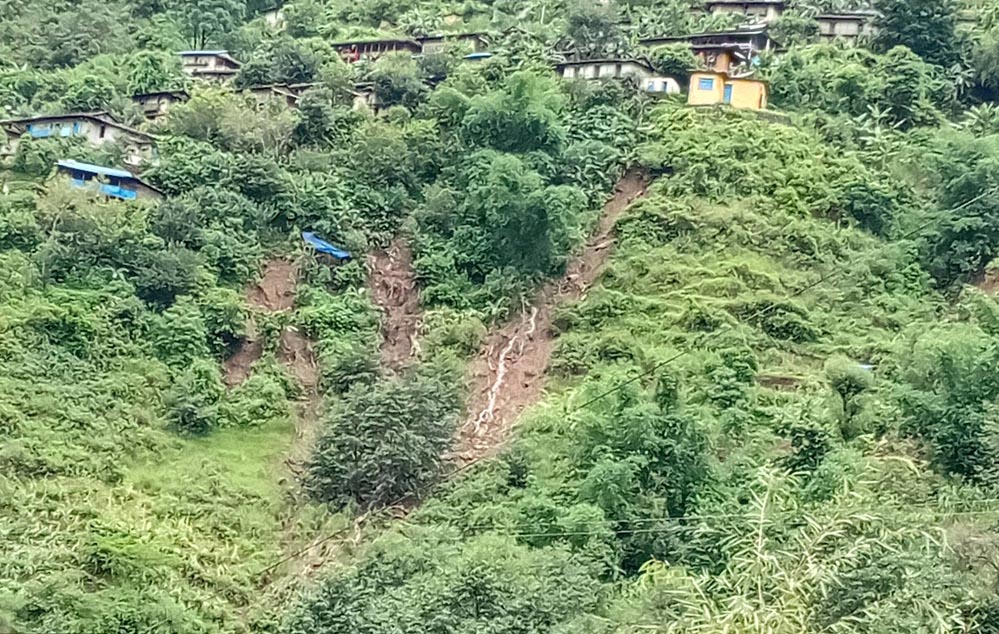
Seram has more than 100 households. Dalit families live mainly in the upper part of the village, while the lower section is predominantly inhabited by Magar families. Mud and debris have been coming down from Baima cliff and Gathan hill above the settlement.
Large cracks can be seen on the Baima cliff, from which mud has been flowing into the village, reaching the yards of some houses.
Seram’s Thulo Gaun.
Two women were killed several weeks ago when a landslide came down from Gathan hill while they were out herding cattle.
“The village is below a cliff, and the soil is unstable. The ground breaks apart, and the soil turns into mud that flows down to the settlement. This time, much more debris came down, making the situation particularly dangerous,” Roka said.
The settlement has more than 100 households as well as the ward office, a school and a police post.
Ghusbang, also in Sunchhahari-1, has also suffered landslide damage. Floodwaters swept away a suspension bridge leading to a local micro-hydropower plant, while several houses have been damaged, according to Roka.
A full assessment has yet to be made because communication with the village has been disrupted.
Ghusbang lies east of Kotalbara in Uwa, where a landslide struck three days ago. Roka said police had been sent to Ghusbang after receiving reports that several houses and a community building had been destroyed.
More than 100 households live in Ghusbang. The village has no electricity supply, and residents said persistent rain has made it impossible even to rely on solar power for lighting.
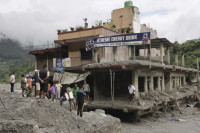
Gam, in wards 2 and 3 of Sunchhahari Rural Municipality, is also at high risk of landslides. Four people were killed there after Thursday night’s rain triggered landslides that buried two houses in separate incidents.
In Thabang Rural Municipality-5, the large settlement of Uwa is also facing a serious landslide threat.
Buddhi Gharti Magar, chairman of the ward, said days of continuous rain had opened cracks across the village. According to him, all settlements in former Uwa Village Development Committee wards 1, 2, 4, 6 and 9 are at risk.
Residents said almost every household was affected by Thursday night’s rain.
Sita Pun said the risk of landslides had made it impossible for residents to remain in their homes.
All houses in former wards 2 and 6 are considered at high risk. Former ward 1 is also vulnerable, while homes in former wards 4 and 9 have suffered less damage.
More than 300 households live in Uwa’s main settlement. Resident Dhukman Roka said the village had been considered vulnerable for years.
Uwa village.
Residents seek shelter in schools and cattle sheds
Authorities have advised residents living in high-risk areas to spend the night at a secondary school in Uwa, ward chairman Gharti Magar said.
“We have told people not to stay in homes at risk and to take shelter at the school or in cattle sheds considered safe. We issued the warning because more rain tonight could further increase the danger,” he said.
Those unable to fit into the school or cattle sheds have been advised to move to safer higher ground.
Gharti Magar said the settlements at risk would eventually have to be relocated.
Chief District Officer Ganga Bahadur Chhetri, who returned from an inspection of the Uwa landslide that killed 13 people, said authorities had concluded that vulnerable settlements in Uwa, Seram and Gam should be moved to safer locations.
“While conducting the field inspection, I contacted the National Disaster Risk Reduction and Management Authority from the site and briefed them on the situation and the problems faced by the residents,” Chhetri said. “The district disaster management committee is preparing to make a formal decision and send a written recommendation to the authority.”
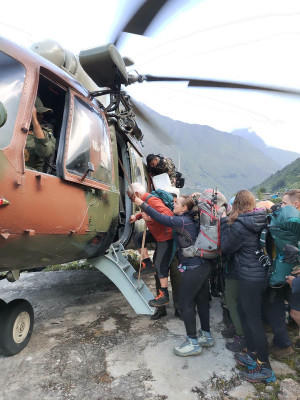
A 60-member rescue team comprising personnel from the Nepali Army, Nepal Police and Armed Police Force had travelled to Uwa under Chhetri’s leadership to inspect the damage and assist with rescue efforts.
The team became stranded on the road while returning on Thursday night.
“While returning after inspecting the Uwa incident and carrying out rescue work, we reached the stretch between Phuliban in Sunchhahari and Sirkyang cliff when heavy rain began. A landslide had blocked the road on the other side. We could not cross it, so we had to spend the entire night on the road. We were able to get out only in the morning,” Chhetri said.




 18.6°C Kathmandu