As the new fiscal year has begun for a week, eight local governments across the country remain unable to collect taxes and spend public money after failing to present their annual budgets within the constitutional deadline, exposing deep governance problems driven by political infighting and administrative vacancies.
According to the Ministry of Land Management, Cooperatives, Federal Affairs and General Administration, budget-related problems have surfaced in 13 of the country's 753 local governments. Of them, eight have not tabled their annual budgets at all, while five others presented budget proposals but failed to endorse or complete the required administrative entry into the federal system. The ministry has placed all 13 on its list of local governments facing budget complications.
As per Nepal's Constitution 2015, the federal government must present its budget on the 15th of Nepali month of Jestha (May 29 this year), provincial governments by Asar 1 (June 15) and local governments by the end of the fiscal month ending in mid-July. Missing that deadline places local units in what officials describe as a ‘budget holiday’, leaving them without legal authority to spend public funds or collect taxes until the budget is endorsed.
Officials attribute the delays to a combination of political disputes among elected representatives, prolonged vacancies in the post of chief administrative officer, and technical and procedural hurdles.
The problem is concentrated mainly in Madhesh province, which accounts for 10 of the 13 affected local governments. One is in Koshi province and two are in Lumbini.
Those yet to present budgets include Sukhipur Municipality and Aurahi Rural Municipality in Siraha, Kamala Municipality in Dhanusha, Garuda, Katahariya, Phatuwa Bijayapur and Maulapur municipalities, and Yamunamai Rural Municipality in Rautahat, as well as Chhipaharmai and Pakaha Mainpur rural municipalities in Parsa.
Budget approval has also stalled in Dharan Sub-metropolitan City in Koshi Province, Kotahimai Rural Municipality in Rupandehi and Shuddhodhan Rural Municipality in Kapilvastu.
By contrast, all local governments in Bagmati, Gandaki, Karnali and Sudurpashchim provinces completed their budget process within the constitutional deadline and have already begun implementation. The ministry also said all 126 local governments in Madhesh and 136 in Koshi, except those facing disputes, have endorsed their budgets.
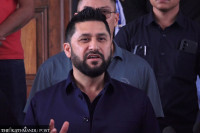
The deadlock has disrupted routine government work in several local bodies. The Post met Chandranagar Rural Municipality Chair Raj Kumar Mahato at the Singha Durbar gate on Thursday. He arrived in the national capital to seek intervention from Minister for Federal Affairs and General Administration Pratibha Rawal to end the budget impasse.
Mahato said his municipality had suffered years of administrative paralysis because chief administrative officers and the head of the infrastructure development section repeatedly failed to make timely decisions between fiscal years 2022-23 and 2025-26. As a result, development projects remained incomplete and allocated budgets lapsed, forcing unspent funds back to the federal treasury.
"The chief administrative officer and the engineer were responsible for the municipality losing its entire development budget," said Mahato. "How can we pay contractors who have already completed work? Until the losses of the past four years are addressed, we cannot move forward with approving another budget."
He said he had submitted an eight-point memorandum demanding compensation worth nearly Rs10 billion for the losses incurred over the past four fiscal years.
According to Mahato, Chandranagar will endorse its budget only after the federal government appoints a chief administrative officer, resolves the compensation issue and authorises section chiefs and ward secretaries to carry out essential financial responsibilities.
Dharan Sub-metropolitan City is the only sub-metropolitan authority yet to approve its budget. The impasse followed the resignation by Mayor Harka Sampang, after which Deputy Mayor Aindra Bikram Begha assumed the role of acting chief. Sampang resigned to contest parliamentary elections. However, disagreements among ward chairs prevented the executive from finalising the budget within the constitutional deadline.
Speaking to Kantipur, Begha said the executive had reached an understanding to table the budget through a meeting scheduled for August 5.
"Past disputes delayed the process, but we have now agreed to convene the municipal assembly. We expect the budget to be endorsed on the same day," he said, adding that consensus was reached after ward-level budget allocations were increased to Rs260 million.
In Rautahat's Maulapur Municipality, Mayor Rina Kumari Shah said political parties had finally resolved their differences and the budget would be presented on July 26. "Failure to reach political consensus pushed us into a budget holiday. We have been unable to spend public funds or collect taxes," she said.
Several other local governments blamed the prolonged absence of chief administrative officers. Garuda Municipality Mayor Kanthamani Prasad Jaiswal said the municipality was ready to unveil its budget when the chief administrative officer sought a transfer and left for Kathmandu in early July.
"We could not convene the municipal assembly without the chief administrative officer," said Jaiswal, adding that salary payments for teachers, health workers and municipal employees had also been affected.
Kamala Municipality Mayor Bishweshwar Yadav said budget discussions were underway when the municipality's chief administrative officer became unreachable after reportedly travelling to Kathmandu to seek a transfer. He said a replacement had been requested from the federal government and the budget would be tabled immediately after the post was filled.
Shuddhodhan Rural Municipality and Chhipaharmai Rural Municipality reported similar administrative difficulties, while officials in Kotahimai Rural Municipality acknowledged that disputes between the chairperson and the chief administrative officer had paralysed the budget process.
The ministry said it was holding continuous consultations with the affected local governments, the Municipal Association of Nepal and the National Association of Rural Municipalities to break the deadlock.
Under-secretary Deepak Dhakal said discussions held on Thursday were encouraging. "Most of the problems stem from vacancies in chief administrative officer positions and disputes among elected representatives. We are optimistic that the remaining local governments will endorse their budgets within the next few days," he said.




 14.82°C Kathmandu