Nepal begins CAR T-cell therapy for cancer patients
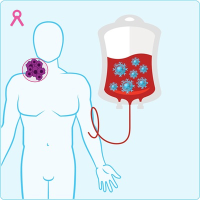
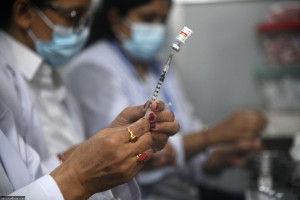
A 20-year-old woman with relapsed leukaemia has received the treatment at TU Teaching Hospital. Doctors are monitoring her response. CAR T-cell therapy treats certain aggressive blood cancers, including B-cell acute lymphoblastic leukaemia (B-ALL), and diffuse large B-cell lymphoma (DLBCL). AI generated image
Nepal has started treating cancer patients with locally manufactured genetically engineered cells for the first time. This marks a breakthrough in the country’s cancer treatment capabilities, doctors involved in the treatment say.
A 20-year-old woman with relapsed acute lymphoblastic leukaemia, a type of blood cancer, received CAR T-cell therapy at Tribhuvan University Teaching Hospital (TUTH) about two weeks ago, according to Dr Anjan Shrestha, the study's clinical lead.
“Her condition is stable, and doctors attending to her are monitoring her response to the treatment,” said Shrestha, who is also a haemato-oncologist. “We will monitor her health in the coming days and inform the public about the results of the treatment.”
CAR T-cell therapy is an emerging treatment that supercharges the body’s immune system to fight cancer. Experts have described it as a “game changer” and “revolutionary.” The treatment involves collecting a patient’s T-cells, a key component of the immune system, and genetically modifying them in a lab so they recognise and destroy cancer cells. The modified cells are then multiplied and infused back into the patient’s body.
The patient’s T-cells were modified by the Kathmandu-based Centre for Regenerative Medicine Nepal (CRM Nepal) using genetic engineering technology and infused into the patient at Tribhuvan University Teaching Hospital (TUTH), Maharajgunj. CRM Nepal’s product targets CD19, a protein found on certain blood cancer cells.
A clinical team led by Shrestha, alongside Dr Prashun Upadhyaya, administered the treatment at TUTH. The team is closely monitoring the patient to determine whether the therapy has induced remission and how long any response lasts.
Dr Sanjivan Gautam, a US-based Nepali immunologist who led the technology transfer, research and manufacturing initiative, described the treatment as a milestone in the development of advanced cancer care in Nepal.
The initiative began with preclinical research in 2022, according to Upadhyaya. The research continued through 2024, followed by preparations for manufacturing, workforce training and the development of the production facility in 2025.
In March 2026, Nepal’s Department of Drug Administration approved CRM Nepal’s locally developed CD19 CAR T-cell product for clinical use.
The organisation’s manufacturing and laboratory teams established a local production platform and carried out the work required to manufacture and assess the patient-specific cell therapy.
The treatment is currently available only at TUTH. CRM Nepal operates a centralised manufacturing facility in Kathmandu and plans to supply the cells to other cancer centres. The organisation is led by Nepali experts based in Nepal and abroad.
‘We have been evaluating the initial outcome of the treatment,” said Shrestha. “ We will also administer the therapy to more patients.”
CAR T-cell therapy treats certain aggressive blood cancers, including B-cell acute lymphoblastic leukaemia (B-ALL), and diffuse large B-cell lymphoma (DLBCL). It is generally considered when cancer returns after treatment or fails to respond to previous therapies—a condition known as relapsed or refractory disease—rather than as a first-line treatment.
Doctors involved in the treatment said that cancer patients must first undergo standard treatments, including chemotherapy. If these treatments fail to respond or cancer returns, then only CAR T-cell therapy is considered.
“This is really a noble and effective technology for cancer treatment,” said Dr Shivaji Poudel, a radiation oncologist and former director of the Bharatpur-based BP Koirala Memorial Cancer Hospital. “The start of this service in our country is a very positive initiative.”
Poudel said patients receiving the therapy need to be kept in protective isolation, and food must be prepared and handled under strict hygienic conditions.
Doctors say the availability of the therapy in Nepal could reduce the financial burden on patients who would otherwise have to seek treatment abroad. Patients requiring such specialised care have travelled to countries including India and China, where treatment can cost tens of millions of rupees.
According to Dr Poudel, CAR T-cell therapy costs more than Rs 7 million per patient in India.
Experts say patients who can afford the treatment will now be able to receive it in Nepal. Poudel said other hospitals will also start CAR T-cell therapy soon.
Arjun Poudel is a health reporter for The Kathmandu Post. Before joining the Post, he worked for Sagarmatha Television, Naya Patrika, Republica and The Himalayan Times.




 19.22°C Kathmandu