Thousands of flood-displaced children remain out of reach of measles vaccination
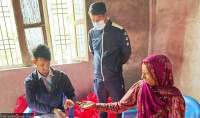
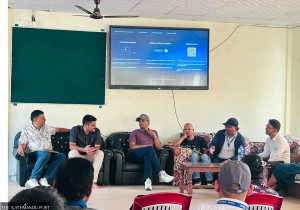
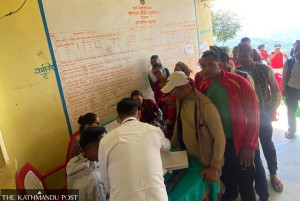
Health officials have indefinitely stalled vaccination in three flood-hit districts, warning that displaced children face a heightened risk of infectious disease outbreaks. Post File Photo
A few days after the Bhotekoshi flood, members of the National Immunisation Advisory Committee sat down for a meeting to discuss risks of communicable diseases. Such risk remains high in the aftermath of the disaster, said Dr Arun Kumar Neopane, a member of the committee. “Our own experiences of the past show that,” he said. “Authorities concerned should not take much time to take precautionary measures.”
The committee’s meeting recommended the government launch a vaccination drive against communicable diseases, including measles, tetanus, and cholera, among others.
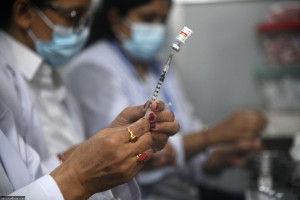
Health authorities soon launched anti-cholera vaccination in the affected areas targeting 100,000 people, but could inoculate only 70 percent of the targeted population.
Around 2,000 rescue workers and injured were administered tetanus and diphtheria vaccine, according to the Immunisation Section at the Family Welfare Division under the Department of Health Services. Officials said they had to struggle to convince Army personnel to administer the tetanus and diphtheria vaccine.
Now officials say they have stalled planned measles vaccination in the flood-hit Rasuwa, Nuwakot and Dhading districts indefinitely, as they have been unable to locate the flood-displaced children.
More than 35,000 children aged six months to 15 years in the three flood-hit districts need measles vaccination as a precaution against post-disaster outbreaks, according to officials at the Ministry of Health and Food Safety.
“Our health workers could not locate most of the children of the affected areas, as they have been moved elsewhere along with their parents,” said Dr Abhiyan Gautam, chief of the Immunisation Section at the Family Welfare Division under the Department of Health Services. “Vaccination will be launched only after those children return to the affected districts.”
Officials say children from Gorkha and Tanahun also need an additional measles dose as a precautionary measure, but the vaccination programme will launch once children from hard-hit areas are inoculated.
Measles is a highly contagious disease that spreads through respiratory droplets from an infected person’s nose and mouth. Doctors say it can be fatal, especially for unvaccinated people.
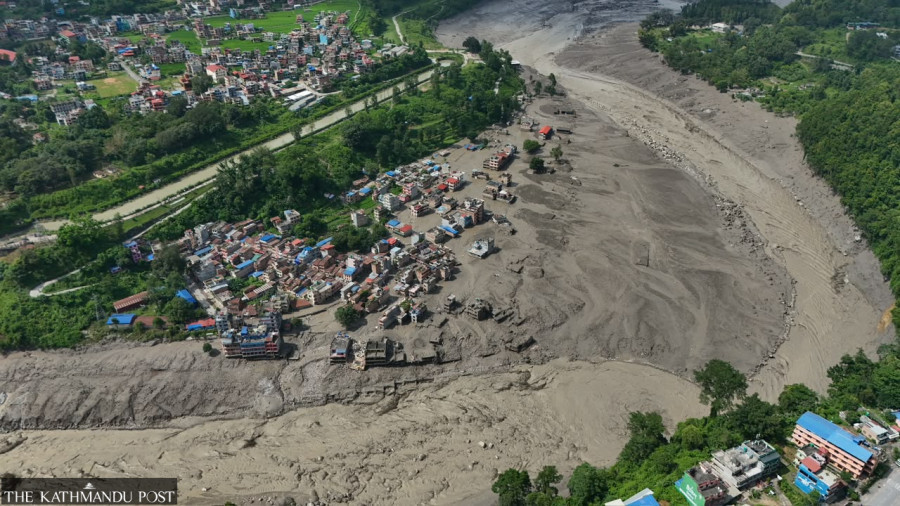
Over 1,400 people died, over 6,000 are missing, hundreds were injured, and thousands have been displaced by the catastrophic August 26 Bhotekoshi flood, which washed away most of the settlements along the Trishuli River basin.
Nepal has reported multiple outbreaks of the deadly disease since the start of 2026, including in Sarlahi, Baglung, Mahottari, Kalikot, Dailekh, Achham, Siraha and others. Health agencies have carried out ring vaccination in some affected areas, including Dhorpatan, Baglung.
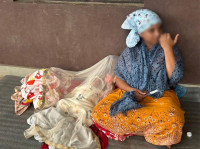
As flood-displaced people have been evicted from their houses and forced to live in mass shelters, they are at high risk of contracting infectious diseases, experts say. They also say that the morbidity rates will increase in such affected populations, as their nutrition and hygiene might have been compromised.
Displaced children may also have missed other routine vaccines, as parents may have other priorities after the loss. Along with small children, pregnant women, and those having compromised immunity are also vulnerable to infectious disease, including measles, health officials say.
Nepal had aimed to eliminate measles by 2026, as there had been no outbreak since June 2023. However, subsequent outbreaks have hindered the country’s progress towards that goal.
The country earlier missed the 2023 and 2019 deadlines. A massive measles outbreak occurred in 2022 and 2023.
To declare measles eliminated, the number of cases should be fewer than five per 1,000,000 people per year. The country must verify progress through foreign, independent verification. For independent verification, there should be no new outbreaks for three consecutive years, officials say.
Doctors say people in all age groups are vulnerable to the disease. Underage children, pregnant women, elderly people and those with weak immunity, such as HIV-infected people, are at higher risk.
Early symptoms, which usually appear 10–12 days after infection, include high fever, runny nose, bloodshot eyes and white, tiny spots inside the mouth. Several days later, rashes develop on the face, upper neck and other parts of the body.
Some patients develop severe complications such as pneumonia and encephalitis, which can be fatal.
Measles was once endemic in Nepal, and an average of 90,000 cases were recorded every year between 1994 and 2004. Routine measles vaccination began in the country in 1979, starting with three districts. The campaign was made nationwide after 10 years.
Arjun Poudel is a health reporter for The Kathmandu Post. Before joining the Post, he worked for Sagarmatha Television, Naya Patrika, Republica and The Himalayan Times.




 16.34°C Kathmandu