Strengthen early-warning systems, fix cross-border information sharing
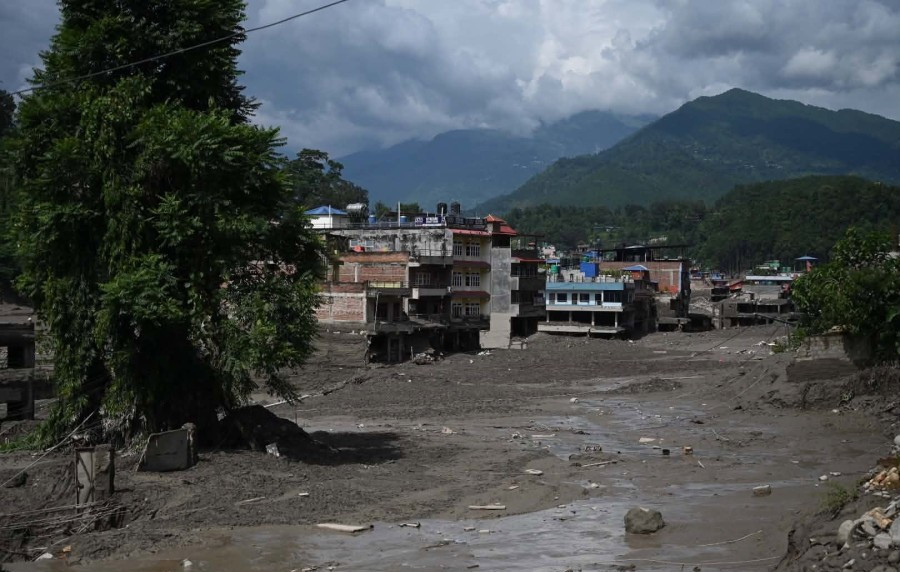
Recurrent floods and glacial lake outbursts expose Nepal’s vulnerability and underscore the need for stronger early-warning systems and preparedness. Post File Photo
The Bhotekoshi flood has caused an unimaginable loss of lives and property, exposing Nepal’s vulnerability to disasters. This is the third consecutive disaster in the region in the span of three years. A settlement was swept away by a glacial lake outburst flood that inundated the Thame River in 2024, destroying 20 houses and a school, among other structures.
Last year’s flash flood in the Lende River in Rasuwagadhi, the area affected this time as well, killed at least 11 people while sweeping away the bridge that connected Nepal and China and vehicles kept there for customs clearance. A report by the International Centre for Integrated Mountain Development pointed out that the disaster was a ‘glacier discharge and debris flood’.
The recurrent flash floods are sure to trouble a country that is among the world’s most disaster-prone. Even as the exact cause of the Bhotekoshi flood is yet to be ascertained, experts have pointed to either a glacial lake outburst or an upstream landslide, possibly on the Tibetan side, as a possible cause of the massive flash flood.
Nepal has 3,252 glaciers and 2,323 glacial lakes, of which 20 are considered potentially dangerous. According to ICIMOD, 26 GLOF events have been recorded in Nepal since 1977, with 11 having transboundary impacts. Global warming has further increased the risks of such outbursts. In 2020, ICIMOD identified 47 potentially dangerous glacial lakes in the three countries, including 25 in the Tibet Autonomous Region of China, 21 in Nepal and one in India. As Nepal lies downstream from Tibet, any such disaster can have devastating consequences for the country.
As disasters of this nature are cross-border issues, there must be proper mechanisms for cross-boundary information sharing. Even though a mechanism exists between the two countries, it does not seem to be functioning effectively. Because floodwaters can take time to travel downstream, there are ample opportunities to save lives if information is shared on time. Therefore, such information-sharing mechanisms must be activated, and the onus is on Nepal to take the initiative to make them more functional.
An early-warning system in potentially risky areas would also greatly improve preparedness. As a similar disaster occurred in the area last year, a functioning early-warning system could have helped avert at least some of the loss of life and property. Nepal contributes little to global warming but is often at the receiving end of its consequences, leaving the country with little choice but to focus on preparedness and response.
Of late, efforts have been made to equip the Armed Police Force, the Nepali Army and the Nepal Police with resources and training for disaster response. But that is far from enough. The changing dynamics of disasters also demand new techniques and technologies to deal with them. That requires sustained government attention, investment and planning.
The recurrent disasters must serve as a warning for Nepal. The government must devise long-term plans to strengthen early-warning systems, improve cross-border information sharing and build the capacity of communities and security agencies so that future disasters cause the minimum possible loss of life and property. But the responsibility cannot rest with vulnerable countries alone. Countries that have contributed disproportionately to global warming also have a responsibility to help vulnerable nations like Nepal build the technology, infrastructure and capacity needed to prepare for and respond to the increasingly severe impacts of climate change.




 15.48°C Kathmandu