



 19.95°C Kathmandu
Sun, Oct 25, 2026
Columns
Is Nepal’s tourism industry moving fast enough?
Nepal’s tourism recovery no longer needs to take years. By shifting from desperate emotional pleas to targeted, transparent digital storytelling, the industry can accelerate its rebound..jpg&w=900&height=601)
bookmark![]()
![]()
![]()
Smriti Subedi
Published at : September 29, 2026
Updated at : September 29, 2026 18:07
In today’s information-driven world, we encounter an overwhelming amount of data daily and often forget recent trends. We are constantly bombarded with global information within minutes. This rapid flow of information may be advantageous, particularly in the aftermath of a crisis. Just until last week, my Instagram feed was flooded with flood-related content from Nepal. But now it’s back to beautiful travel-related content from all over the world. In a country whose economy runs on tourism, how we tell the next story matters more than ever.
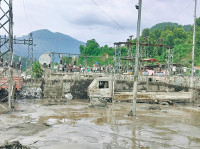
The Bhotekoshi flood claimed hundreds of lives and left communities in Rasuwa, Nuwakot, Dhading and Gorkha devastated—districts I’ve travelled through myself, so this isn’t an abstraction to me. That loss is not something a recovery statistic can capture. In that context, the tourism sector must decide how to move forward.
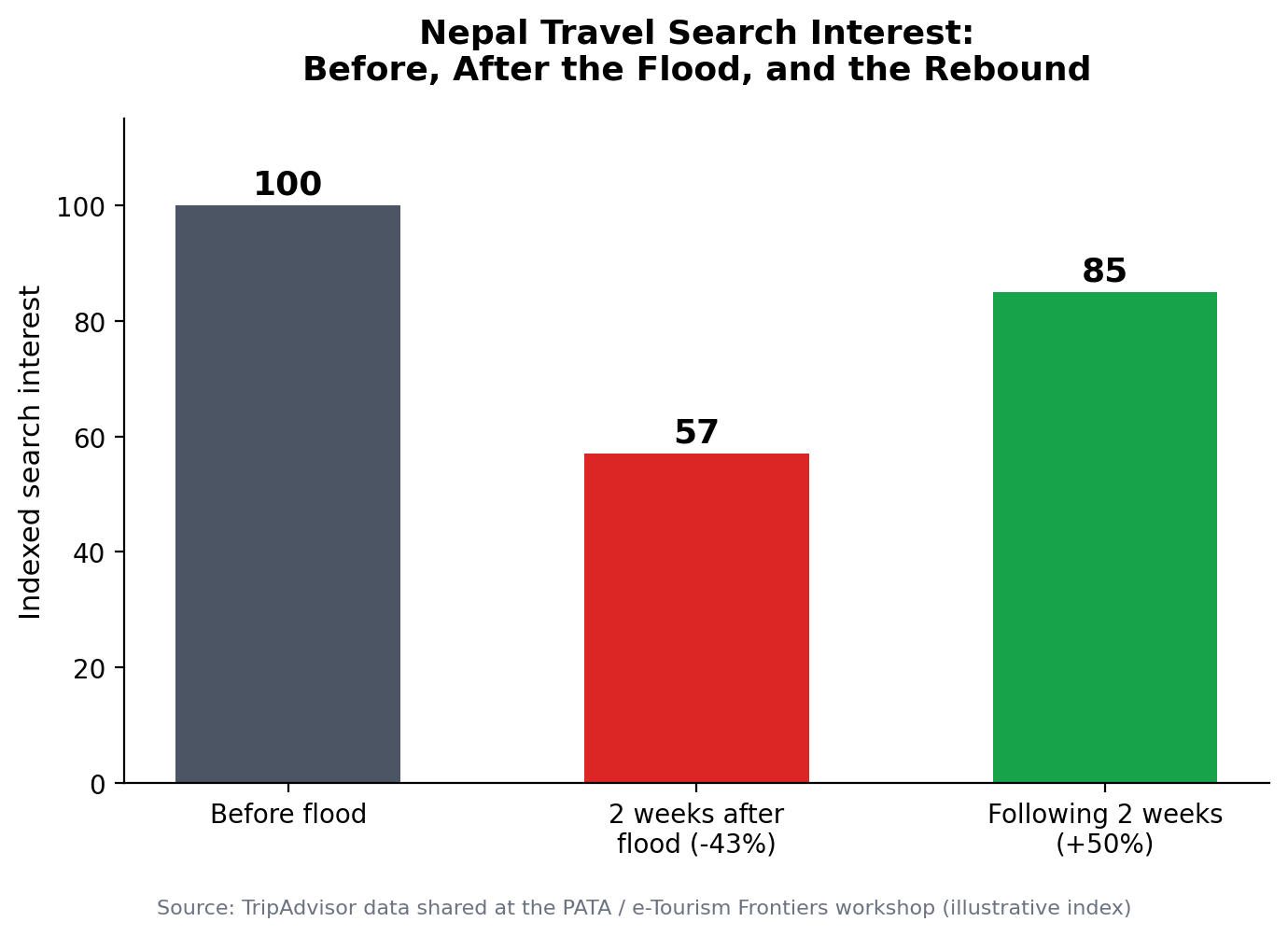
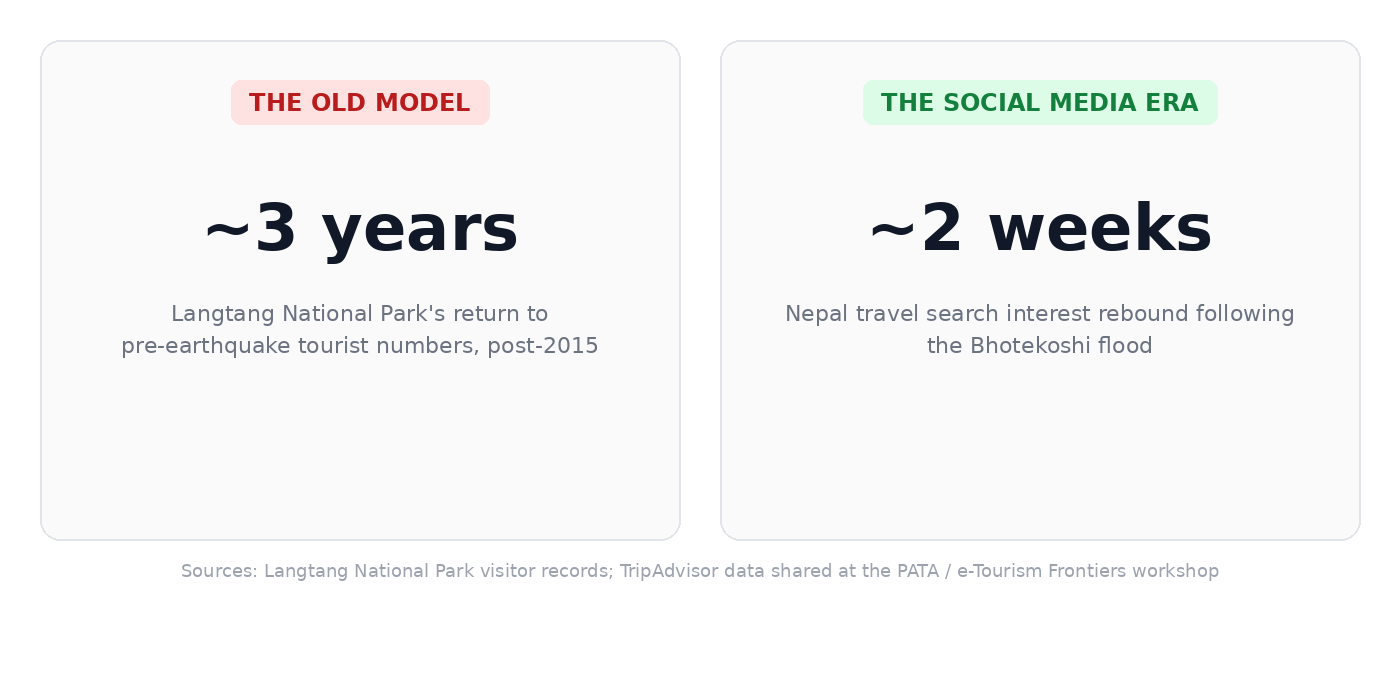
According to a preliminary government assessment, the Bhotekoshi flood alone cost Nepal’s tourism sector an estimated Rs52.13 billion. Under the old model, that kind of damage takes years to recover from—Langtang National Park, for instance, took roughly three years to return to its pre-earthquake tourist numbers after 2015. According to TripAdvisor, ‘Nepal’ searches dropped by 43 percent in two weeks after the Bhotekoshi flood. And the most interesting part is that immediately after that fortnight, searches also rose by 50 percent. That’s not a multi-year recovery curve like in the past. The tourism recovery can happen in weeks. That’s the advantage social media creates. If Nepal plays this right, recovery could land closer to months than years because the conditions now allow for it. To achieve this, we need clear, targeted communication strategies that highlight unaffected regions, success stories and ongoing safety measures, ensuring stakeholders understand how strategic messaging accelerates recovery.
The same short attention span that makes bad news spread fast will also help replace it with positive news quickly. According to data shared by e-Tourism Frontiers, destinations that actively manage their story and lead recovery efforts recover roughly 1.5 times faster than those that don’t. Recovery speed depends on how deliberately you empower your team to shape the story from here on. Some specific ways to move fast in a short-attention environment include sharing dated, specific, route-named content. Content is what cuts through a feed, instead of talking about the whole country in one frame. Content should be diversified across different parts of Nepal.
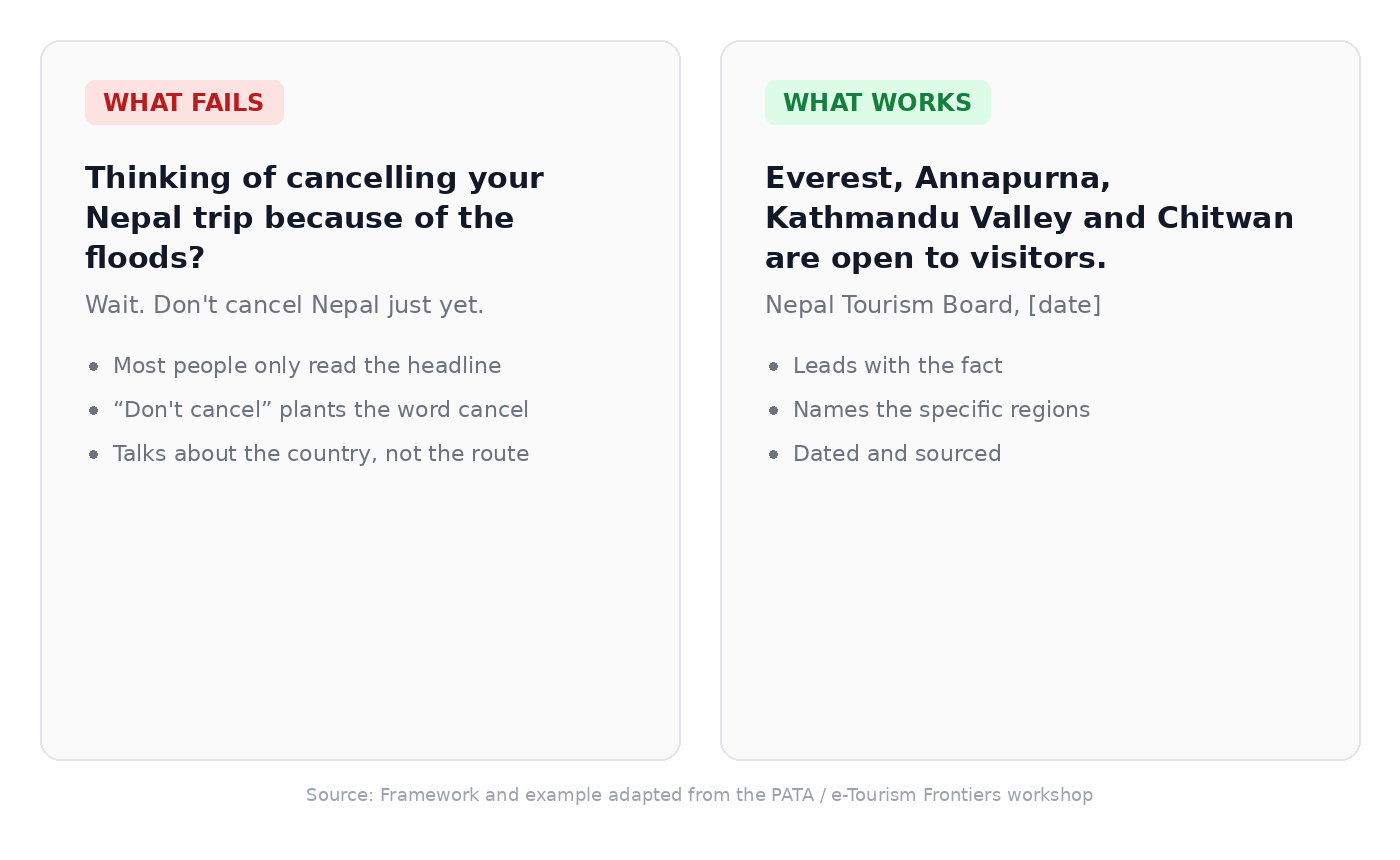
My recent feed was full of well-meaning posts—“please don’t cancel”, “Nepal needs you now more than ever”, “Nepal will rise again”—each one trying to help, but each one doing the opposite: repeating the very words a hesitant traveller was already thinking, and turning a trip decision into an emotional plea instead of a simple fact.
We don’t have to wait for time to pass to go into recovery mode. Recovery can happen way faster when handled well versus left alone. People rarely check for news headlines. They check the same few creators they like and trust. But speed alone isn’t enough—tone matters just as much. One creator’s post 10 days after the flood was factually accurate—reassuring travellers that Nepal’s mountains, trails and people were still there—but it drew criticism for asking people to visit before acknowledging the loss. It was written for travellers, but read by people in Nepal still grieving. Right facts, wrong tone, can backfire as fast as silence does. Therefore, craft messages that balance optimism with empathy, ensuring they resonate appropriately with both local communities and potential visitors.
These posts also shape what AI search tools surface, so titles and descriptions carry more weight than ever. Encourage creators, guides and travel agencies to post content from today and every day. Pay guides extra to film beautiful photos and videos of their clients, with their consent, while they’re travelling in Nepal; and, most importantly, encourage them to post on their platforms. If tourism businesses hire great photographers and video creators to film clients enjoying all the eccentrics of Nepal, those clients will post the content on their platforms and send a good, authentic message to their network. Repeated, authentic content builds trust over time—a trusted voice that shows up on viewers’ phones, creating a ripple effect of positive messages. Focus on sharing diverse, real experiences through Instagram stories, TikTok videos, and Facebook posts that highlight unaffected regions, local hospitality, and cultural richness, fostering genuine engagement and trust among potential visitors.
The speed of content cuts both ways. Social media feeds can be flooded with content related to the Bhotekoshi flood, and people can instantly switch to cute dog videos. It is critical to proactively fill this gap with factual updates, such as which places are open and unaffected, to prevent rumours and false information from spreading. Developing a crisis communication plan will help the industry respond swiftly to misinformation and maintain a positive narrative.
Smriti Subedi
Subedi is a travel filmmaker. She is the co-founder of Traverart, a media company.




Most Read from Columns


Editor's Picks





E-PAPER | October 25, 2026

×