



 17.48°C Kathmandu
Mon, Oct 26, 2026
Columns
Lessons from Nepal’s past for families living without answers
Physical closure may never come for those lost in the flood. But by walking hand-in-hand with survivors, we can provide the resources and empathy needed to navigate the uncertainty.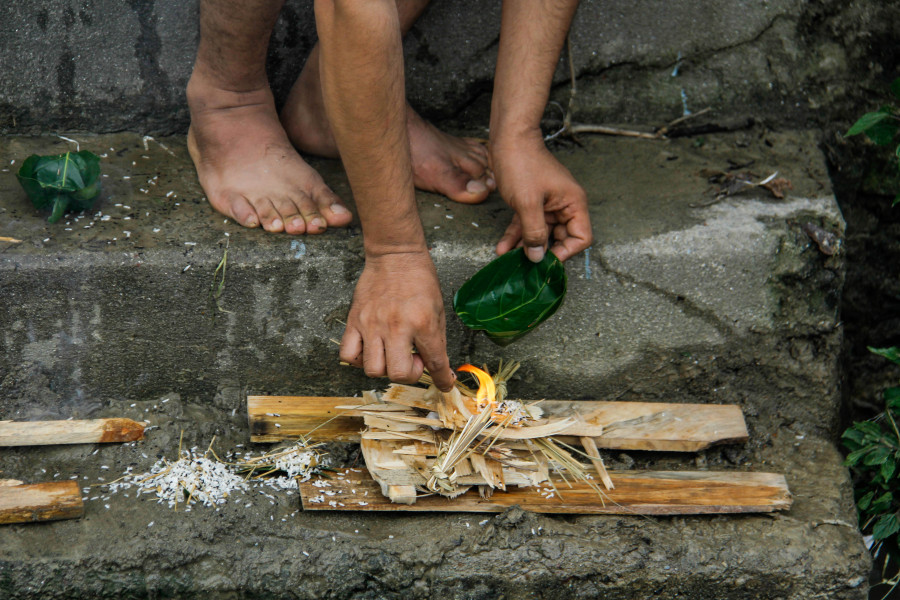
bookmark
Sujen Man Maharjan & Brandon Kohrt
Published at : September 11, 2026
Updated at : September 11, 2026 06:20
Eleven days after the devastating Bhotekoshi flood, a 64-year-old woman was rescued from her house that had been pushed entirely off its base and 100 metres up a hillside, nearly entirely buried in mud. Days earlier, her family had already performed a symbolic kush (effigy) funeral for her and three other missing relatives.
This story of miraculous survival offers a sliver of hope to families across the disaster-hit areas. Yet, as rescuers continue to search sludge-filled tunnels, the harsh reality remains: around 5,300 people are still unaccounted for. Their families face difficult decisions. Continue waiting in hope? Conduct a ceremonial funeral? Many of the thousands of missing people may never be recovered. For these families, there will not be physical closure to their loved ones’ deaths.
When someone still feels the psychological presence of a loved one, but without a physical presence, it is known as ambiguous loss. Thousands of Nepalis and people around the world are experiencing ambiguous loss as they wait for news about the missing. There is no physical proof of life or death. It is a pendulum swinging between hope of reunion and the feeling that their loved one will never return. The experience varies from person to person and moment to moment, with distress often greatest when they feel pressured by others to accept death.
As mental health professionals who have supported the torture survivors and child soldiers during the decade-long People’s War, 2015 earthquake survivors, and people living with mental health conditions during the Covid-19 pandemic, we have seen this pendulum of hope and grief before. An important thread through all of this work is helping people mourn and recover after loss. That is especially challenging when the loss does not have the finality of a body.
One of us (Sujen) managed psychosocial services at the International Committee of the Red Cross (ICRC) for families of some of the 1,300 people who disappeared during the People’s War. Although the current context is very different, there are many lessons we can apply from the experience. In our previous project, families were given psychological and social support. Both of these elements were crucial, and they needed to be integrated together to be successful by addressing the psychological, socio-cultural, economic, and legal or administrative needs of the families.
For the psychological part, families came together in mothers’ groups, wives’ groups, and fathers’ groups. They shared the emotional experiences of having lost someone without ever having confirmation of their death. They also described challenges of taking on the responsibilities of the missing person. During the conflict, most of the disappeared were men. But the flood consumed lives indiscriminately. It will be important to provide psychological support that addresses the differences in these experiences.
We also found that rituals play an important part. In our prior work, in addition to kush funerals, we observed parents engaging in rituals for their children who had gone off to fight during the Moiast insurgency. Rituals such as bhakal were important for their safe return, before moving on to funeral rites. For the families of those missing, there should not be social pressure to conduct mourning rituals when families are not yet ready.
For the families of the disappeared after the war, social service support was equally important. With no proof of death, families could not file papers for death certificates. Psychosocial workers also accompanied families of the missing to complete paperwork and navigate the challenges of getting resources, compensation, and managing logistics. This accompaniment is vital now as families are distressed and trying to manage details of housing, accessing finances, and supporting children who may have no legal guardian.
During the conflict, managing legal and financial issues was challenging because, without proof of a body, a person is only legally established as deceased after 12 years since their disappearance in Nepal’s National Civil Code. The code does include provisions for deaths in major accidents, so it will be important to streamline bureaucratic processes to ensure rapid access to support.
One of the most important lessons learned from our previous project is that people who are not mental health experts can also play a role in psychosocial services. Adults who had disappeared relatives could be trained to be paid peer supporters as companions. They were as effective as other psychosocial workers, and they did not experience additional distress. With proper training, supervision, and compensation, they found it meaningful to support others. Other studies in Nepal have shown that community members, with training, supervision, and compensation, can reduce psychological distress.
We recently visited psychosocial programmes being rolled out in Nuwakot. From our colleagues there, we heard many stories of loss and waiting. In the coming days, we may see more miraculous rescues, and we will certainly see more bodies identified.
Unfortunately, for thousands, this closure will never come. There will not be a single moment when hope ends and mourning starts. No ceremony, certificate, or counselling session can substitute for physical closure. But amidst this uncertainty, we can ensure that families have the practical resources, empathic support, and freedom to mourn, to wait, and to hope, as we walk beside them hand-in-hand.
From our experience, there are four pillars to helping the affected families: committing to long-term efforts for recovery, setting up one-stop multi-resource support centres, ensuring nationwide family-centred psychological services, and following, not leading, families of the missing.
These pillars require concrete, structural commitments. A long-term commitment to identification and recovery of human remains needs to be established to ensure families that every effort is being made. We should expect this process to continue for years.
Families of the missing should be able to go to one place for support for the numerous legal, financial, citizenship, child guardianship, and other documents. It is distressing to have to repeatedly file different paperwork across municipal, provincial, and federal systems. Nepal has a successful model in One Stop Crisis Management Centres (OCMCs) where women can receive legal, police, medical and psychological services all provided through a single one-stop centre.
The missing come from every sector of the country, and services need to be available beyond the immediate areas of the disaster. Services need to be flexible for different timelines for types and timing of rituals, and include the diverse experiences of ambiguous loss and complicated grief.
Ultimately, efforts will be most successful if families of the missing design and implement these programmes. Families had no control over losing their loved ones. They should lead the way in how they remember them.
Sujen Man Maharjan
Maharjan is a research coordinator at Transcultural Psychosocial Organisation (TPO) Nepal.
Brandon Kohrt
Kohrt is a technical advisor for TPO Nepal and the Charles and Sonia Akman Professor of Global Psychiatry and Director of the Center for Global Mental Health Equity at George Washington University.


Most Read from Columns


Editor's Picks

What to know about the US trial over Mamta Kafle’s disappearance

NPL returns with bigger ambitions and global recognition
What’s new in the Nepal Premier League’s third season?
After Nepal’s recent disaster, it wants to test whether COP31 can deliver climate justice

Why does an hour long flight to Dhangadhi cost more than a flight to New Delhi?
E-PAPER | October 26, 2026

×