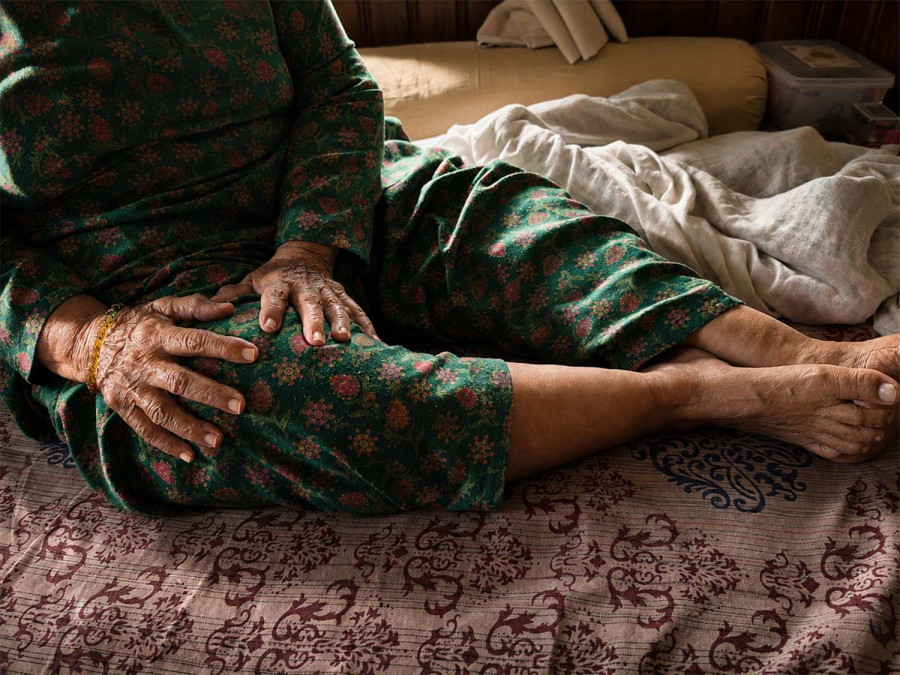
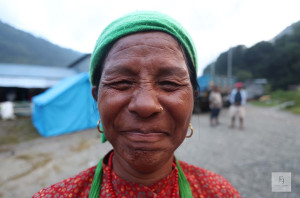
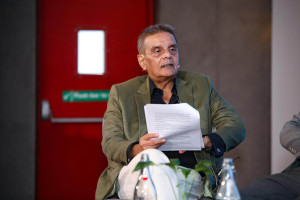
Better understanding, ethical care and early management can improve outcomes for Nepalis living with osteoarthritis. Photo: Courtesy of Yugeshwor Koirala
25 years ago, Meena Risal, now 88, began noticing a twinge in her knees whenever she stood or walked for too long.
“It was easy to ignore at first. But gradually, the ache turned into persistent pain. My knees started swelling, they felt stiff in the mornings, and even simple movements became increasingly difficult,” she says. For years, Meena dismissed the discomfort as a normal part of aging. It was only more than a decade later, when the pain began to impair her mobility, that she sought medical attention.
Her symptoms were characteristic of osteoarthritis, a chronic joint disease that affects an estimated 600 million people worldwide. That number is expected to reach one billion by 2050.
In Nepal, its true burden remains difficult to quantify because large population-based studies are lacking. The country’s most recent national health survey, conducted in 2019, found that almost one in five Nepalis aged 15-69 reported some form of chronic joint pain. “A sizable proportion of these adults suffer from osteoarthritis,” says orthopaedic surgeon Bhaskar Raj Pant. “Today, I see many more patients with the disease than I would have just a few years ago.”
For decades, osteoarthritis was understood as an inevitable consequence of cartilage wearing out with age, like a rubber sole wearing down with use. But the scientific understanding has changed. “Now, we know much more about the disease,” Pant says. “Put simply, when a joint works too hard to repair itself, the repair process can eventually become part of the problem.”
Osteoarthritis is a disease of the whole joint, and involves not just the cartilage, but also bone, synovial lining, ligaments, inflammatory pathways, and the central and peripheral nervous systems that process pain. Changes can occur before symptoms become severe, and symptoms do not always correspond closely with what is seen on an X-ray.
That shift in understanding matters because it changes what good care should look like. Rather than waiting for a joint to deteriorate until invasive interventions become necessary, the emphasis is increasingly on prevention, recognising and predicting osteoarthritis early when the biology of the joint may still be modifiable.
There is currently no approved disease-modifying treatment that can reverse osteoarthritis. This makes early management particularly important, especially as the burden of the disease continues to grow. Between 2010 and 2017, the prevalence of osteoarthritis in Nepal increased by around 20 percent, while years lived with disability attributable to the disease rose by approximately 21 percent.
The burden is also unevenly distributed and is more common among women, people in the lowest wealth quintile, homemakers and residents of Karnali Province.
A misunderstood disease
“Decades ago, when people had cholera, they would avoid drinking water because they believed it would worsen their diarrhoea. That was simply a result of poor awareness,” says Pant. “Today, something very similar is happening with osteoarthritis.”
Part of the problem lies in how osteoarthritis is understood and in the language used to describe it. Terms such as “Jorni Khiyine” (wear and tear), “degenerative” and “Budeskaal ko Rog” (disease of ageing) can make osteoarthritis sound like an inevitable consequence of getting older, rather than a condition that can be actively managed.
That belief can shape how people respond to their condition. If a painful joint is thought to be simply “wearing out”, movement may seem harmful and rest may seem safer. In reality, exercise and physical activity are important parts of first-line osteoarthritis care.
A 2025 study in Pokhara found that only around 28 percent of patients with knee osteoarthritis believed the condition could be managed. “There is a narrow understanding of treatment, and many see osteoarthritis as a condition to be endured until surgery is needed,” says Pant.
Pant argues that health professionals need to do more to explain the disease and its treatment. “Many doctors have plenty of time to prescribe strong oral painkillers and controversial intra-articular injections with unclear benefit but don’t pay much heed to educate patients about this disease or about the importance of weight management, supervised exercise and physiotherapy,” he says.
“I have also seen patients, especially in rural Western Nepal, buying supplements believing that they can reduce pain and regrow cartilage,” says Pant. “Lack of awareness is one problem, but in resource-scarce settings, that lack of awareness can be misused, and that is something we must fight against.”
The same kind of ignorance surrounds joint surgery. As a joint replacement surgeon, Pant says patients should never be made to feel that surgery is the inevitable end-point of osteoarthritis. Surgery is irreversible, invasive, holds risks of infection, and can have adverse post-operative consequences, which are especially concerning for the elderly.
Although joint replacement can be effective for people with severe symptoms who are appropriately selected, “treatment should be based on a person’s symptoms, function and overall circumstances, not simply on what an X-ray shows or on the assumption that more intervention necessarily means better care,” Pant adds.
There is also an economic dimension to this. Osteoarthritis is chronic and requires long-term management and years of consultations. Pain can also mean missed work, reduced physical activity, and a greater reliance on family members for daily tasks. In households where an older adult contributes through paid work, declining mobility can affect the entire family’s economic security.
“This makes it all the more important for care to be patient-centric rather than institution or profit-centric,” says Pant. “The only incentive driving healthcare should be better outcomes for the patient.”
Pain is influenced by more than structural damage. A patient's physical activity, sleep, mood, expectations, social circumstances and ability to access support can all shape how the disease is experienced and managed. That makes osteoarthritis a biopsychosocial condition that requires more than a single specialist and more than a single intervention.
“What we need is a joint effort to fight joint pain. Surgeons, physicians, physiotherapists, researchers and policymakers each should play a role in this effort, rather than leaving the burden of care to orthopaedic wards alone,” says Pant.
The Nepal Health Research Council has identified osteoarthritis as a priority research area, which reflects growing recognition that musculoskeletal conditions deserve greater attention within Nepal’s public health agenda. But Nepal faces an acute shortage of specialists and limited access to rehabilitation services, particularly outside major urban centres.
The response, therefore, cannot simply be to build more orthopaedic capacity. It must be to build a system in which patients can recognise symptoms early, receive appropriate advice close to home, access exercise and physiotherapy, and be referred for specialist or surgical care when it is genuinely needed.
Meena’s knee pain began over two decades ago, but she delayed seeking care, partly because her family was living abroad and she feared facing treatment or surgery alone. By the time her family considered joint replacement a few years ago, she was nearing 90, and doctors felt the potential risks outweighed the likely benefits. Today, she cannot walk and relies on a wheelchair.
“Meena isn’t my patient, so I can’t comment on her individual circumstances. But generally, age alone should not determine whether someone is considered for treatment or surgery. What matters is their overall health, symptoms, functional limitations and the likely benefits and risks of treatment,” says Pant.
“Early access to information, education and guided treatment could have helped me remain active for longer,” Meena says. “People with joint pain should not wait as long as I did before seeking care. But when they do seek help, they also deserve the right care.”




 21.14°C Kathmandu