For Bivechna Chettri, fashion is a way to find and redefine identity
Through Dhaago, the Darjeeling designer is mixing traditional clothing with modern fashion to create a style that crosses cultural borders. Provided to the Post
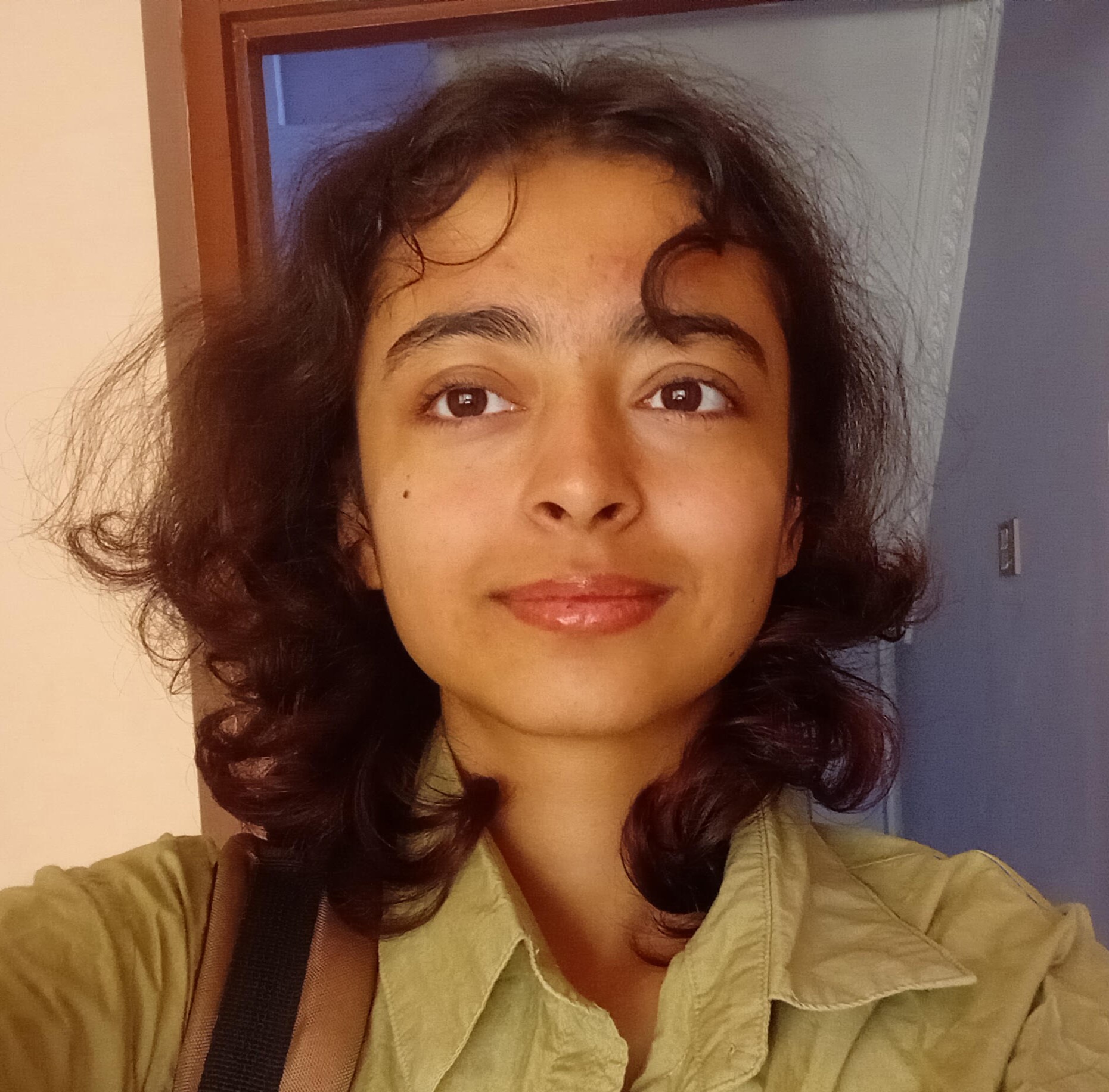
Bivechna Chettri from Darjeeling says she has always been interested in “mixing and matching clothes”.
Fashion intrigued her, inspired her, and became a deeper, more complex emblem of her identity.
Around 2020, thrift culture became big in Darjeeling, she says. A top could be purchased for INR20 if you’re lucky, and INR100 at most. It was an advantage for people like Chettri who wanted to experiment with clothes whilst adapting to a sustainable lifestyle.
To “mix and match” clothes, she purchased a sewing machine, learned patterns online, developed her own style, and launched fashion projects. One of which is Dhaago.
The project isn’t just a remake of thrifted clothes. Neither is it merely a modernist fashion statement. It carries heritage, culture and identity. And Chettri did this by reverting to Dhaka [a hand-woven fabric traditionally associated with Nepal, Sikkim and Darjeeling].
When she noticed young people in Darjeeling moving away from traditional cultural attire and embracing fashion trends from abroad, she felt a sense of responsibility.
Chettri says she has always been interested in ‘mixing and matching clothes’.
“I thought maybe they do not find it cool enough,” she says. “I had to come up with an idea to mix cultural wear in a way that would make it cool for younger generations.”
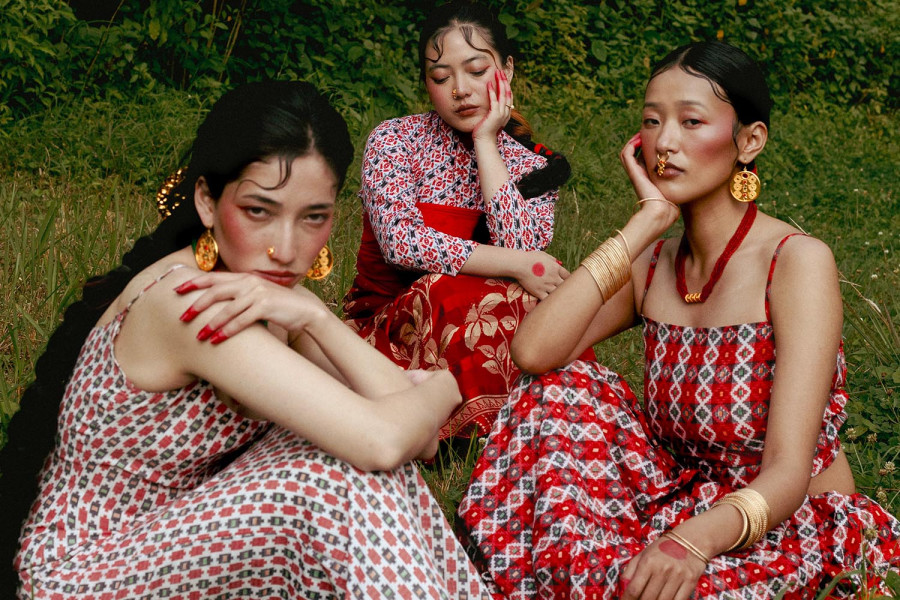
Adhering to her upcycling fashion ethics, she reused her grandmother’s Dhaka fabric, which encompasses most of her designs. Five of these are collectively called ‘Dhaago’.
A bodycon dress, cut from thread and Dhaka, was reimagined as something you could wear to a birthday party rather than only on ceremonial occasions.
A blazer made with Dhaka fabric and a denim jacket brought the fabric into everyday wear. The other pieces stayed closer to tradition. “I didn’t want the Western wear to overpower Dhaka,” Chettri says.
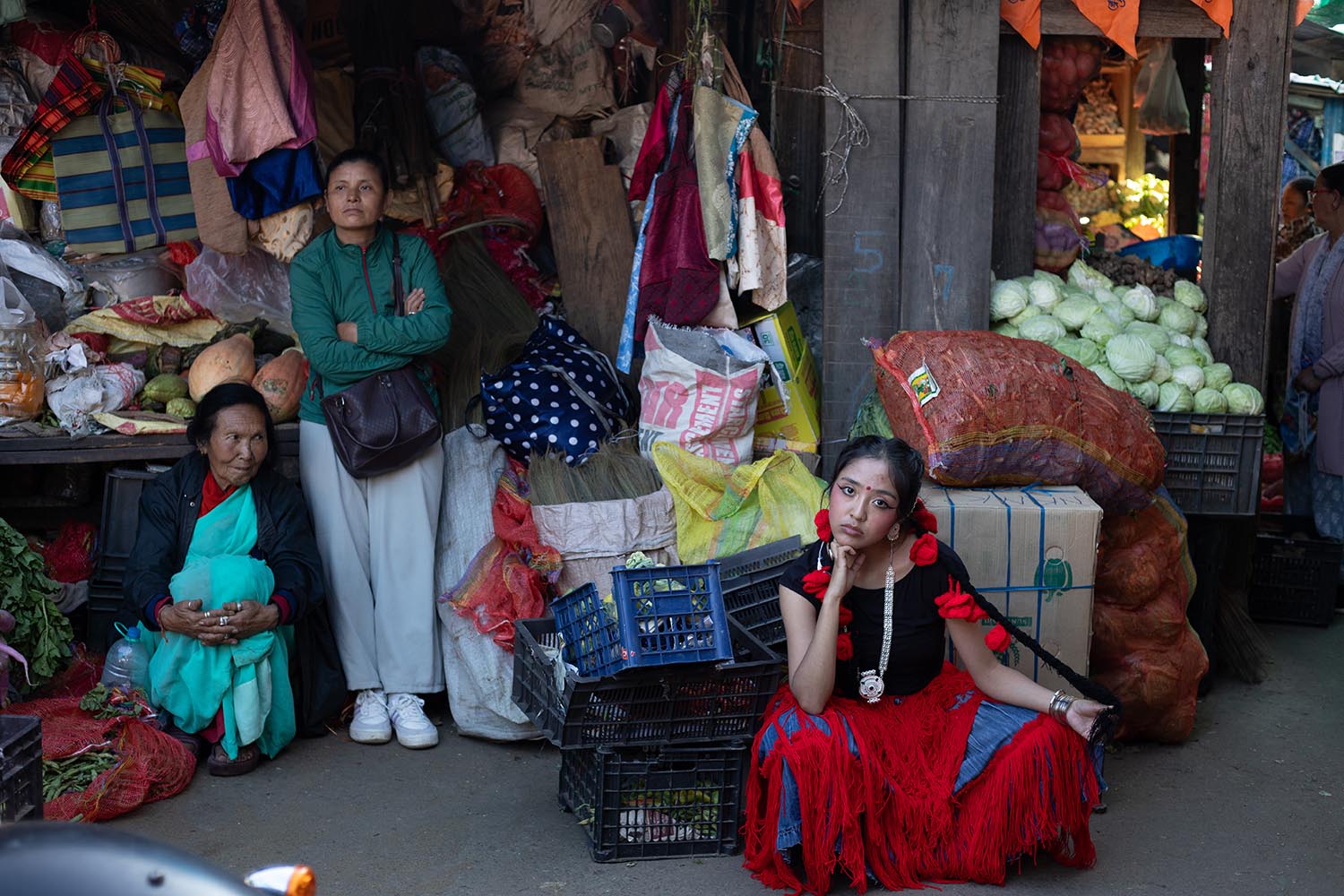
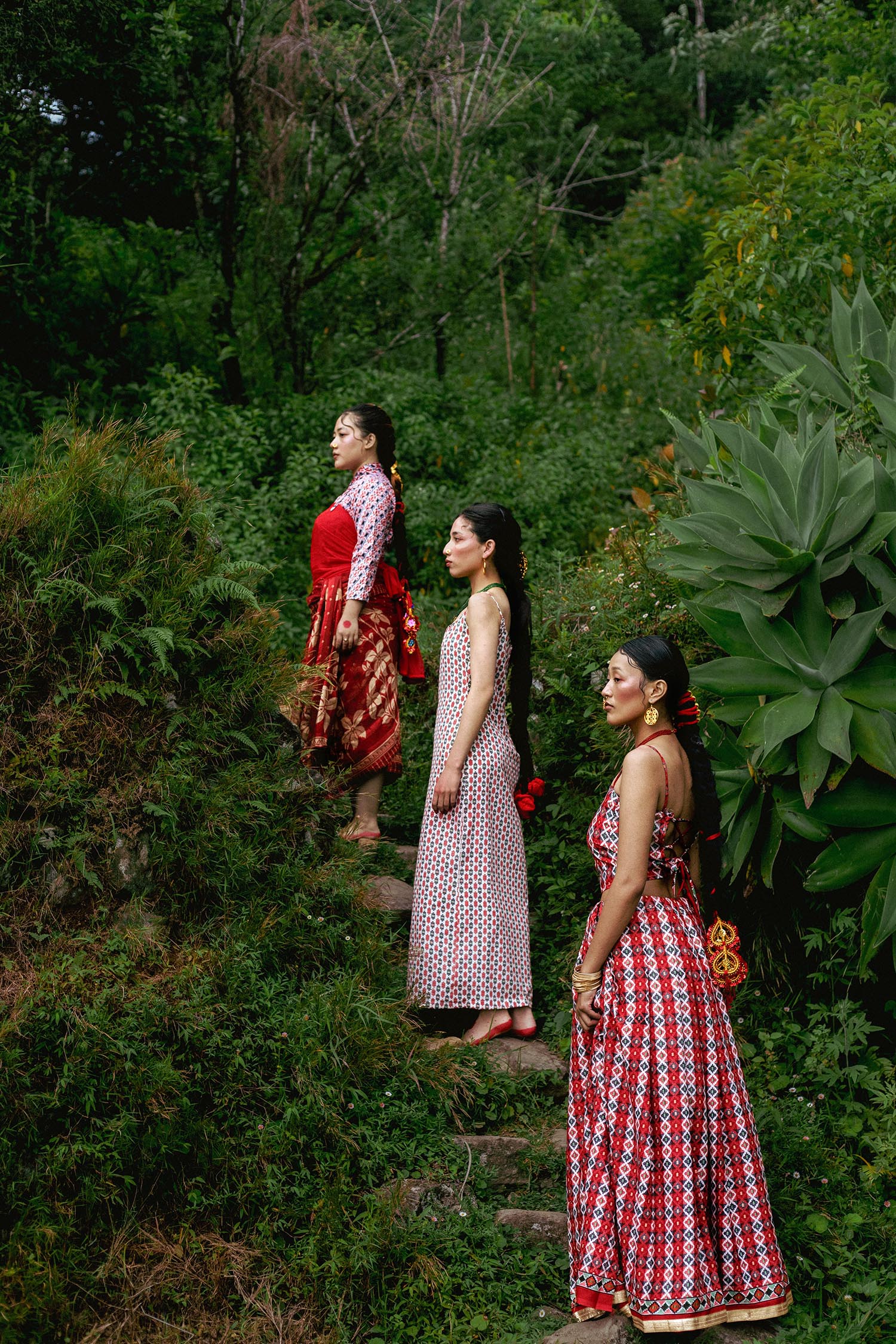
Both were built around what she calls ‘modern Maruni’; a reworking of the traditional Maruni long skirt made by cutting a pair of bell-bottom jeans into a skirt-like drape. She paired it with a top featuring Maruni’s floral motifs, tied at the waist with a patuki.
Going through Dhaago’s social media page is an experience in itself. With eye-catching clothing, what stands out just as much is the way they are presented.
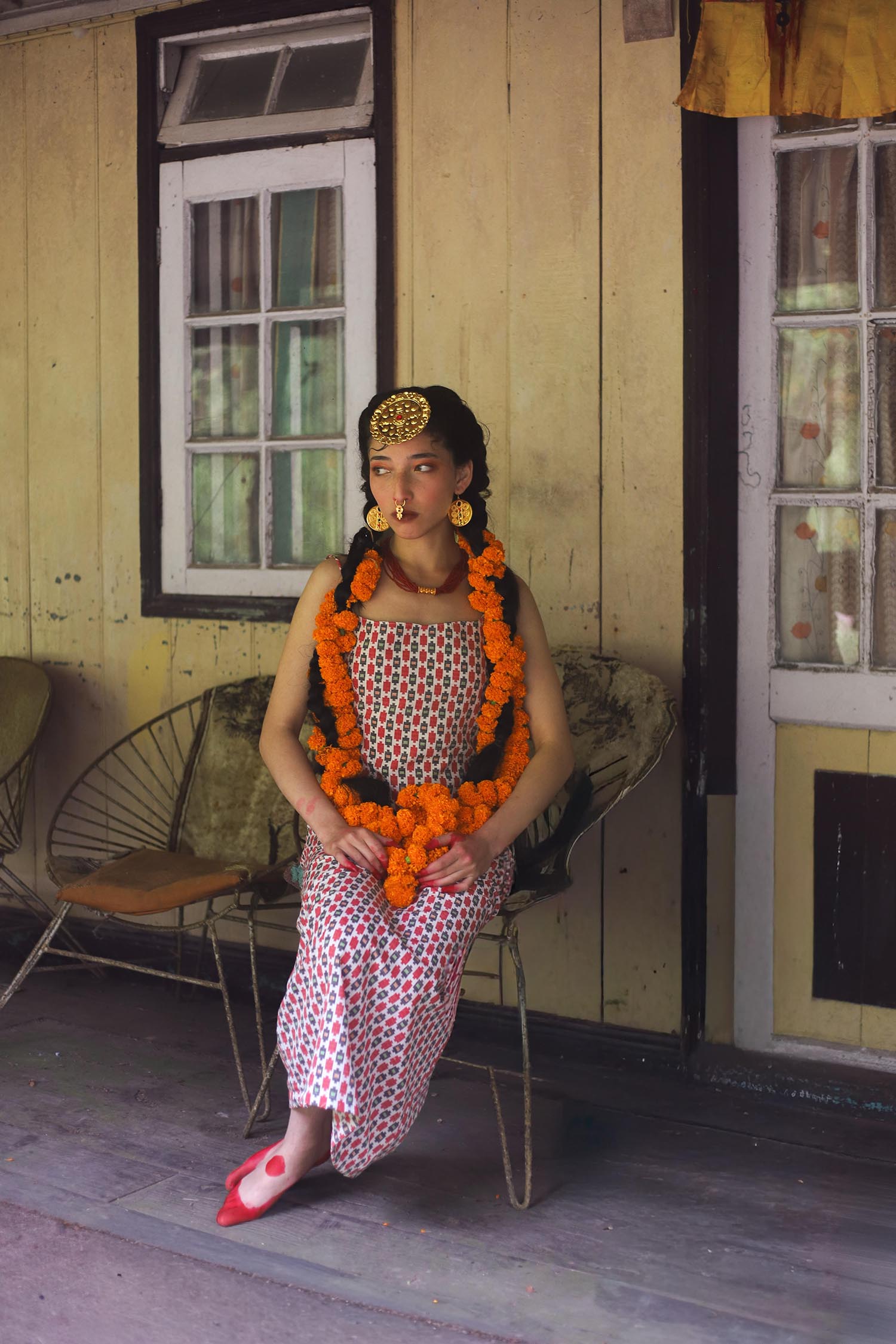
A model (right) wears a design styled with traditional jewellery.
“I think of it more as a creative page for cultural and contemporary art,” she says, “which is mostly dedicated to fashion and promoting our culture.”
Each design is uniquely styled with traditional jewellery: chepty sunn (earrings), fuli (nose pin), sirful (headgear), bulaki (nose ring), tilhari (neck piece), and most importantly and recurringly, laccha dori (hair accessory), amplifying the models’ charismatic stances. And every picture summons the crude essence of Darjeeling with the backdrop of local markets and tea gardens, particularly of ‘Bich Galli’ in Darjeeling which Chettri described as her primary inspiration.
However, beneath this creative initiative lies a much deeper layer of representation and identity. For Chettri, belonging has always been at the crossroads of Nepal and India.
“In representation, we struggle a lot,” she says. “Neither do we entirely belong in Nepali culture, nor in the Indian identity.”
Within this ambiguity, fashion has become her refuge and a medium for understanding her identity.
And eventually, her hometown became her inspiration.
The fabric, Dhaka, itself runs through Darjeeling, Sikkim, and Nepal alike, and she has found that fashion can gesture at unity. “Fashion, I feel, unites us,” she says. “Everyone, from heel to head, is adorned in Darjeeling. That was my inspiration.”
Chettri aims to continue this initiative. From “mixing and matching” to crafting a bridge between tradition and modernity, and between Darjeeling, Sikkim and Nepal, Chettri has demonstrated that our collective culture can indeed be a cool, borderless language of its own.




 15.68°C Kathmandu