Culture & Lifestyle
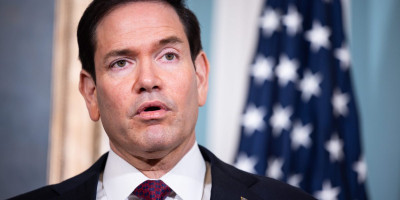
Basu Acharya on the ground in Nuwakot: ‘Right now, people are in survival mode’
The psychologist, who is providing psychological first aid to flood survivors, discusses the shock, grief and uncertainty they are facing—and the risk of deeper trauma in the weeks ahead.Jony Nepal
Rescue and search operations are ongoing following devastating flash floods along the Bhotekoshi and Trishuli river system, but mental health professionals warn that the crisis is only just beginning.
In the days and weeks ahead lies the risk of deeper psychological vulnerabilities taking hold as survivors begin to fully comprehend the scale of what happened. Among them lies the risk of Post-Traumatic Stress Disorder (PTSD).
When an entire village changes like this, people become anchored to old memories, wondering when, or whether, their village will ever return to what it was, and what will happen next. The absence of their culture, their norms and values, everything embedded in that place makes this disaster particularly hard to process. This is when Psychological First Aid (PFA) comes in.
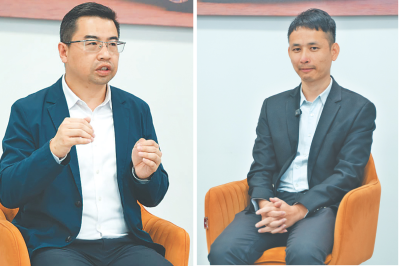
Basu Acharya is a MPhil/Phd scholar in Psychology and teaches at KN College and Trichandra College. He also works with a clinical team at Manovishleshan Kendra.
In this interview with the Post’s Jony Nepal, he discusses how, on August 26, when flash floods hit Nuwakot, he and his team immediately set out to provide PFA to flood survivors.
What is the situation on the ground now? How are people responding emotionally?
The Red Cross and local authorities have set up shelters. Locally, people are cooking and eating together. Rescue operations are also taking place. Essentially, the main thing happening is people trying to locate their missing relatives. Then, there is fear and dread.
People who have lost their homes and families entirely are frozen, in shock, with no capacity right now to think or talk about what comes next.
Right now, those providing relief are themselves in distress; some spent the night crying while supporting others. And those receiving support are suffering as well. There is real discomfort in this: people are constantly trying to figure out who is alive and who isn’t, asking after friends, relatives, extended family in nearby villages. That’s the reality on the ground.
Beyond grief, what is happening is acute stress. Grief will come more gradually. Right now people are in survival mode. There’s also concern about preventing another traumatic event from happening. And there is a kind of collective uncertainty. ‘What’s going to happen now’. Nobody is really talking, they are not able to have this conversation yet.
Do you see children, adults, and elderly survivors coping similarly, or differently?
Children are crying as they have lost their parents and relatives. Anxiety engulfs them along with the uncertainty of what is going to happen next.
One of the professors here said something like, ‘This is our fault,’ feeling personally responsible. People are in a liminal space where they are either talking, processing, or just sitting and reflecting on their own.
One positive aspect is how elderly people are coping. In some conversations I have had, they tend to fall back on the concept of ‘bhagya’ (fate/destiny)—a familiar, culturally comfortable framework that makes it easier for them to accept what happened.
Later, once the activity and relief support recede, people will be more alone, and that is when the real emotional weight, the grief, is likely to set in.

Can you explain what psychological first aid actually is, and in what situations and for whom it’s needed?
Psychological first aid applies in disaster situations including emergencies and traumatic events people have had to face. After a crisis like this—flood, landslide, earthquake or in conditions of intense panic and displacement, there are essentially three core concepts:
First, you need to observe. Then, you need to listen. Then comes connecting/linking. That is the basic first aid, the psychological equivalent of primary treatment.
In this particular situation, the government’s broader security response has already been handled reasonably well. The basic elements of psychological first aid have been generally fulfilled. Now, the emerging problem is the traumatic aftermath and the risk of PTSD [post-traumatic stress disorder].
What role has social media played? Is it spreading more fear, or more awareness?
What social media has mostly done is amplify fear. Posting frightening images set to dramatic music triggers reactions in ways that affect people's emotions.
In terms of misinformationation, it is rather saddening to say that the lack of electricity has actually helped. That has probably been good for people's mental state. Otherwise, they would just be sitting and watching that content as a way to pass time, which I think would only increase the fear.
What do you think, psychologically, should happen next beyond the immediate post-disaster response?
The first step is to wait another day or two, because these emotional reactions are normal. Even the hardest ones are normal human reactions right now.
The second step is to stop the spread of rumors. That needs to happen immediately. These are unsettling for people adjacent to the situation. Imagine how much harder it is for those closer to it.
The government has played a reasonably good role so far. That role needs to continue.
Mental well-being screening plays a crucial role here. Screening means identifying who is struggling the most and needs support.
Without that identification, people are left doing their own internal ‘self-talk ’, which is not healthy on its own.
The most important thing is to avoid the outdated approach of waiting for psychological problems to arise before addressing them. We need to start intervention work now, not wait for that point.


23.12°C Kathmandu


.jpg&w=200&height=120)