Public medical colleges add seats as entrance exams begin on Saturday
The Medical Education Commission has added 418 seats for the upcoming academic year, including 50 MBBS places in Geta. Medical reforms campaigner Dr Govinda KC has challenged the decision over concerns about infrastructure and staffing.
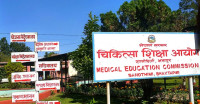
Nepal’s Medical Education Commission has increased the number of seats in public medical colleges for the coming academic year, with entrance examinations for medical and other health science programmes scheduled to begin on Saturday.
A total of 9,691 seats have been allocated across the programmes, and 77,359 students have applied to sit the integrated entrance examinations.
According to Sasmit Pokharel, minister for education and sports and co-chair of the commission, 418 seats have been added compared with last year. The increase is confined to government institutions, while seat allocations at private medical colleges remain unchanged.
“The aim is not to discourage the private sector, but to give meritorious students the opportunity to study at government institutions at lower fees,” Pokharel wrote on Facebook.
At government medical colleges, 75 percent of seats are reserved for students receiving scholarships. At private medical colleges, only 10 to 20 percent of students generally receive scholarships. Tuition fees for an MBBS degree are set at between Rs4 million and Rs4.4 million.
Pokharel said 110 additional seats had been allocated for MBBS programmes at government institutions alone.
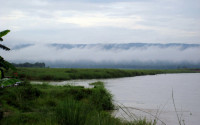
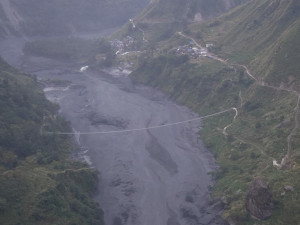
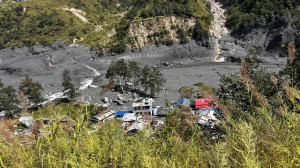
The Shaheed Dasharath Chand University of Health Sciences in Geta, Sudurpashchim province, has received approval to offer 50 MBBS seats for the first time. The commission has also added 30 seats each at the BP Koirala Institute of Health Sciences in Dharan and the Nepalese Army Institute of Health Sciences.
The government says the increase will expand access to medical education at public institutions. But the decision to increase seats and launch new programmes has drawn criticism from medical education reform campaigner Professor Dr Govinda KC, who has demanded that approval for the MBBS programme in Geta be revoked, alleging that the institution lacks the necessary infrastructure and staff.
In a statement, KC also called for the cancellation of the decision to increase seats at the Nepalese Army Institute of Health Sciences. Allowing institutions to run academic programmes without meeting the required infrastructure, staffing and legal standards would compromise the quality of medical education, he said. This could affect the production of qualified doctors and nurses and put public health and lives at risk, he warned. He threatened to launch a protest if his demands were not met.
KC accused the government of rushing to launch MBBS and nursing programmes at Geta before bringing its teaching hospital into full operation. He said the publicly funded hospital should first be run at full capacity rather than allowing institutions that have yet to meet the required standards to start academic programmes.
Under the Medical Education Act, a hospital with at least 300 beds must operate in Geta to support medical education, KC said. He alleged that the authorities were seeking to start programmes by counting beds at nearby government hospitals to meet the 300-bed requirement.
The government had moved ahead with infrastructure development and other preparations for medical education in Geta in response to KC’s demands. The process of establishing the institution also advanced after Parliament passed legislation for a medical university. The commission, however, said seat allocations were based on inspection reports prepared by expert teams.
Hari Prasad Niraula, a joint secretary at the commission, said seats had been allocated to 84 of the 90 institutions that submitted self-assessment forms seeking approval for the coming academic year.
The commission has added 120 seats for BSc Nursing and 98 for Bachelor of Medical Science (BMS) programmes. The remaining additional seats are in other disciplines.
A meeting chaired by Prime Minister Balendra Shah, who also heads the commission, before the Dashain festival decided to increase seats only at government medical colleges. Last year, 9,273 seats were allocated across 16 medical education programmes, including MBBS, BDS and nursing, but only 8,548 students enrolled.
According to the commission’s examination schedule, entrance tests will run until November 4. The MBBS examination is set for October 31, followed by BDS on November 1. The BSc Nursing examination will take place on November 2, while examinations for programmes including Bachelor of Medical Microbiology (BMMs), Bachelor of Nursing Science (BNS), and Bachelor of Pharmacy are scheduled for November 3. The Bachelor of Public Health examination will be held on November 4.
All examinations are scheduled to run from 11 am to 2 pm at designated centres.
The entrance examinations are taking place about a month later than stipulated in the academic calendar. They were originally scheduled for the first week of October. The delay is likely to affect the timing of admissions and the start of classes.
The appointment of commission officials was delayed after the government removed the vice-chair and other office-bearers through an ordinance in April. The absence of officials also delayed the call for entrance examination applications.
Although this year’s Grade 12 results were published earlier than in previous years, university admissions and medical education entrance procedures have still failed to proceed on schedule. According to the Ministry of Education, the results, which previously took about three months to publish, were released in around 40 days this year.
The government said the earlier publication was intended to allow university admissions to begin sooner and bring greater consistency to academic calendars.




 16.94°C Kathmandu