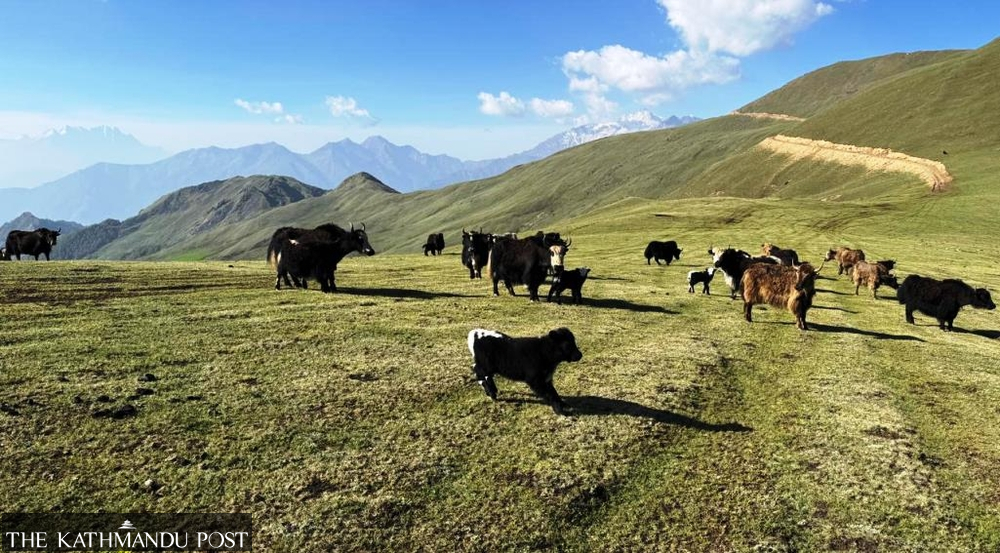
A new plant in Jagadulla could alone produce up to 30 tonnes a year, while farmers hope a guaranteed market will revive commercial yak and chauri farming across the district. Local farmers say the milk produced by animals grazing around yarsagumba-growing areas has distinctive qualities that could give Dolpa cheese a unique taste and identity. Post Photo
Yak herders in Dolpa are hoping for a new market for their milk after the Dairy Development Corporation (DDC) showed interest in buying cheese produced in the district’s high mountains.
Yak and chauri (a cross between yaks and domestic cattle) have been raised in Dolpa’s high-altitude areas for generations. But the lack of a reliable market has kept commercial cheese production from taking off.
That could now change in ward 4 of Jagadulla Rural Municipality, where the DDC and the local government have signed an agreement to set up a cheese plant at the commercial chauri farm in Bhalulek.
Under the agreement, the DDC will provide cheese-making training, technical assistance and equipment, and guarantee a market for the cheese produced there.
DDC General Manager Sharan Kumar Pandey and Jagadulla Rural Municipality Chairman Nara Singh Rokaya travelled to Bhalulek last Saturday to sign the agreement.
Pandey said DDC had already arranged to send technical staff and equipment within a week and planned to begin cheese production within 15 days. It aims to get the first products to market within three months of starting production.
Jagadulla alone could potentially produce about 30 tonnes of yak cheese a year, he said. The planned plant is located at an altitude of more than 4,000 metres and will use yak milk to make cheese.
The rural municipality began building the plant and other required infrastructure in 2022, and had also arranged equipment. But the facility never opened because it lacked technical and marketing support.
“The municipality had already built the building and installed the equipment four years ago,” Pandey said. “The rural municipality had sought help from many places but had not received it. I learned about the situation later, contacted the rural municipality chair and that led to the agreement.”
The DDC plans to expand the programme beyond Jagadulla to other areas of Dolpa with potential for commercial cheese production.
Pandey said the corporation would work with local units to provide the necessary support to farmers anywhere in Dolpa who want to produce cheese commercially.
“If farmers anywhere in Dolpa want to produce cheese, we will coordinate with local units and help set up everything they need,” he said. “We will also guarantee a market for the cheese.”
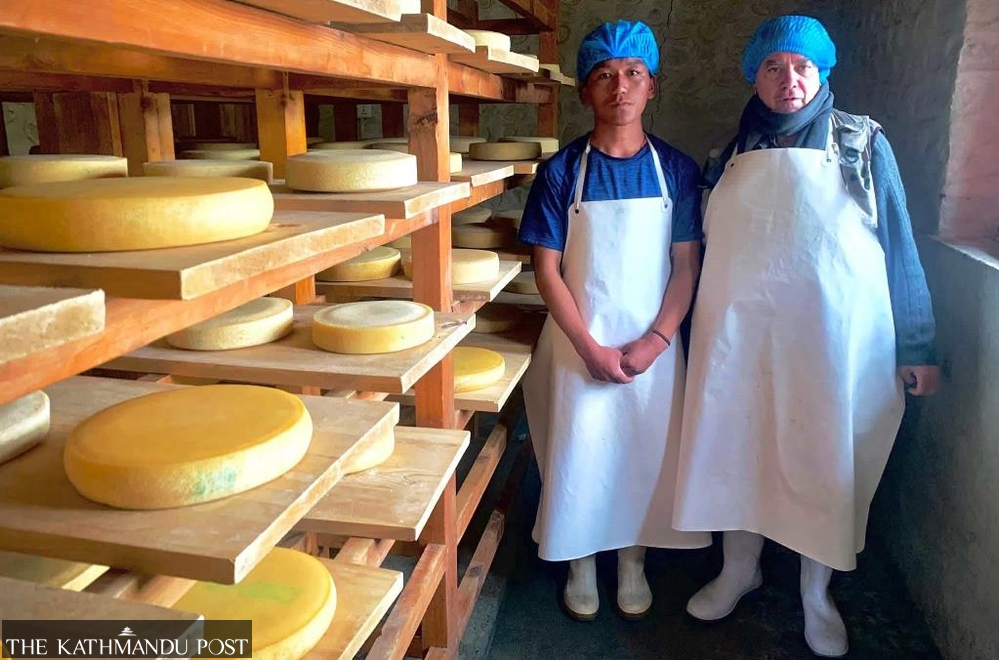
Under the agreement, the DDC will provide cheese-making training, technical assistance and equipment, and guarantee a market for the cheese produced in Dolpa. Post Photo
The DDC plans to visit other potential production areas in the near future and provide farmers with technical assistance, equipment and marketing support to expand cheese production across the district.
Commercial yak-chauri farming has been underway in Jagadulla for about eight years. The Bhalulek farm was established with support from the provincial and local governments. About 30 households are involved in the farm, which has between 500 and 600 chauri, according to residents.
The farm currently produces milk and yoghurt, but has not been able to produce cheese commercially.
Jagadulla has extensive grazing areas in Maure, Jagadulla Patan and Bhalulek. Yak and chauri farming is one of the main livestock activities in the area, alongside sheep farming.
Rokaya said the agreement with the DDC would encourage farmers to expand chauri farming.
“We will produce cheese under the agreement with the DDC,” he said. “We also plan to bring milk from yak and chauri raised in areas along the border with Jumla and use it for cheese production.”
While Jagadulla prepares to launch its new cheese plant, cheese has already been produced for 12 years in Bhijer, a settlement in ward 5 of Shey Phoksundo Rural Municipality at an altitude of about 4,200 metres.
Dhawa Sumduk Gurung, chair of Shey Phoksundo Rural Municipality, said the cheese produced in Bhijer was the first commercial yak cheese in Karnali province.
“We have been producing cheese continuously for 12 years,” Gurung said.
Production began in Bhijer in 2014. The facility now produces about 700 to 800 kilograms of cheese a year, Gurung said. But production has remained limited because there is no reliable market.
“Some of the cheese is sold locally, but we have to take the rest to hotels and markets in Kathmandu,” he said. “Poor roads and difficult terrain make transporting the cheese to market both expensive and dangerous.”
The facility could potentially produce cheese year-round, but the lack of road access means production is limited to a few months, starting around April.
A technical team from Switzerland initially helped build a modern cheese-making facility and supplied the necessary equipment. The local government also provided support.
About 150 chauri are currently being raised commercially in Bhijer.
Other wards of Shey Phoksundo also have extensive pastureland, and chauri are raised by many households. But without a guaranteed market, farmers cannot afford to process all their milk into cheese, Gurung said.
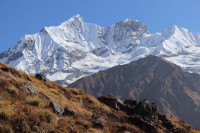
Farmers say the quality of Dolpa’s milk and cheese could be a major selling point because yak and chauri graze on pristine, high-altitude pastures where medicinal herbs and yarsagumba (prized caterpillar fungus) grow.
Local farmers say the milk produced by animals grazing around yarsagumba-growing areas has distinctive qualities that could give Dolpa cheese a unique taste and identity.
“Our chauri graze on pastures where yarsagumba and other high-altitude plants grow,” Nara Prasad Rokaya, a farmer from Jagadulla, said. “The milk is of high quality. Cheese made from that milk also has its own distinctive characteristics.”
Livestock experts also say Dolpa’s geography is well suited to yak and chauri farming. The district’s high-altitude areas have extensive grazing land, alpine meadows and natural grasslands that could support commercial production.
Farmers say the quality of Dolpa’s milk and cheese could be a major selling point because yak and chauri graze on pristine, high-altitude pastures where medicinal herbs and yarsagumba grow. Post Photo
Farmers in Dolpo Buddha, Shey Phoksundo, Chharka Tangsong, Kaike and Jagadulla are estimated to keep about 5,000 chauri. Residents say production could increase significantly if farmers were assured of buyers for their cheese.
Dolpo Buddha, Shey Phoksundo and Chharka Tangsong in upper Dolpa are considered particularly suitable for cheese production. But poor road access and limited markets have prevented the industry from expanding, local representatives said.
Gurung said the three local units in upper Dolpa could produce dozens of tonnes of cheese a year if the government provided subsidies and guaranteed a market.
Better road connections to Upper Dolpa would also be essential, he said.
The situation at Balangra Chauri Farm in ward 11 of Tripurasundari Municipality is a stark contrast.
The government established the farm in 1979. At its peak, it had about 150 yaks and chauri. But it was shut down after 1992, and its livestock and other assets were auctioned off.
The Karnali provincial government later proposed reviving the farm around 2020-21 and built fencing, sheds and office buildings. But the farm never resumed operations.
The structures are now deteriorating.
Dr Keshab Bhatta, a senior livestock development officer at the Department of Livestock Services who visited Dolpa two months ago, said the farm had the infrastructure and grazing land needed to resume operations.
He said efforts would be made to revive it in coordination with the relevant authorities.
Rokaya, the Jagadulla chairman, said the agreement with the DDC could provide Dolpa’s chauri farmers a foothold in the commercial cheese industry.
He said Bhijer’s 12 years of experience, combined with Jagadulla’s new plant could help establish a distinct identity for Dolpa cheese as production expands.
The DDC’s plan to expand the programme to other potential production areas and support farmers from cheese-making to sales could help turn scattered small-scale production into a more viable industry, he said.




 16.46°C Kathmandu