Gopal Man Shrestha, key signatory to historic 12-point peace accord, dies at 83
The veteran Nepali Congress leader, who steered the party during Sher Bahadur Deuba’s imprisonment and played a crucial role in bringing the Maoists into mainstream politics, dies after battling cancer.
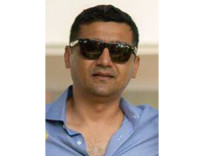
Gopal Man Shrestha, a senior Nepali Congress leader and one of the key architects of Nepal’s democratic transition, died on Tuesday morning while undergoing treatment for cancer at Helios Hospital in Jawalakhel, Lalitpur. He was 83.
His political career spanned more than six decades, from student activism against the partyless Panchayat system to the restoration of multiparty democracy, the reunification of the Nepali Congress, and the establishment of the federal democratic republic.
Shrestha assumed the leadership of the Nepali Congress after its president, Sher Bahadur Deuba, was arrested on April 27, 2005 by the Royal Commission for Corruption Control, a body formed after King Gyanendra Shah seized direct power on February 1, 2005. Deuba was detained over corruption allegations linked to the Melamchi Water Supply Project.
During Deuba’s 10-month imprisonment, Shrestha kept the party united and led its campaign against the royal takeover. On November 22, 2005, he signed the historic 12-point accord with leaders of the Seven Party Alliance and Maoist chair Pushpa Kamal Dahal. The agreement marked a turning point in Nepal’s political history, paving the way for the 2006 People’s Movement, the end of the decade-long Maoist insurgency and the abolition of the 240-year-old monarchy.
Shrestha’s political career was also shaped by shifting alliances within the Nepali Congress. When internal differences with then party president Girija Prasad Koirala led to a split in June 2002, he sided with Deuba and became vice president of the breakaway Nepali Congress (Democratic). After the party reunified in September 2007, his stewardship during Deuba’s imprisonment was widely credited with preventing the splinter party from falling apart.
In his later years, however, Shrestha distanced himself from his longtime ally. Dissatisfied after Deuba resumed active control of the party shortly after delegating responsibilities to vice president Purna Bahadur Khadka, Shrestha aligned himself with the reformist camp led by Gagan Thapa and Bishwa Prakash Sharma during the party’s special general convention.
Following the convention, party president Gagan Thapa announced Shrestha as the party’s senior leader at a programme marking BP Koirala Memorial Day on July 23, subject to formal endorsement by the Central Working Committee.
Prem KC, a secretary at the party’s central office who had worked with Shrestha since 1991, visited him in hospital to share the news of his nomination.
“He was overjoyed when I told him,” KC recalled. “He told me he would recover soon and return to address public rallies. In his final days, whenever party leaders visited him, he would ask them to take him to the central office in Sanepa before taking him to Pashupati for his final rites.”
Shrestha entered politics through the student movement in 1960 and went on to participate in every major democratic movement in the country, including the 1979 referendum campaign, the 1985 Satyagraha, the 1990 People’s Movement and the 2005-06 pro-democracy uprising.
He was first elected to the House of Representatives from Syangja in 1991. Although he lost the 1994 election, he regained the seat in 1999 and later served in the reinstated House in 2006, the interim legislature and the second Constituent Assembly elected in 2013. He lost the 2017 parliamentary election and was included on the party’s proportional representation list in 2022, but did not secure a seat.
Over the course of his political career, Shrestha held several ministerial portfolios, including deputy prime minister and minister for education.
Expressing grief over his death, Nepali Congress president Gagan Thapa said Shrestha’s unwavering commitment to democracy and party organisation would continue to inspire future generations.
“The passing of a leader as dedicated, principled, experienced and fearless as Gopal Man Shrestha is an irreparable loss to the Nepali Congress and the nation,” Thapa said in a statement. “We will continue to follow the path of integrity and dedication that he showed us.”
Nepali Congress parliamentary party leader Bhishma Raj Angdembe also paid tribute, recalling Shrestha’s lifelong struggle for democracy and his significant contribution to the peace process and the institutionalisation of the republic.
Shrestha is survived by two wives, three sons and seven daughters.
The Nepali Congress said his body would be kept at the party’s central office in Sanepa from 9 am to 11 am on Wednesday to allow party leaders, supporters and members of the public to pay their final respects before the funeral.




 12.67°C Kathmandu