



 20.51°C Kathmandu
Mon, Oct 12, 2026
Columns
What the Bhotekoshi flood revealed about Nepal’s health system
The emergency phase of the flood has largely been contained, but the most demanding work still lies ahead.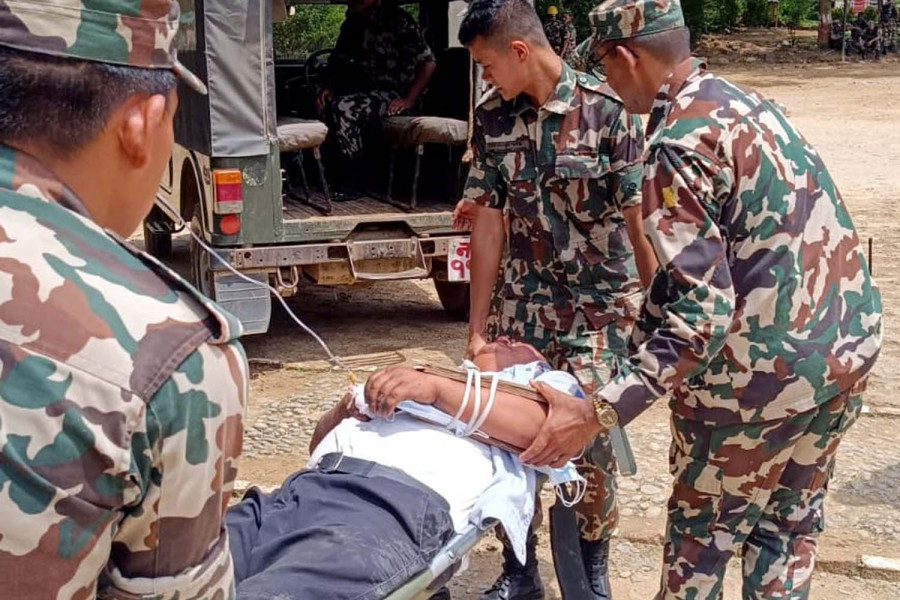
bookmark
Dr Arun Kumar Neopane
Published at : September 22, 2026
Updated at : September 22, 2026 07:16
Disasters are often measured in lives lost, property damaged and infrastructure destroyed. However, something deeper must accompany the assessment: the strength and resilience of the institutions responsible for response. How effectively can these systems keep functioning when normal conditions collapse? Nepal’s recent Bhotekoshi flood became a real-time examination of the disaster health preparedness, leadership, coordination and resilience of the state and, by association, its institutions.
The response of our health system in particular was encouraging. It responded far more effectively than it might have a decade ago. The Health Emergency Operations Centre (HEOC) was activated, hospitals continued accepting referrals, disease surveillance was expanded, Emergency Medical Teams (EMTs) were mobilised, and mental health services were able to reach the affected communities. Regular situation reports helped maintain operational awareness and supported decision-making during a rapidly evolving emergency.
This progress reflects a key aspect of institutional learning since the 2015 earthquakes and subsequent emergencies. Investments in preparedness, emergency coordination and health-sector capacity were visible throughout the post-earthquake policy response. But preparedness should not be confused with resilience. The flood ultimately revealed that the Nepali health system does not lack institutions or expertise, but the challenge lay in effectively integrating many capable actors into a unified operational system.
The response brought together the Ministry of Health and Food Safety, HEOC, provincial and district health authorities, hospitals, the Nepali Army Medical Corps, Armed Police Force (APF) and Nepal Police Medical Services, EMTs, United Nations agencies and humanitarian organisations. Each contributed valuable resources and expertise. Did these actors operate as one coordinated system or as multiple systems responding simultaneously?
Coordination and command are not the same thing. Coordination enables organisations to communicate and share information. Command ensures that resources are directed where they are most needed. The flood highlighted a challenge familiar to emergency-management systems worldwide: many organisations may perform well individually, yet overall effectiveness can still suffer if operational leadership is fragmented. Future disasters are likely to become more complex, making it increasingly important to strengthen operational command while preserving collaborative coordination.
Emergency Medical Teams provide a useful example. Over the past decade, Nepal has invested significantly in EMT development. Provincial governments, hospitals, security agencies and humanitarian organisations have all developed deployable medical capabilities. During the response to the flood, these teams proved invaluable. However, as the number of deployable teams grows, governance becomes increasingly important. Future emergencies will require a mechanism capable of registering, verifying, deploying and monitoring EMTs under a common framework. A National EMT Coordination Cell could provide that function.
The flood also highlighted the oft-overlooked challenge of mass fatality management. Many victims were swept long distances downstream, while others were recovered only after prolonged exposure to water, making visual identification difficult or impossible. The recovery of decomposed, bloated and, in some cases, fragmented human remains required a coordinated effort involving security agencies, forensic experts, health authorities and local administrations. The systematic collection of biological samples, documentation of remains, DNA profiling and scientific identification of victims represented a significant advancement in Nepal’s disaster-response capability and demonstrated the growing role of forensic medicine in humanitarian emergencies.
The tragedy also exposed important infrastructural limitations. Existing mortuary facilities and refrigerated storage capacity were insufficient to accommodate the unusually large number of recovered bodies over an extended period. In many locations, the absence of adequate mortuaries and body chiller facilities created operational and public health challenges, necessitating timely burial of unidentified bodies after appropriate forensic documentation and sample collection had been completed.
As climate-related disasters increase in frequency and severity, Nepal should further strengthen its mass fatality management capacity through specialised training, expanded mortuary and body-storage infrastructure, enhanced forensic preparedness, DNA identification systems and standardised protocols that can be rapidly activated during major emergencies
Disaster response is fundamentally a logistics exercise. Throughout the response, supplies were mobilised through government agencies, health facilities, security forces and humanitarian partners. While commodities generally reached affected populations, logistics remains one of the least visible yet most critical components of emergency management. Greater attention to inventory visibility, stock management, warehousing and supply-chain intelligence could significantly strengthen future responses.
Another lesson from the flood was the critical importance of health information management and operational situational awareness. During rapidly evolving emergencies, decision-makers require accurate, timely and interoperable information to assess health needs, track disease risks, monitor the availability of medical resources and prioritise interventions. Although regular situation reports were produced, future responses would benefit from stronger integration of data streams from hospitals, EMTs, laboratories, local authorities and humanitarian partners into a unified information platform. Strengthening digital health emergency information systems, standardising reporting formats and improving real-time data sharing across all levels of government would significantly enhance decision-making, resource allocation and overall response effectiveness during major disasters.
The role of security agencies deserves special recognition. The Nepali Army Medical Corps and APF Medical Services contributed far beyond traditional rescue functions. Immediate deployment of Emergency Medical Response Teams (EMRTs), Medical evacuation, mobile treatment services, field-level health support and surge response capacity all became essential elements of the health response. Future planning should focus on stronger civilian-military integration, common reporting standards and shared operational frameworks.
While the emergency phase has largely been contained, the most demanding work still lies ahead. The recovery phase should restore health, wellbeing and resilience of the affected populace. In the months ahead, priorities should include rebuilding damaged health facilities, restoring essential services, strengthening disease surveillance, supporting mental health recovery and ensuring continuity of care for vulnerable populations. Recovery should also be viewed as an opportunity to address pre-existing system weaknesses rather than simply restoring conditions to their pre-disaster state.
Recovery planning must extend beyond reconstruction. Long-term challenges such as displacement, disrupted livelihoods, psychosocial distress, chronic disease management and the needs of women, children, older persons and marginalised communities will require continued attention. Investments in preparedness, community resilience and risk reduction should therefore become central elements of the rehabilitation agenda. Moving forward, Nepal must create a stronger, more coordinated, more resilient and more disaster-ready health system for generations to come.
Neopane, a retired major general of the Nepali Army, is a senior paediatrician and former Director General Medical Services (DGMS) of the Army.
Dr Arun Kumar Neopane
Neopane, a retired major general of the Nepali Army, is a senior paediatrician and former Director General Medical Services (DGMS) of the Army.

Most Read from Columns

Before you take credit for Khula Manch, read its history

Shah went to the UN to speak for Nepal, then left before he could make the most of it
Why Nepal’s latest disaster needs a local name—not just a scientific label

Lesson learned after the death of Ronaldo
What Lubra can teach Nepal about climate-induced migration and resettlement
Editor's Picks

Constitutional Bench caught in seniority, ‘pick and choose’ dispute

A Dom boy’s long road to becoming a doctor

From blankets to handmade dolls, two foreign women bring comfort to flood survivors

News Analysis: When institutional defence exposes institutional fault lines

It’s a bird … it’s a plane … it’s the Indian ambassador’s farewell tweets
E-PAPER | October 12, 2026

×