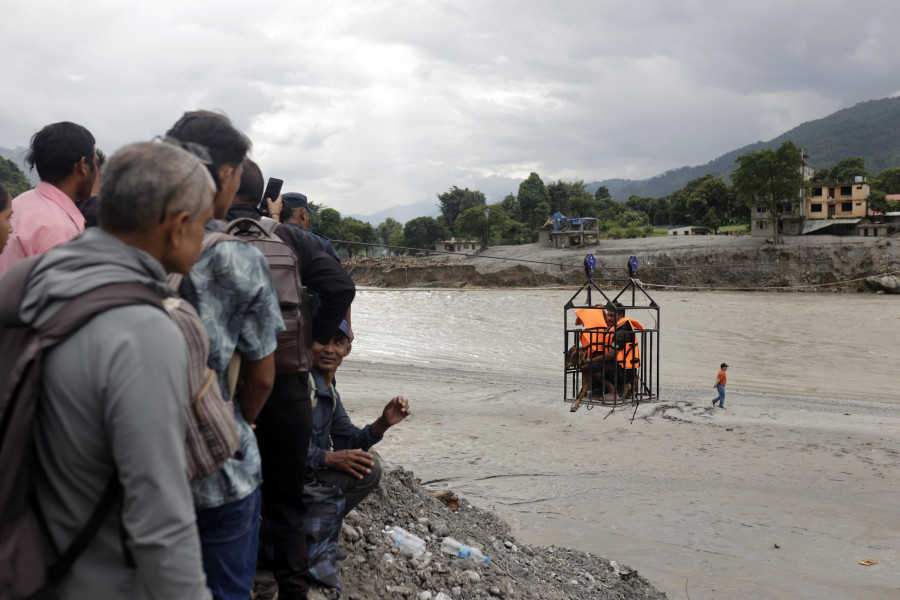
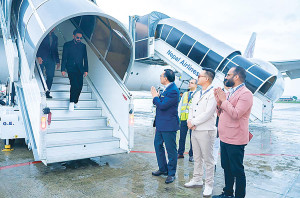
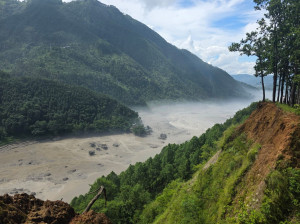
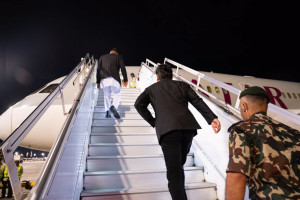
Following the devastating floods last month that tore through settlements across several districts, the wave of support from global leaders and citizens has been extraordinary. It reflects the standing Nepal has built over decades: in UN peacekeeping, in intergovernmental forums, and most recently through a political renewal the rest of the world watched with real interest. The sympathy and support for Nepal arrived quickly because Nepal had credibility to draw on.
As Nepal confronts the challenges of rescue, resilient recovery and reconstruction, it possesses a unique blend of moral authority and political visibility. Could Nepal turn this moment into a global movement—rallying the world behind solutions that match the brutal scale of climate catastrophes?
Nepal’s experience places it at the forefront of a larger global reality. As underscored by UNEP’s September 2026 Limiting Overshoot report, exceeding the 1.5 degrees Celsius threshold is now an unavoidable reality. Yet this is not an abstract threshold for countries hit by extreme climate catastrophes. Heatwaves, floods, wildfires, droughts and glacial outbursts are striking with unprecedented intensity.
A challenge facing Nepal and the developing world is the fragmentation across humanitarian, development and climate action systems, although they address the same risks. Headline catastrophes attract brief spikes of attention. Disaster preparedness is often underfunded, despite the proven value in minimising losses and emergency response costs. Frontline communities are left exposed before disasters, overwhelmed during them, and underserved afterward. The frequency and devastation from climate catastrophes call for breaking these silos—before, during, and after crises.
This structural flaw is compounded by the limits of the climate justice architecture. While the moral argument for climate justice centres on compensation for loss and damage, the legal framework under the UNFCCC climate convention carefully avoids state liability. Mechanisms like the Fund for Responding to Loss and Damage (FRLD) represent vital political progress, but operational gridlock and limited funding restrict actual relief.
Nepal has long championed mountain ecosystems and the cryosphere in global forums. Yet advocacy and evidence do not produce systemic change. History shows that the most significant international breakthroughs occur when vulnerable nations move from describing problems to proposing concrete solutions and building political coalitions around them. Prime Minister Mottley of Barbados led the Bridgetown Initiative, transforming climate vulnerability and debt distress into “debt pause clauses” in World Bank lending and other multilateral development bank reforms. Similarly, the Pacific Island nations designed their own mechanism called the Pacific Resilience Facility,targeting$500 million for community-level resilience.
Could Nepal propose something the world can unite around?
The systems designed around conventional climate finance cannot deliver the speed and timeliness required by climate catastrophes that undermine both mitigation and adaptation efforts.
As climate catastrophes become the norm, Nepal should propose a rapid-response feature into existing financing mechanisms, one that aligns with the full cycle of crisis preparedness, response, and recovery. Where these funds are fragmented and overlapping, a rapid response track would help reinforce coherence and synergy across these mechanisms, reducing duplication and delay.
Alongside it, as with the priority country groups in the climate funds, Nepal should advocate for a dedicated category for mountain and high-altitude countries, given the extreme vulnerability of these ecosystems and the cascading effects of cryosphere change on other ecosystems—downstream rivers, forests, agriculture, wetlands and coastal systems. To put it simply, climate catastrophes are now undermining essential investments in energy, food and agriculture, water and sanitation systems among other priority areas on climate action.
A layered disaster financing approach offers useful lessons. When Hurricane Melissa struck Jamaica in 2025, it activated a pre-arranged risk layering system—combining contingent credit, parametric insurance and catastrophe bonds—which unlocked $241 million within days: $91.9 million from the Caribbean Catastrophe Risk Insurance Facility, and a full $150 million payout on a World Bank-issued catastrophe bond.
The lesson is clear: financing needs to be ready before disaster strikes, released quickly when it does, and complemented by larger pools of finance for recovery and reconstruction.
Nationally, the response from Nepalis has shown extraordinary resolve, with citizens, the diaspora and government mobilising rapidly for the Prime Minister’s Disaster Fund. Nepal must reinforce its initial response with a compelling pitch for resilient recovery and reconstruction, anchored in an approach that ‘builds for the future’—not simply rebuilding the past, as it also strengthens internal systems to channel financing efficiently and effectively. While raising the money is challenging, the timely absorption, expenditure and reporting are just as difficult. Nepal’s case internationally will rest substantially on that record.
Nepal will have to cast a wide net to mobilise multilateral and bilateral finance, climate funds, private capital and innovative instruments, including those to buffer risks. It should bring the world's best expertise to climate-resilient infrastructure, early-warning systems, river-basin management and community resilience. And it should use reconstruction to demonstrate what multi-hazard resilience can look like in practice as a model for others. This will not be the last catastrophe of its kind.
Turning national tragedy into global reform requires a multi-track diplomacy. The coming months present a sequence of opportunities across the UN General Assembly in New York, COP31 in Antalya, Türkiye, and beyond.
While the UNGA provides high-level visibility, the real diplomatic work happens outside the main hall through leaders’ dialogues, bilaterals, and media outreach—much as Pakistan demonstrated post-2022 floods to catalyse momentum on ‘loss and damage’. The UN Climate Summit is an important opportunity to address peers and lay the ground before COP31. Upcoming formal COP31 negotiations are important, but progress moves slowly in this political economy. Nepal must also look beyond to secure support from geopolitical anchors to champion our initiatives. Overall, building support across multiple constituencies and sustaining it long after the news headlines have moved is a challenge.
This is where Nepal’s political renewal matters. A country that has demonstrated its capacity to challenge an entrenched political system can bring that same spirit to the international system.
Across the globe, climate catastrophes are outpacing every model, hitting communities hardest. What they share is not geography but a system that foresees the risks but cannot move fast enough to meet them. The surge that came down the Trishuli took minutes. The rebuilding will take years.
The global outpouring of support to Nepal’s crisis—from everyday citizens and community kitchens to premier sports leagues—shows that global goodwill is alive. In a deeply divided world, this shared humanity is our greatest asset. Closing the gap between the speed of catastrophe and the pace of recovery is the fundamental bridge that Nepal, backed by global solidarity, can help build.




 15.26°C Kathmandu