How an IT engineer used AI to aid Nepal’s flood response
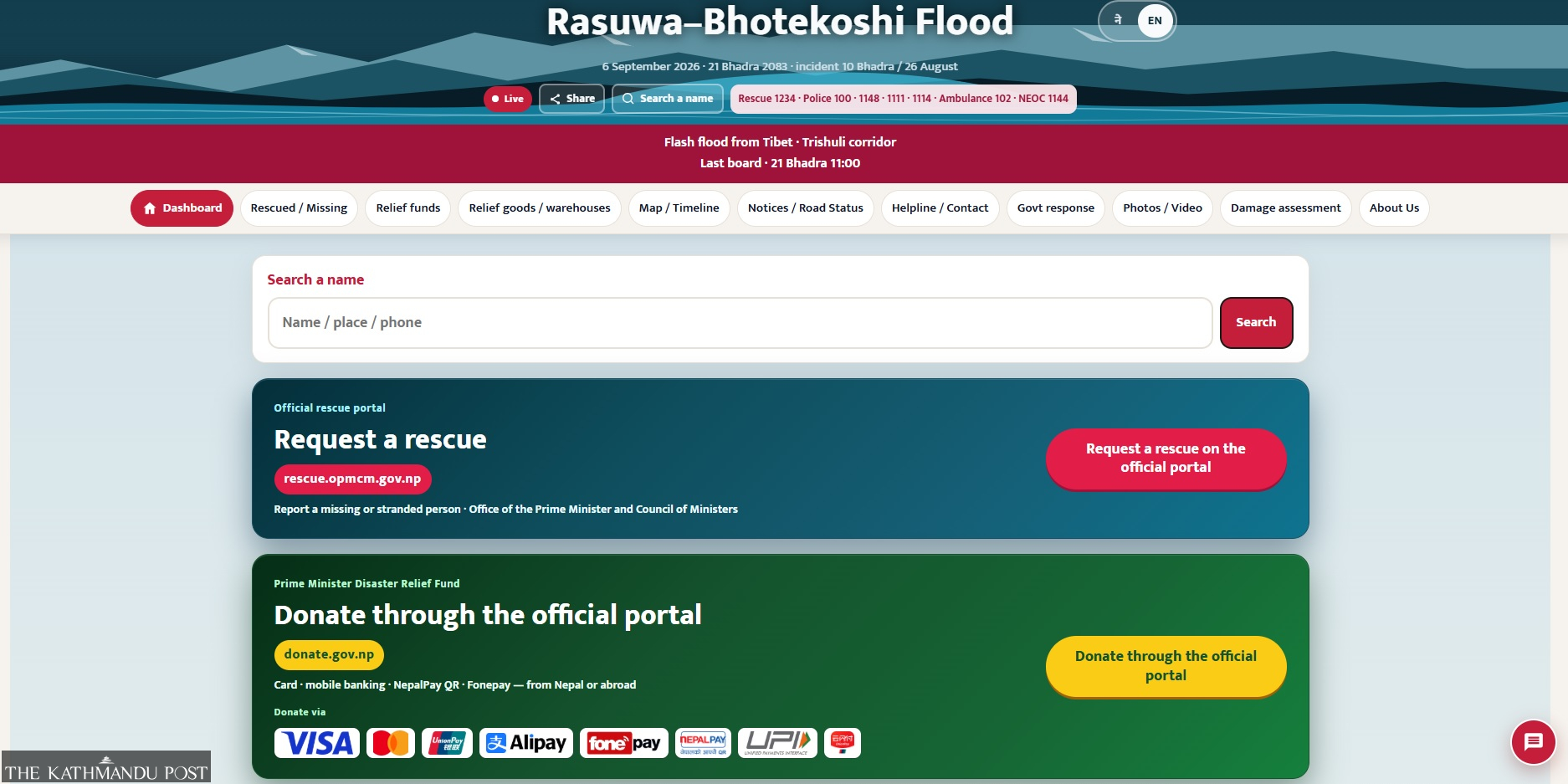
Ministry of Finance’s Niraj Bhusal deployed an AI-driven web application to track casualties and streamline relief efforts, providing Nepal’s disaster management teams with a new tool for emergency coordination. Niraj Bhusal, who is an IT engineer at the ministry, worked through the night and single-handedly developed the disaster response portal. Post Photo
When devastating floods struck Nepal on the morning of August 26, Niraj Bhusal was getting ready for a routine day at the Ministry of Finance.
When news arrived that the Rasuwagadhi customs office on the China-Nepal border had been swept away, Bhusal, like many Nepalis, was dumbfounded. Unified, reliable information about the unfolding crisis was scarce. Bhusal knew he had to act, and quickly. That was when he decided to put his training in ‘AI and governance’ to test. Bhusal, who is an IT engineer at the ministry, worked through the night and single-handedly developed an integrated, accessible, and AI-driven disaster response portal to track casualties, locate missing persons and coordinate government relief.
Bhusal recently gained access to ‘Grok Bot’—the AI model developed by Elon Musk’s xAI. He has programmed the model to build the entire layout, design, and JavaScript coding for a web application called the ‘Rasuwa-Bhote Koshi Flood’ portal. Hosted on GitHub, the portal automatically aggregates and structures information from diverse official sources, including the Department of Hydrology and Meteorology, Nepal Police, Nepali Army, the National Disaster Risk Reduction and Management Authority (NDRRMA), news outlets, press releases, and satellite APIs.
To ensure absolute accuracy and credibility, Bhusal implemented a strict validation system. “Once the code went live on GitHub, the AI began sending new updates to my mobile phone every five minutes,” Bhusal told Kantipur recently. “To prevent errors, I verify each update manually. That first night, my laptop never went idle, and I only managed to sleep at 4:00 am.”
Initially launched in Nepali, the portal is now also available in English to help Nepalis living abroad and international organisations monitor the situation. Post Photo
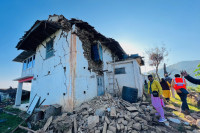
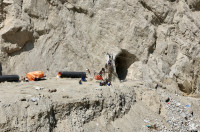
As the Bhotekoshi and Trishuli rivers raged, tearing through roads, power plants, bridges, and settlements, the AI worked tirelessly in the background, scanning the internet for news on casualties, relief fund commitments, missing person requests, ongoing rescues and official government statements.
Initially launched in Nepali, the portal is now also available in English to help Nepalis living abroad and international organisations monitor the situation.
What began as a simple Google Form to collect details about missing persons has now evolved into a critical node in Nepal’s disaster response architecture. After the government launched its official rescue portal, Bhusal integrated his database with the NDRRMA’s system, routing citizens who visit his site directly to official state relief and rescue portals.
To map physical destruction, Bhusal integrated satellite imaging from Copernicus, the European Union’s Earth observation programme, allowing the website to show precise damage to houses, roads, and bridges. Copernicus recognised his efforts, mentioning him on the social media platform X.
Bhusal’s solo initiative has sparked an outpouring of unexpected global support to keep the portal running. Shristi Mainali, a Nepali residing in Australia, contributed $210 in server credits. At the same time, Tabor T., a community developer at SpaceX AI (Grok’s parent company), stepped in with an additional $100 to ensure the site remained active during traffic spikes. Five other supporters contributed $185 via the ‘Buy Me a Coffee’ platform.
This is not Bhusal’s first time on the front lines of a national crisis. In his 13-year career in public service, he has served as an IT officer at the Ministry of Urban Development, the Prime Minister’s Office, and the Ministry of Water Supply. During the devastating 2015 earthquake, he was stationed at Tribhuvan International Airport and customs, managing the complex logistics of international relief materials.
Finance Minister Swarnim Wagle has highly praised Bhusal’s initiative, actively sharing and retweeting the portal’s updates on social media.
Bhusal now plans to officially hand over the portal to the government, hoping the state will adopt it as a permanent model for emergency communications.
Bhusal says that as citizens, everybody should contribute whatever and however they can in times of crisis.
“The government does not have to do everything alone,” he said. “I designed this portal treating every single victim as a member of my own family.”




 18.31°C Kathmandu