



 25.52°C Kathmandu

Mon, Oct 26, 2026
Columns
Why fixing Nepal’s government takes more than just copying the rulebook
As public issues grow increasingly interconnected and citizens demand faster, more transparent services, Nepal’s conventional administrative reforms are falling short.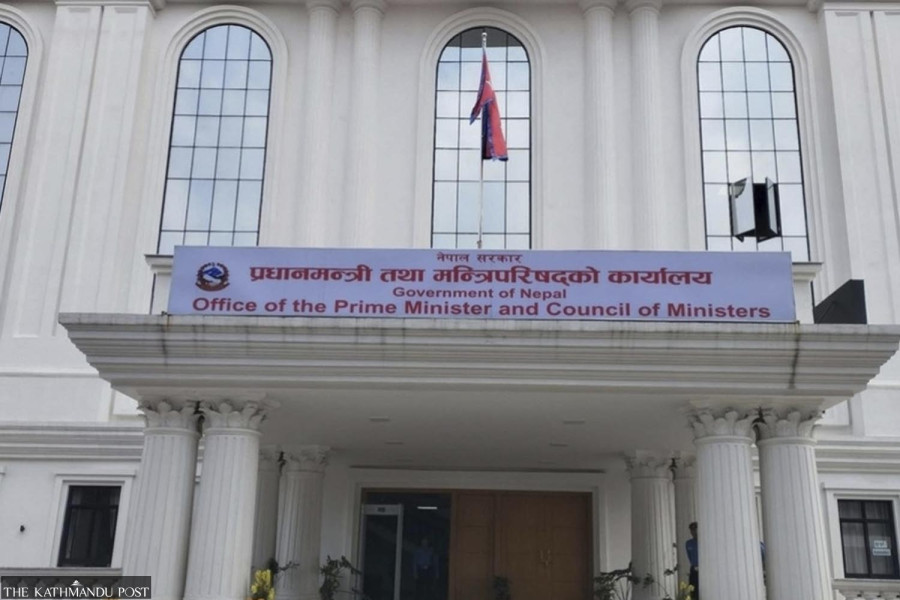
bookmark
Bal Sagar Giri
Published at : September 14, 2026
Updated at : September 15, 2026 06:35
The environment in which government functions in Nepal has changed. Public issues are increasingly interconnected, and authority is dispersed among federal, provincial and local governments. Citizens demand faster, more transparent services. Technology is reshaping how the state and society function. Economic, social, environmental and geopolitical forces now interact in complex, unpredictable ways. Focusing solely on making individual ministries or agencies more efficient is no longer enough. The critical question is how governments can govern effectively amid this complexity and turbulence.
Recent scholarship offers a useful lens here. Torfing and colleagues define ‘robust governance’ as a strategy to address societal turbulence. It blends flexible adaptation and proactive innovation while preserving core public functions and values. Their model is built on three pillars: multi-level governance, hybrid governance, and negotiated societal intelligence.
This framework closely fits Nepal’s existing situation. Although federalism has established multiple centres of public authority, coordination among them remains weak. Studies on Nepal’s intergovernmental relations highlight unclear division of responsibilities, limited subnational autonomy, fiscal imbalances, and inactive dispute-resolution mechanisms. At the citizen level, participation affects whether accountability builds local trust, as recent studies of Nepal’s local governments indicate. The political events of 2025-26 have increased the public’s demand for a government that is responsive, transparent and accountable, rather than just procedural or opaque.
Why does conventional reform often fall short? Several patterns recur. First, institutions are often built to resemble successful models elsewhere without developing the necessary capacities, incentives or political conditions. This phenomenon, called ‘isomorphic mimicry’ in the CAMAD presentation, involves copying the form but not the function. Second, rules and procedures are essential for legality and accountability, but when they become the sole measure of administrative success, compliance replaces problem-solving. Third, political and administrative incentives tend to favour short-term, visible achievements, while genuine institutional reform requires continuity, learning and organisational memory; frequent restructuring, in turn, produces reform fatigue. Fourth, federalisation increases the number of decision-makers, and without adequate coordination mechanisms, this leads to duplication, conflict and delays. Fifth, many public organisations remain overly dependent on particular individuals, with weak systems for retaining institutional knowledge when those individuals move on.
Robust governance distinguishes itself from resilience. Robustness integrates these concepts by ensuring that institutions retain their fundamental roles and values even as they adjust their tools, practices and relationships to evolving circumstances. For Nepal, this principle is useful because the country faces a dual challenge: certain institutional arrangements clearly need to change, while core values— constitutionalism, accountability, equity, public service, and democratic legitimacy—must be preserved.
The three pillars translate into a practical agenda. Multi-level governance means treating federal, provincial and local governments as interconnected parts of a single system rather than separate entities, with clear functional responsibilities, reliable fiscal transfers, shared data and effective dispute resolution mechanisms. Hybrid governance means recognising that many issues are best tackled through combinations of government, private sector, civil society, universities and digital platforms. In contrast, government retains its core responsibility for regulation, coordination and accountability. Negotiated societal intelligence means moving beyond superficial consultation to genuinely involve citizens, communities, professional groups and frontline public servants in identifying problems, designing solutions and overseeing results, recognising that government does not hold a monopoly on relevant knowledge.
Transforming these pillars into practice requires building specific capabilities. Administrative systems need to be established so that they learn from evidence and feedback rather than merely complying with procedures. The federal structure must be treated as a unified, coordinated system rather than three competing tiers. Clear roles need to be defined for decision-making, funding, implementation and accountability when government collaborates with non-state actors. Institutional channels, such as citizen forums, participatory planning, and university partnerships, must be established so that turn public knowledge into policy input. Policy experiments must be given space through pilots and innovation labs. Public trust is ultimately earned through fair, competent and transparent performance rather than declared through communication campaigns.
Viewed this way, governance reform becomes a cycle rather than a one-off project. Political turbulence, economic uncertainty, technological disruption and evolving citizen expectations press on government-centred reform built around restructuring, rules and compliance. When that reform leaves persistent gaps in coordination, learning and trust, robust governance closes them by combining adaptive capacity, multi-level coordination, accountable hybrid arrangements, societal intelligence, experimentation and digital capability. The resulting public value includes better services, stronger legitimacy and higher trust, which in turn strengthen the system's capacity to face the next round of turbulence.
Bal Sagar Giri
Giri is a Superannuated Joint Secretary of the Government of Nepal and a PhD scholar at Tribhuvan University.





Most Read from Columns




Editor's Picks

What to know about the US trial over Mamta Kafle’s disappearance

NPL returns with bigger ambitions and global recognition
What’s new in the Nepal Premier League’s third season?

After Nepal’s recent disaster, it wants to test whether COP31 can deliver climate justice

Why does an hour long flight to Dhangadhi cost more than a flight to New Delhi?
E-PAPER | October 26, 2026

×