The era of anti-India nationalism is over, Wagle says
Speaking in New Delhi, Nepal’s finance minister Swarnim Wagle says the new government wants closer ties with India and signals that Prime Minister Balendra Shah could visit by year-end.
Finance Minister Swarnim Wagle has said the era of linking nationalism in Nepal with anti-India sentiment is over, signalling the new government’s intention to strengthen ties with New Delhi.
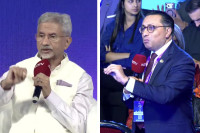
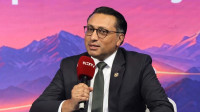
Speaking at the NDTV World Summit 2026 in New Delhi on Friday, Wagle said Nepal and India shared a deep-rooted relationship and that the new government wanted to take bilateral ties to a new level.
“The relationship between India and Nepal runs very deep. There are occasional problems, but we remain firmly connected. Nepal does not have a relationship with any other country like the one it has with India,” Wagle told NDTV’s Padmaja Joshi.
He said the two countries shared not only geographic proximity but also deep cultural ties, adding that Nepal’s new leadership wanted to build on those connections.
“There was a time when nationalism in Nepal was associated with anti-India sentiment. But that era is over,” Wagle said.
He also indicated that Prime Minister Balendra Shah could visit India by the end of 2026, saying such a visit could help take Nepal-India relations to a new level. The date has not been finalised, although both sides have begun preliminary work to prepare for the trip. Shah could visit India as early as late November, according to reports. Although Wagle suggested the visit could take place before the end of the year, no official date has been announced.
Following a change of government in Nepal earlier this year, Kathmandu and New Delhi have been seeking to strengthen ties under their new political leadership. Wagle also cited India’s assistance during disasters, recalling its response to Nepal’s 2015 earthquake and the floods in August.
According to Wagle, Indian Prime Minister Narendra Modi called Shah following the latest disaster and assured him that India would provide whatever assistance Nepal needed.
“In formal talks and official communications, India has consistently shown itself ready to help. It has made clear that it is prepared to provide whatever Nepal needs,” Wagle said.
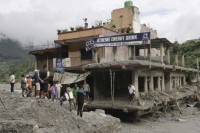
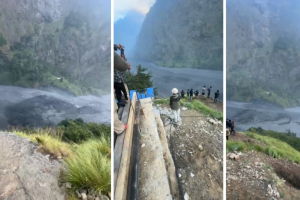
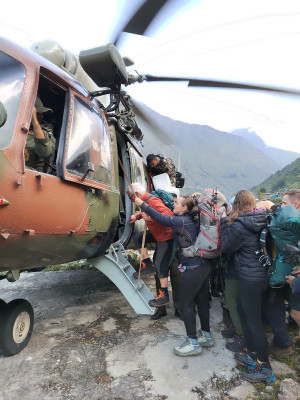
A devastating ice-rock avalanche in the Himalayan region and the ensuing floods caused extensive damage in Nepal in August. Several countries and international organisations subsequently assisted in relief and rescue efforts.
Wagle’s remarks also underscored the economic dimension of Nepal-India relations. Referring to India’s ambition to become a developed country by 2047, he said Nepal wanted to see its southern neighbour become more prosperous and economically stronger, creating opportunities for neighbouring countries as well.
He argued that close economic ties were essential to maintaining good political relations. He said bilateral cooperation needed sustained effort and should extend beyond diplomatic dialogue.
As India’s middle class grows more prosperous, Wagle said, its purchasing power and appetite for international travel are also expected to increase. Nepal wants to benefit from India’s economic expansion by attracting more Indian visitors to its tourist destinations, he added.
India is Nepal’s largest trading partner and plays a major role in supplying petroleum products, investing in the country, providing transit facilities and supporting cross-border energy cooperation. With an open border and extensive people-to-people ties, relations with India have long occupied a central place in Nepal’s economic and foreign policies.
The relationship, however, has periodically come under strain over trade and transit arrangements, border disputes, sovereignty and questions of national identity. Nepal’s dependence on India for transit and essential supplies has also made economic cooperation with New Delhi a priority for successive governments in Kathmandu.
Held in New Delhi under the theme “A World Between Orders”, the NDTV World Summit 2026 brings together political leaders, economists, policymakers and other prominent figures to discuss global and regional challenges.




 18.94°C Kathmandu