



 25.42°C Kathmandu


Thu, Oct 22, 2026
National
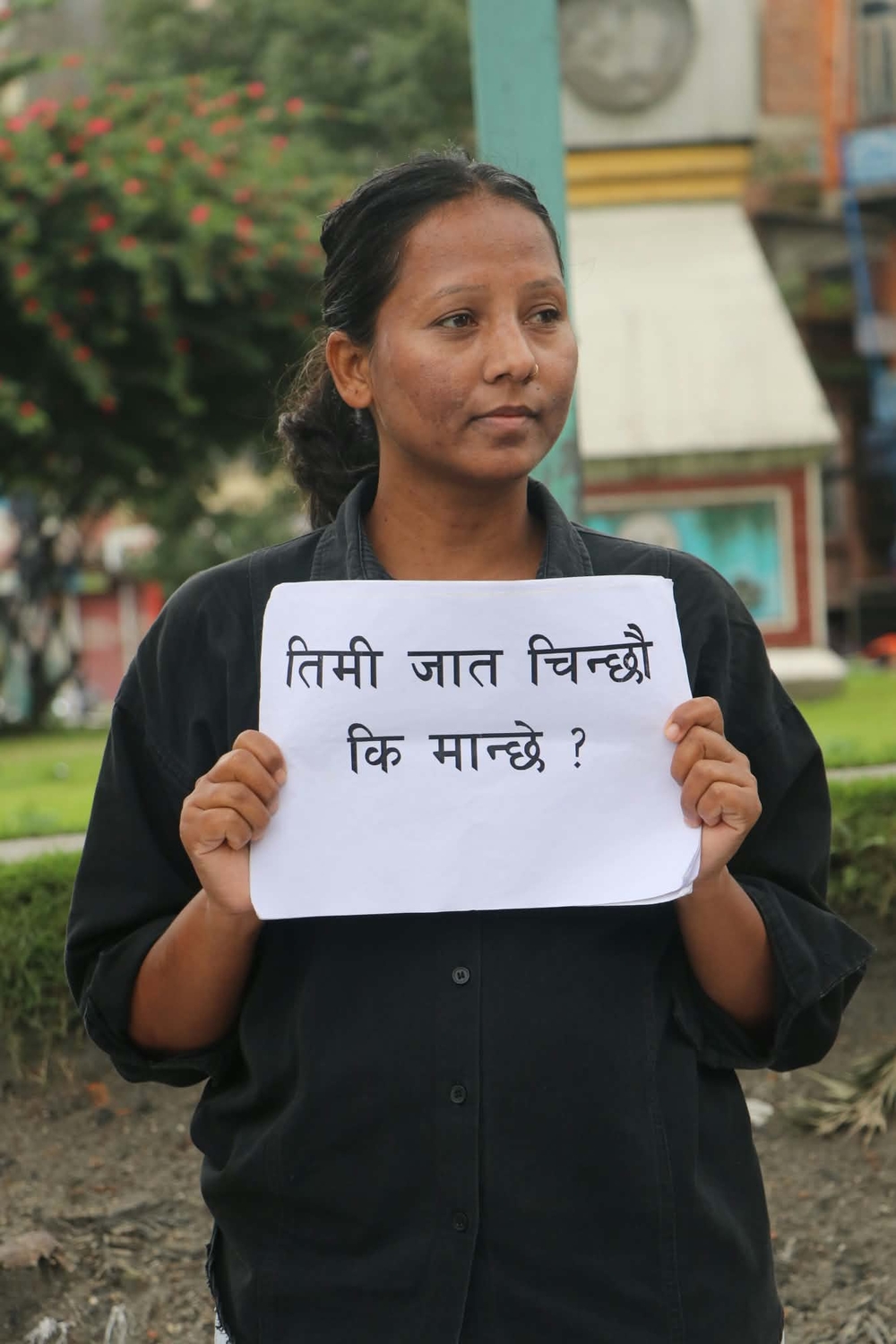
Deepa Nepali spends Dashain on the streets, demanding caste justice
As families celebrate at home, the activist continues her protest at Maitighar Mandala, highlighting discrimination faced by Dalits in finding rented accommodation.
bookmark![]()
Deepa Nepali stages a sit-in at Maitighar Mandala in Kathmandu.
Ranjana BC
Published at : October 22, 2026
Updated at : October 22, 2026 16:13
Kathmandu
On a day when families across Nepal gathered to celebrate Dashain, applying red tika and jamara to their foreheads and receiving blessings from elders, activist Deepa Nepali spent the festival on the streets, her protest fuelled by defiance.
As the country basked in the festive mood, she continued her protest at Kathmandu’s Maitighar Mandala, a public square that has become a focal point for demonstrations, asking: “How long will caste continue to be placed above human beings?”
Nepali launched the ‘Government, Is There a Room Vacant?’ protest at Maitighar to demand justice for caste-based discrimination, particularly discrimination faced by Dalits in finding rented accommodation.
She spent Dashain at the protest site this year, joined in solidarity on Wednesday by former Constituent Assembly member Binod Pahadi, Dalit rights activist Madan Nepali, Dalit campaigner Sunita Marik, Dalmardan Kami, yoga guru Drishtant Sharma and Ekal Darmali.
Nepali said she had been forced to spend the festival on the streets because the state had ignored her demands even after 186 days of protest. Unable to celebrate a major family festival at home, she said, raised serious questions about caste discrimination, citizens’ dignity and the state’s accountability.
“If a citizen has to stand on the road for 186 days over a fundamental question of humanity, where is the state? Where is the government?” she asked.
Caste discrimination, she said, remained a barrier to social progress. A society in which caste is considered more important than a person’s humanity reflects a cruel mindset, she added.
Her protest also highlights the wider prevalence of caste discrimination in Nepal. If people in Kathmandu, the country’s capital, can be denied rented accommodation because of their caste, marginalised communities in remote and underserved areas are likely to face even greater barriers. Yet the government has remained silent as a young woman continues to demand justice for this deep-rooted social problem.
Nepali said her campaign was not directed at any single landlord or incident of housing discrimination. Rather, she was demanding action against discrimination embedded throughout society. The issue, she said, reflected the attitudes and sensitivity of the state and government.
She said her protest challenged the state to examine whether its own mindset towards caste discrimination had changed.
“I have begun to feel that even those in policymaking positions want to preserve discrimination. Otherwise, why are they silent?” she asked.
For Nepali, the protest is neither about supporting nor opposing any political party. It is about the humanity and rights of citizens who have endured injustice and inhumane treatment for years. She had hoped the new government would take concrete steps to end discrimination.
Although she had expected the government led by Balendra Shah to listen to her demands, she said the failure to address them over 186 days had left her disillusioned.
She urged the government to invite the protesters for talks, seek a resolution and take practical measures to end caste-based discrimination.



Most Read from National
Flood sweeps away houses, bridges in Gorkha
What to know about the US trial over Mamta Kafle’s disappearance

Torrent of black mud and rocks engulfs settlements along Budhigandaki

From blankets to handmade dolls, two foreign women bring comfort to flood survivors
Budhi Gandaki flood washes away three bridges in Gorkha
Editor's Picks

E-PAPER | October 22, 2026

×