



 21°C Kathmandu
Mon, Oct 12, 2026
Culture & Lifestyle
In Thecho, Matayaa becomes a festival of remembrance and satire
This year’s procession honoured victims of the Bhotekoshi floods while continuing a tradition of using music, performance and satire to reflect on society.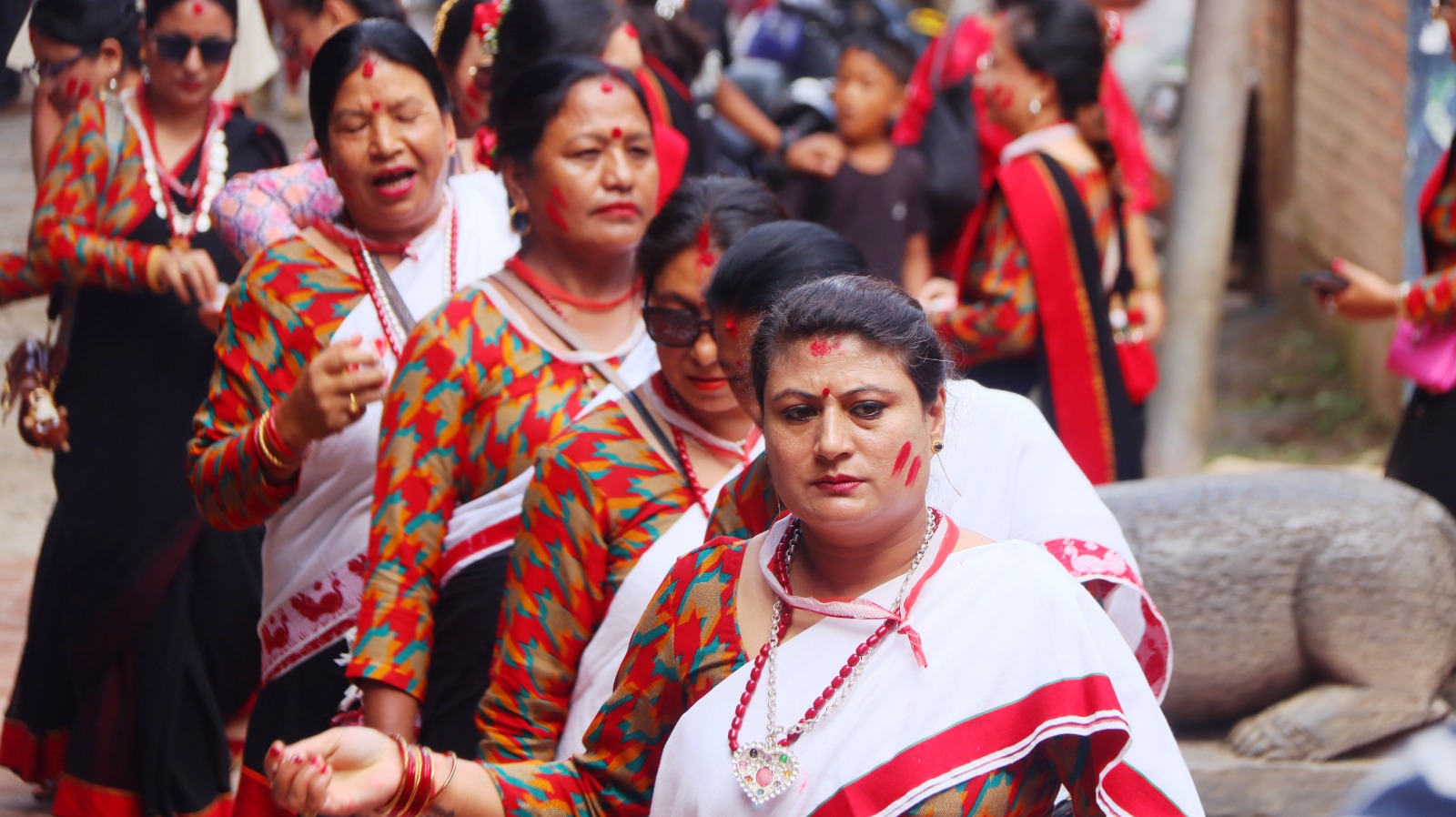
Prashant Mali
Published at : September 2, 2026
Updated at : September 2, 2026 07:25
The day after Gaijatra, traditional music echoed through the streets of Thecho. This time, the melodies carried not only the joy of the festival but also remembrance and grief for those who lost their lives in the devastating Bhotekoshi floods.
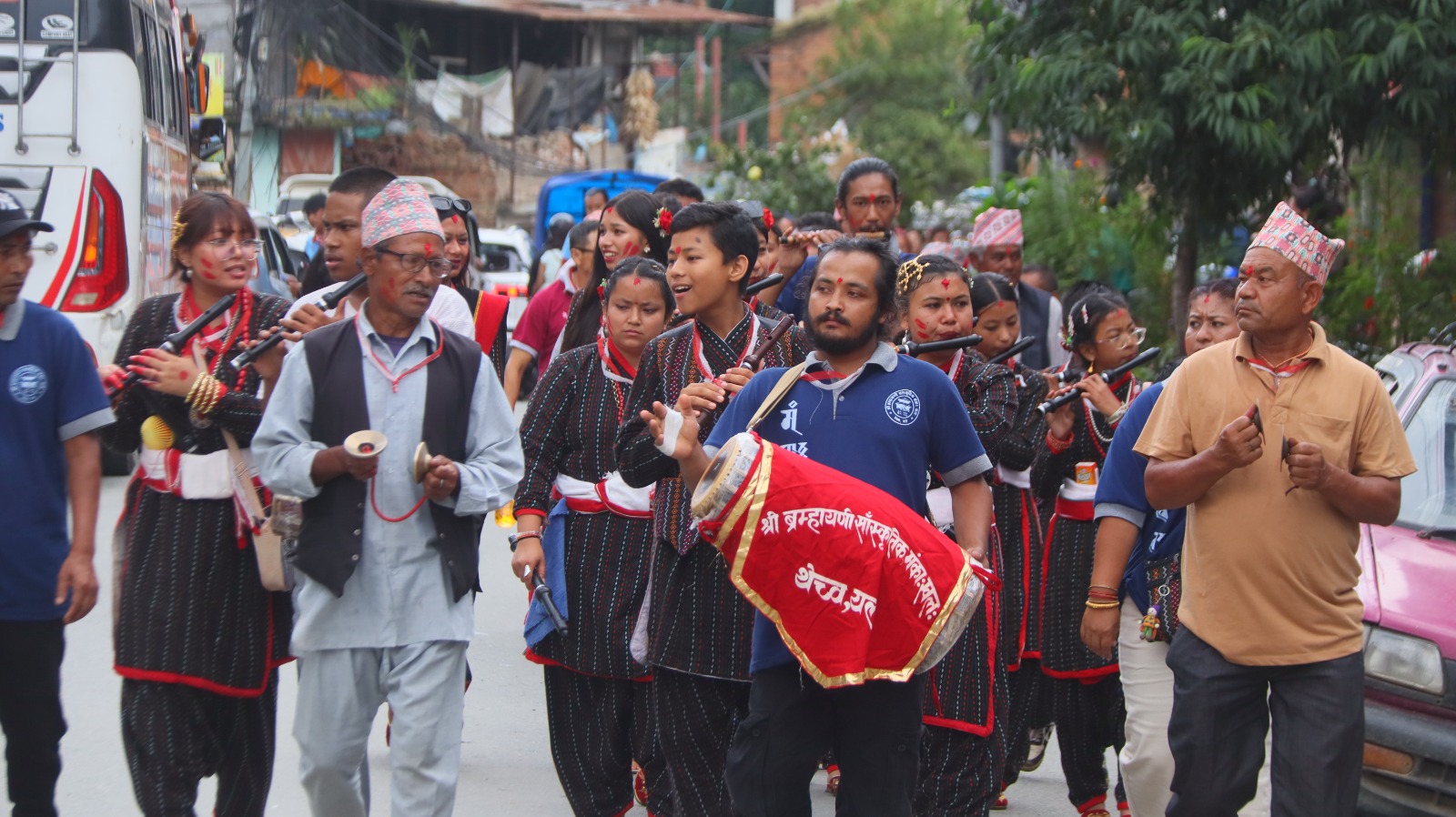
Participants from Thecho Tahnani Tole marched ahead, carrying traditional musical instruments and paying tribute to the deceased.
The procession was led by Gyanlal Maharjan, a resident of Thecho Tahnani Tole. What began as a march expressing grief and solidarity over the tragic incident gradually took on the colours of Thecho’s traditional Matayaa festival.
According to Maharjan, the Matayaa tradition teaches people to remember the departed and to stand by those who are grieving. “We paid tribute through the Matayaa festival to those who lost their lives in the natural disaster and expressed solidarity with the families who are mourning,” he said.
The Newa community celebrates Matayaa Jatra, also known as the Festival of Lights, the day after Gaijatra. In Thecho of Godawari Municipality-12, however, the festival holds special significance.
Celebrated in a satirical spirit, this year’s Matayaa Jatra was organised by Thecho Sanskritik Baja Sanrakshan Samiti, in coordination with Tahnani Bansuri Khalah.
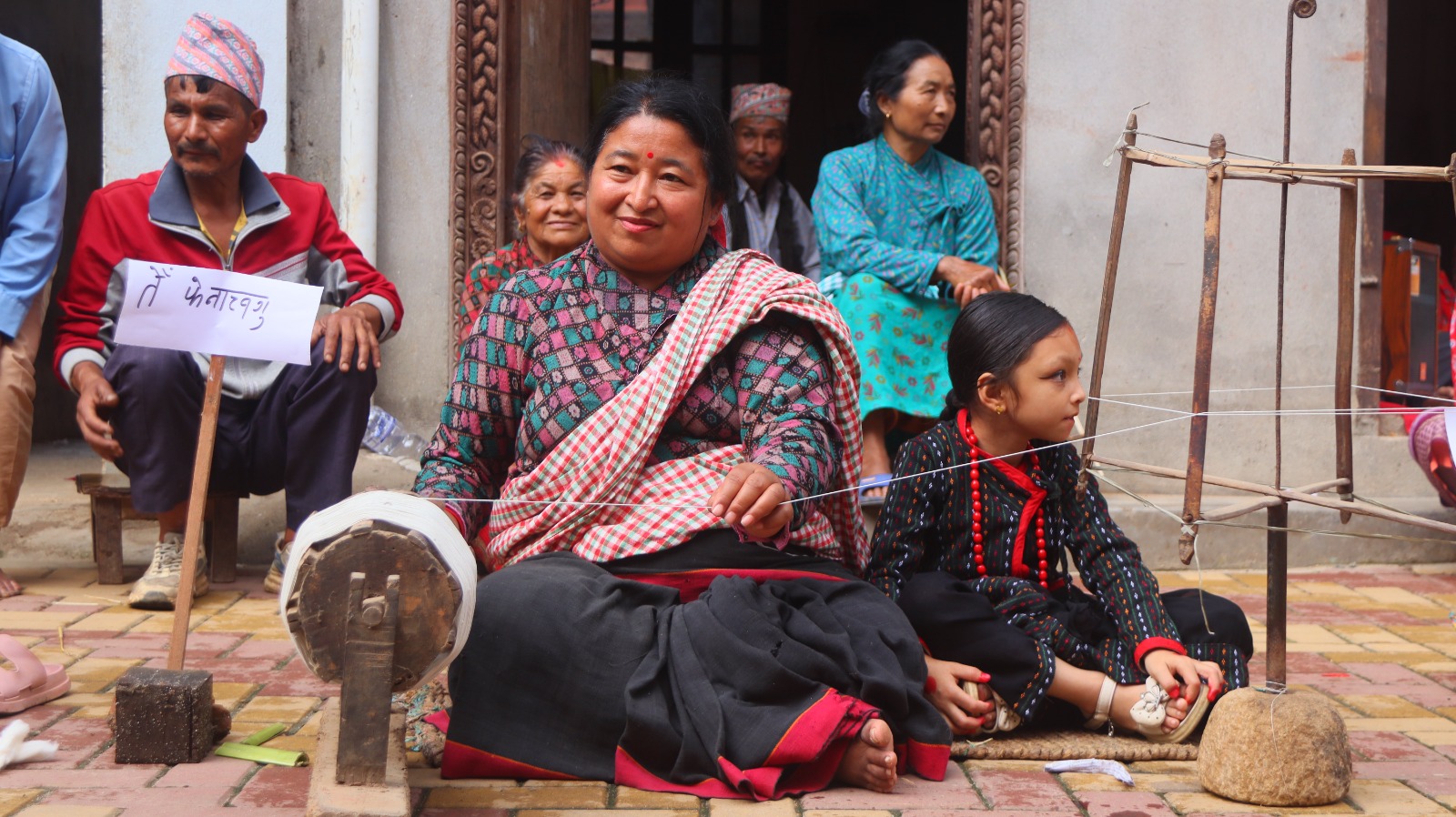
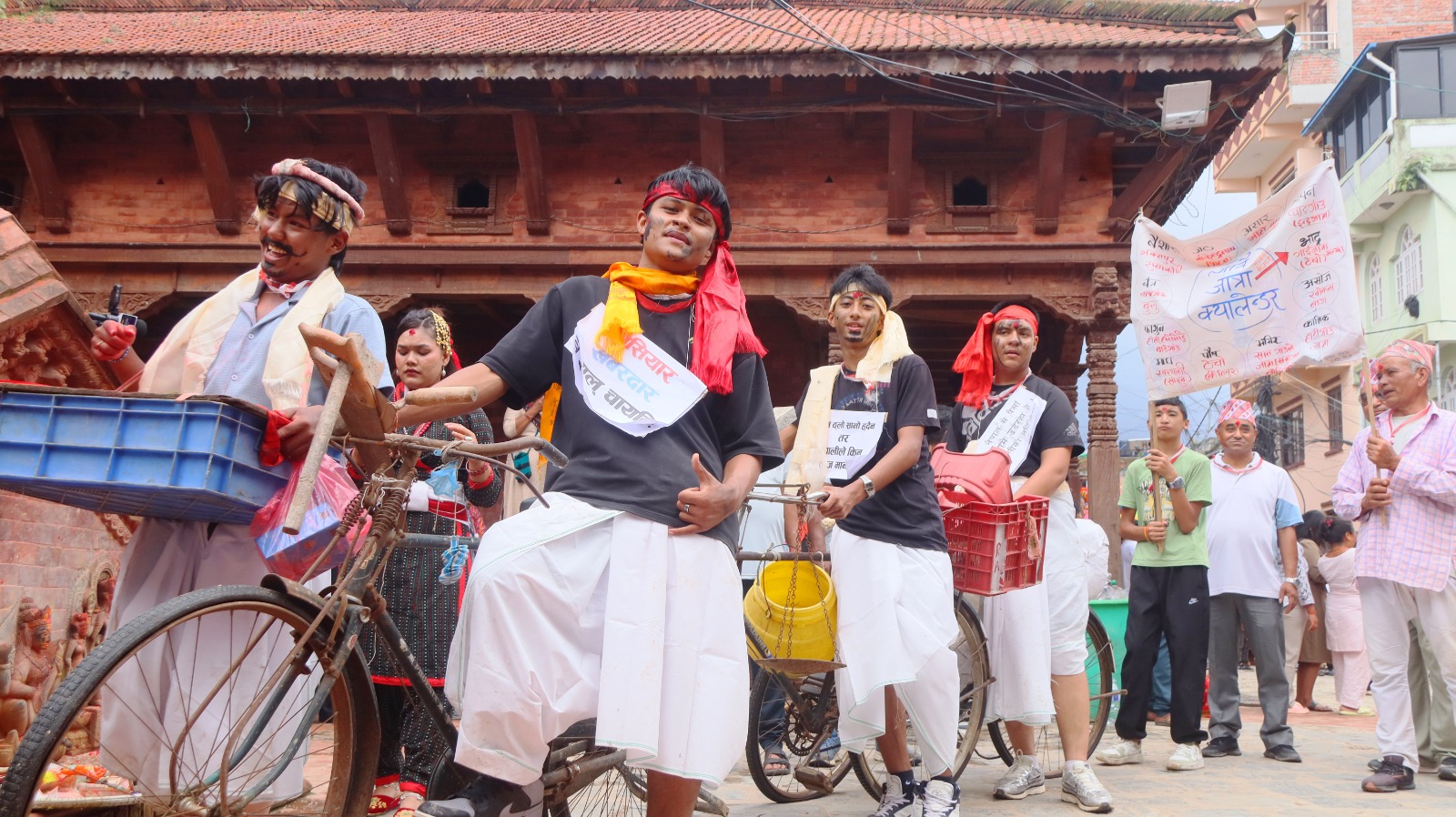
For Thecho, Matayaa Jatra is more than just a cultural festival. It also serves as a mirror reflecting society and the state. Events, social ills, irregularities, and contemporary issues seen in society and the state throughout the year are presented through satire during the festival.
The Mali Gaa Dhime Khalah of Thecho presented a scene depicting the country’s mainstream political leaders being controlled by foreign powers. A man walked ahead carrying photographs of former prime ministers on his head.
Behind him were two men dressed as politicians. Following them was another man carrying a banner that read ‘Invisible Power’.
Baburam Maharjan, chairperson of Mali Gaa Dhime Khalah, said, “We feel that foreign powers are trying to push the country into conflict, so we presented this satire to warn mainstream political leaders.”
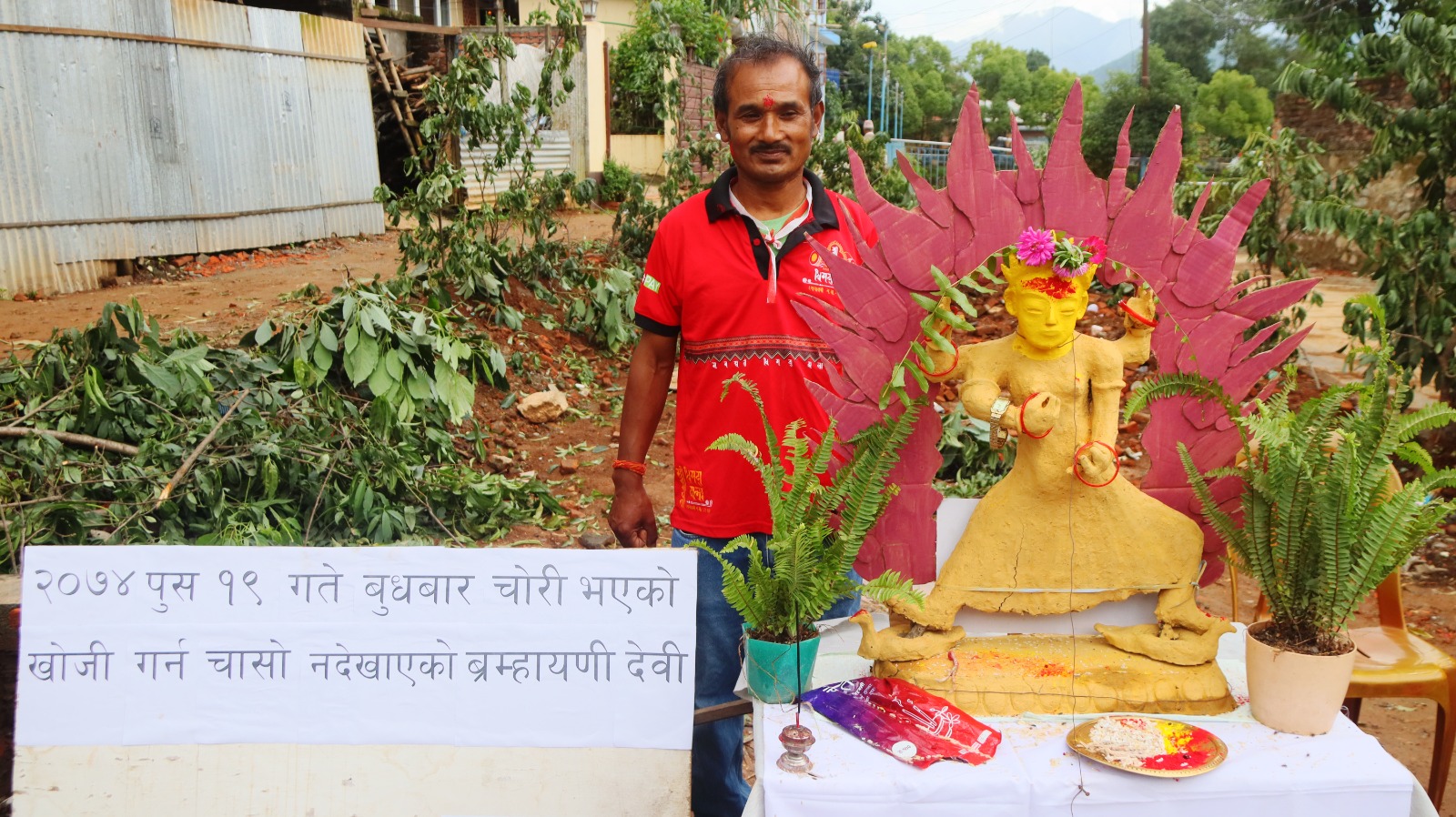
Local artist Krishna Mali used satire to highlight the lack of interest in finding stolen idols. He made a clay idol of the Brahmayani goddess and a paper swan, her vehicle, and put them on display. In Thecho, the Brahmayani idol, which had been kept in a (sattal) rest house after the temple was damaged by the 2015 earthquake, was stolen in 2017. The swan was stolen in 1999.
He said, “No one has shown any effort in looking for those idols. This satire is directed at elected representatives, local guthi leaders, the public and the police administration.”
According to him, idol thefts have still not stopped. “Stolen idols from places such as Khokana and Lele have yet to be recovered. Through this, we wanted to send a message that the state needs to take the issue seriously,” he said.
Likewise, according to religious tradition, the idol of Brahmayani and its chariot are taken out of the temple in Thecho only for the annual procession held on the occasion of Yomari Purnima. However, residents of Thecho Tahnani Tole satirised the need to collectively protect and promote artefacts of archaeological importance by making a replica of the Brahmayani idol, along with imitation jewellery and a chariot, and putting them on display.
In Thecho, the tradition of holding a procession with an idol of Krishna on Krishna Janmashtami has been discontinued. The Saraswati Dhime Khalah presented a satire on the lack of interest among the concerned guthi members in reviving the procession, which has already disappeared.
They moved ahead in a procession, singing Krishna bhajans, carrying an artificial chariot with a child dressed as Krishna seated on it.
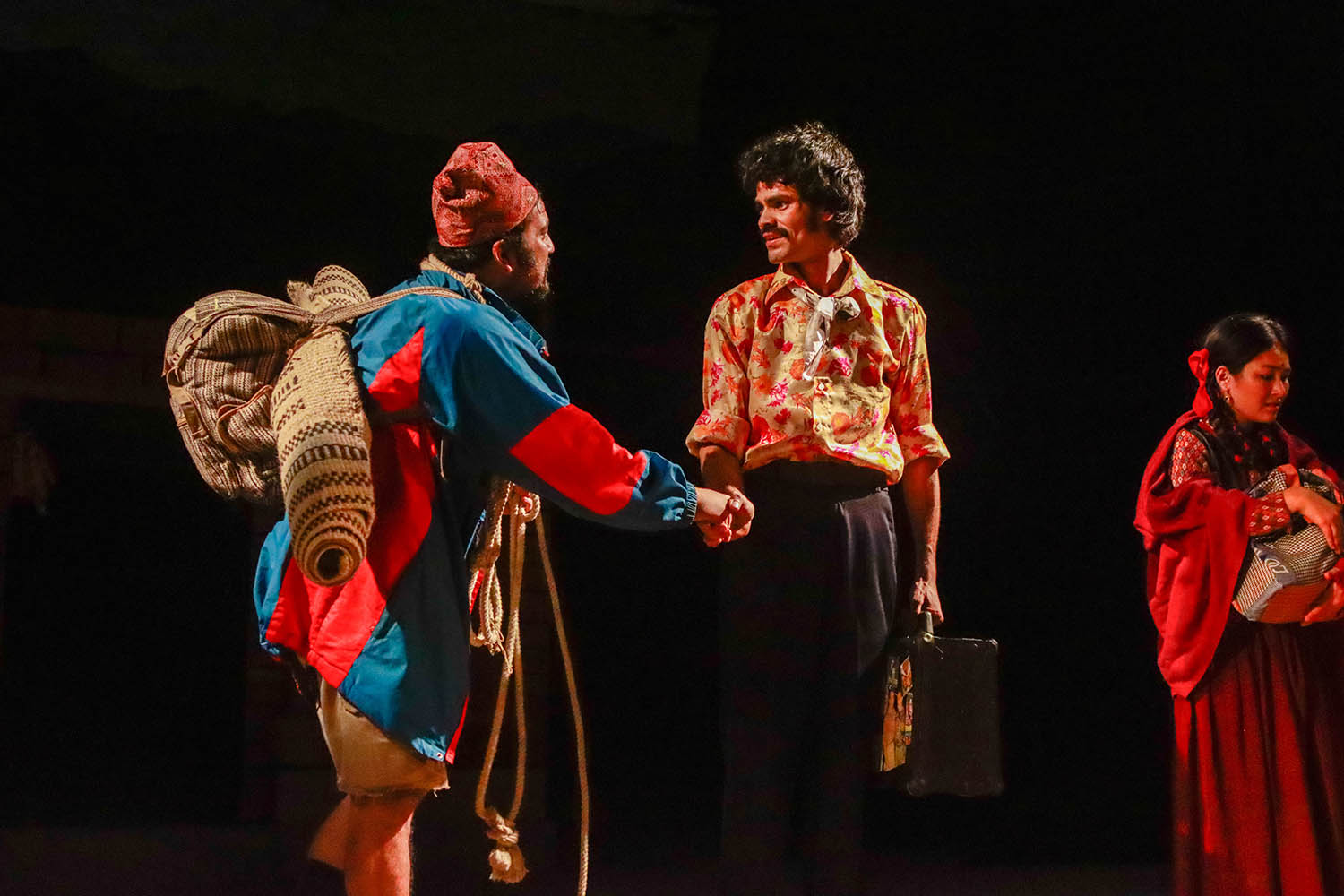
The procession also featured three women dressed as Thakalis, wearing artificial cotton beards and moustaches, daura suruwal and betali (a traditional hat worn by deity performers).
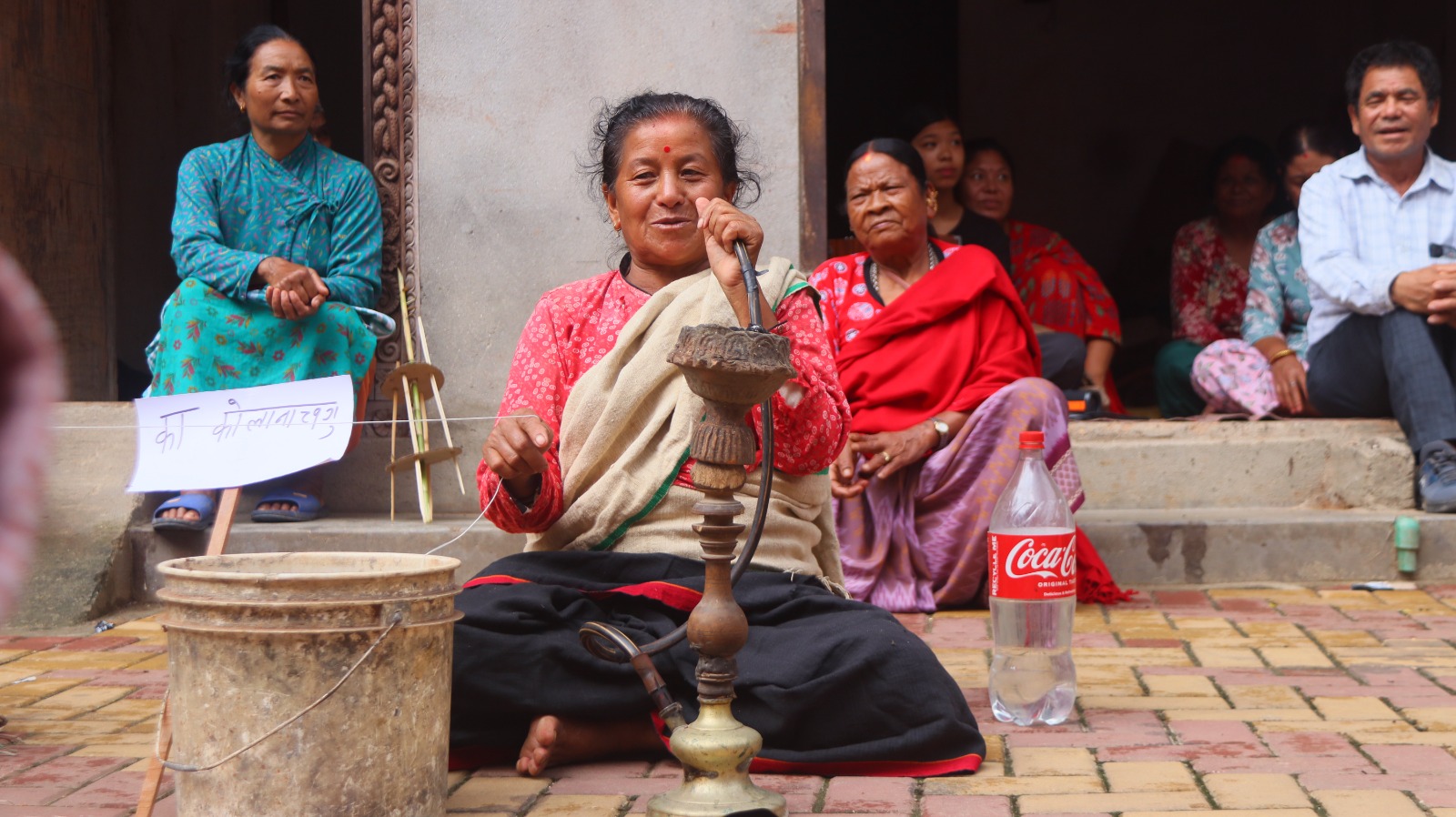
Similarly, people also came together to demonstrate traditional methods of washing clothes and weaving textiles from before soap was commonly used.
A woman dressed in a haku patasi sat smoking a tamaku (tobacco). Nearby, women in traditional attire were boiling clothes in a khadkulo (traditional cooking vessel) over a fire. Another woman was taking out the boiled clothes and beating them clean.
Through the performance, they satirised the hardships women once faced while washing clothes, as well as people who are too lazy to wash clothes even with the convenience of washing machines today.
Rajuraj Dev Bajracharya of Patan was surprised to see a group of men and women dressed in haku patasi and daura suruwal, carrying utensils and food in baskets. The scene depicted the traditional practice of travelling to the Gosainkunda fair in ancient times.
Bajracharya said, “The Matayaa Jatra is a beautiful blend of the area’s indigenous culture, traditions and music. I am happy to have witnessed such a tradition that has been passed down through generations. It should be preserved and continued by involving the younger generation as well.”
Participants at the festival were welcomed by the Pachwo Tole Sudhar Samiti. Old photographs of Thecho were also put on display at Tahnani Tole. Various groups took on volunteer roles during the festival.
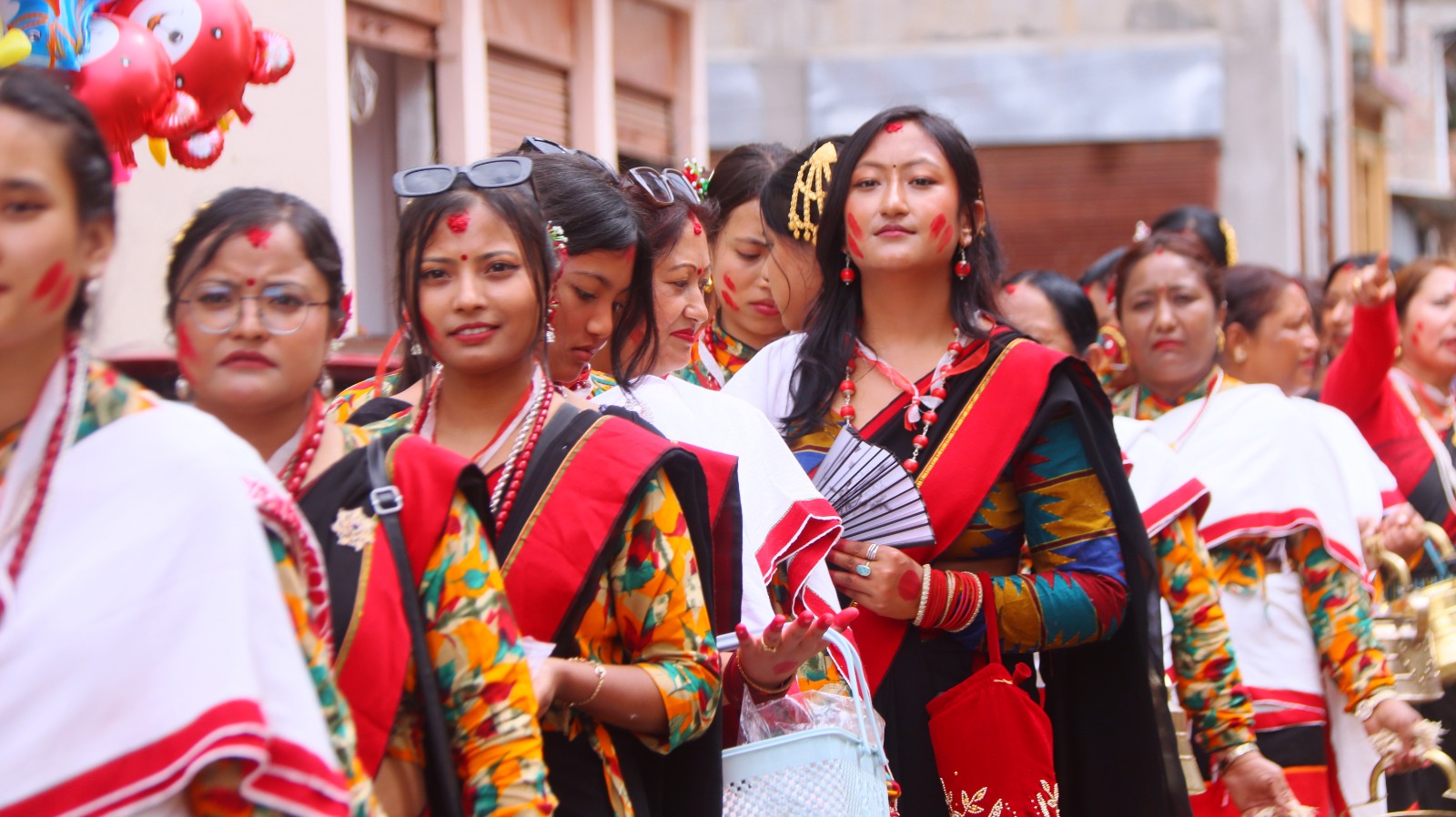
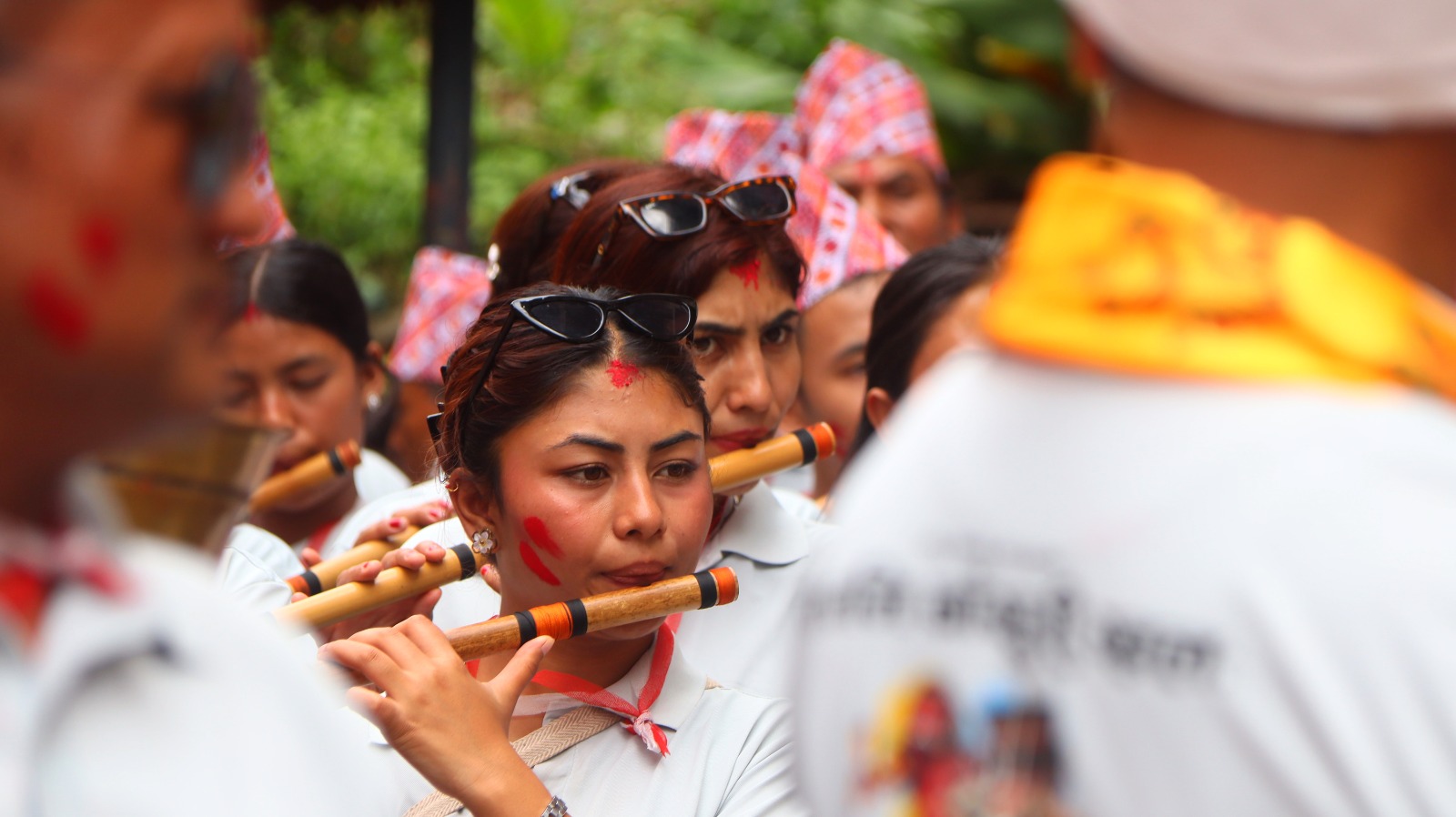
At the beginning of the procession, Thakalis from the organising committee walked ahead, dressed in daura suruwal and betali, carrying a banner. They were followed by men and women dressed in the same traditional attire, dancing to the rhythm of flutes.
The festival features 13 musical groups. The groups take turns organising the festival each year.
Awards are also given for the best performances. This year, Nhuchhen Dafa Khalah, Maligaan Dhimey Khalah and Nhyachhen Dafa Khalah secured first, second and third places, respectively. Saraswati Dhimey Khalah received the consolation prize.
Laijho Tole won the award for the most attractive neighbourhood.
Jit Govinda Maharjan, chairperson of Thecho Sanskritik Baja Sanrakshan Samiti, said the Thechwo Matayaa Jatra is not merely a religious tradition but a living expression of Thecho’s indigenous culture, traditional music, art and community unity.
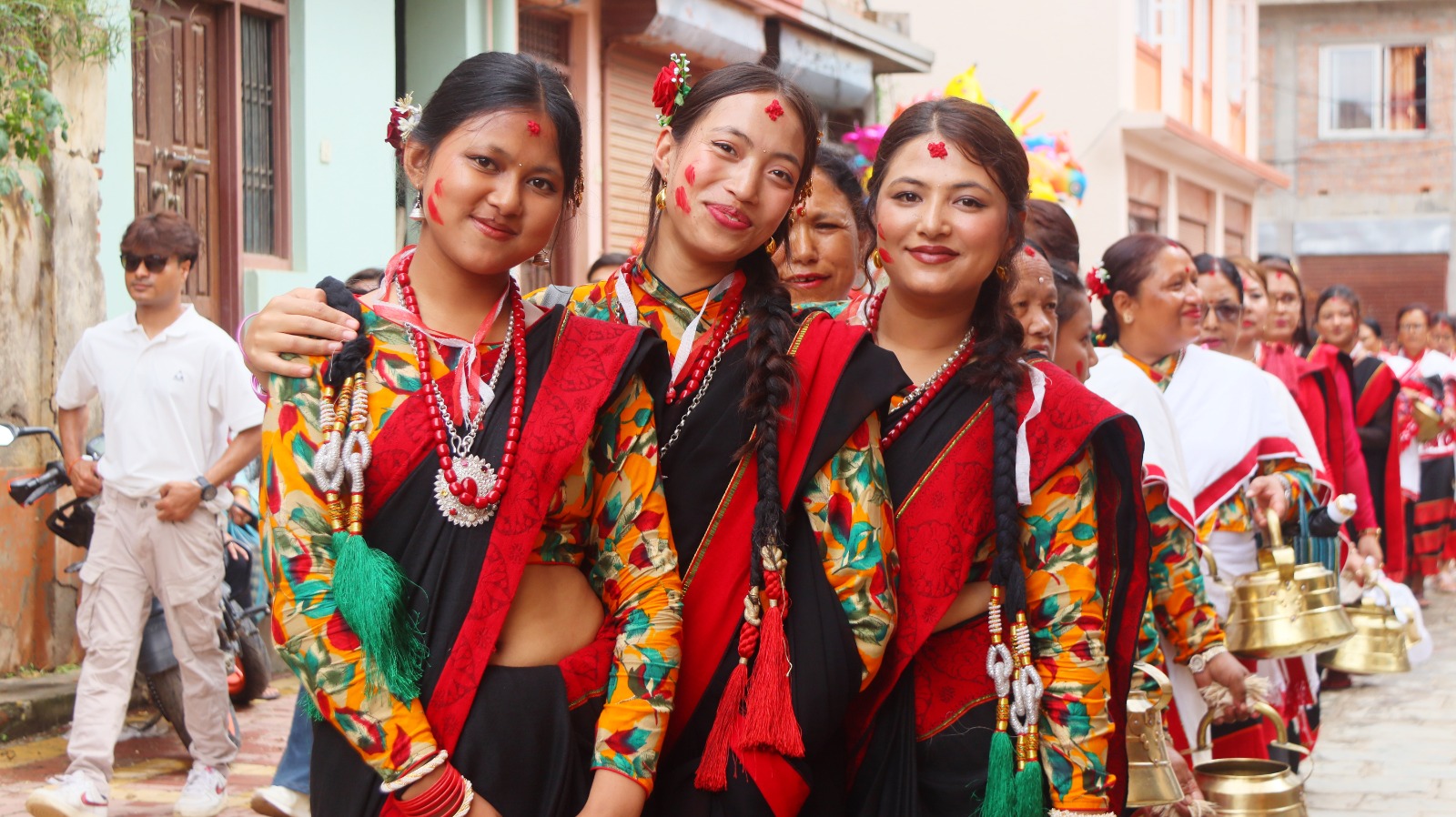
He said the festival, which has been celebrated for generations, not only honours the departed and prays for the eternal peace of their souls but also makes an important contribution to preserving local art, culture and traditional musical instruments.
With growing challenges to the preservation of traditional music and cultural practices, he stressed the need to involve the younger generation and ensure the continuity of the Matayaa Jatra.
Godawari Municipality Mayor Gajendra Maharjan said the Thecho Matayaa Jatra is an important part of Godawari’s indigenous cultural identity and historical tradition. He said the municipality is committed to preserving such traditional festivals, celebrations and musical traditions and passing them on to the younger generation.
Prashant Mali
Mali is the chairperson of the Federation of Indigenous Nationalities Journalists (FONIJ), Kathmandu Valley and a cultural researcher.

×