
How
KP Sharma Oli
rose, ruled and fell
From prison to four terms of prime minister, Oli’s career traced Nepal’s democratic contradictions — and, in the end, its limits.
Voluble, sharp-tongued, and self-centered to the point of hubris.
That’s how some describe KP Sharma Oli. Others see a leader with genuine mettle — a nationalist who cared about the country when few others would say so plainly.
The 74-year-old politician is probably Nepal’s most divisive figure of the post-2015 constitutional era. Few careers in modern Nepali politics contain so many reversals, so many reinventions, and so persistent a refusal to be finished.
From Jhapa to Kathmandu, from a marginalised figure to four-time prime minister, Oli’s journey is marked by jail terms, ailments, revolts, and unrelenting audacity. It is also a story about what happens when a political system built on coalition and compromise encounters a man constitutionally incapable of either.
Oli’s political journey reflects a broader tension in Nepal’s democratic experiment: between revolutionary origins and institutional governance, between populist certainty and constitutional restraint. Over five decades, he has moved from underground communist activism to the centre of state power, repeatedly reshaping both his ideology and the political system around his personal authority.
Until September last year, he was the most powerful person in the country, leading a government with the backing of the then-largest party, Nepali Congress. Less than a year later, his own party members are considering ousting him, and he is on the verge of being pushed into obscurity.
To understand how Oli got here, you have to start last year. September 9, 2025. Around noon. Demonstrators had already stormed the Prime Minister’s official residence in Baluwatar. A day earlier, 19 people, mostly young, had been killed in police firing.
Oli was surrounded by security forces and party office bearers. Witnesses recall him maintaining an almost eerie calm, even as Baluwatar burned around him. Fires raged in the Supreme Court, Parliament, Singha Durbar, the presidential house, and other buildings. Smoke and chaos had become the city’s soundtrack.
He dismissed suggestions that he step down.
“What’s the political solution [of the current crisis] once I resign?” he asked.
Finance minister Bishnu Poudel, his chief advisor Bishnu Rimal, and party Deputy General Secretary Pradeep Gyawali pressed him insistently.
“I am not going to bow down before the wrongs. I will rather die here if they kill me,” he declared.
As the situation spiraled beyond control, he agreed to resign. He asked for official letterhead of the Prime Minister’s Office, but there was none. So he scrawled his resignation on plain paper:
“…I resign effective today’s date to pave the way for a political resolution through constitutional means…,” he wrote.
Rumors about his whereabouts swirled. Some said the Nepal Army had taken him to Shivapuri barracks; others suggested the Army Headquarters. It was later confirmed that a Nepal Army helicopter had airlifted him and his wife, Radhika Shakya, to Chitlang barracks.
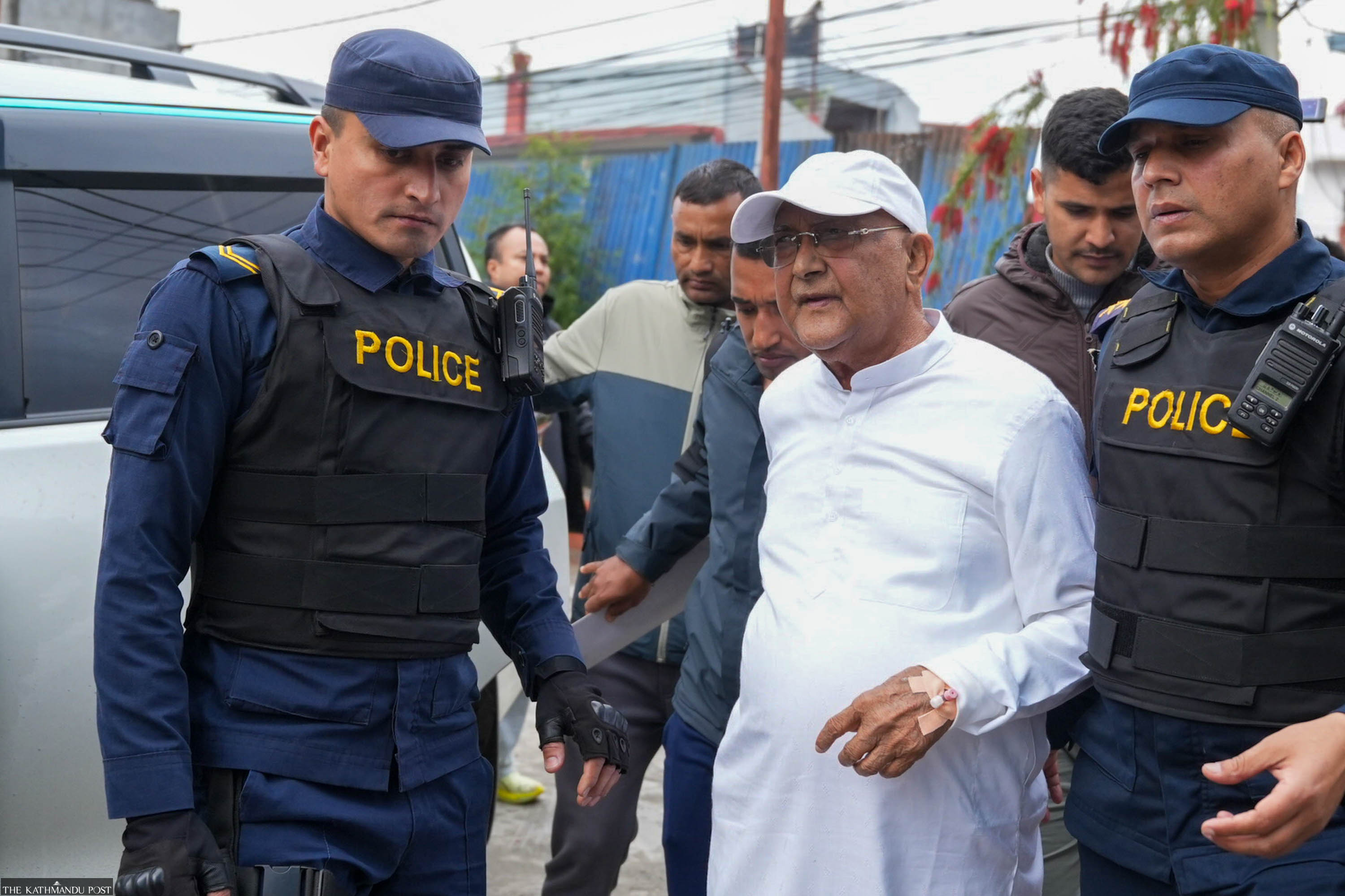
For ten days, Oli vanished from public view — the longest stretch of silence in his recent political career. He gave no statements, there were no newspaper quotes, and he didn’t make a single media appearance.
Then, on September 18, he resurfaced in Gundu, Bhaktapur. His house in Balkot had been reduced to ashes during the September 9 demonstrations. Mahesh Basnet, his loyal and at times bellicose right-hand man, had arranged for his accommodation.
Oli said little about his absence, he appeared unbowed.
He remained adamant: the September 8 Gen Z protest was a conspiracy, and the destruction that followed was a calculated outcome. The uprising, fuelled by his refusal to compromise, had escalated from a peaceful demonstration into a nationwide demand for accountability, generational change, and clean governance. The immediate trigger had been his government’s decision to ban 26 social media platforms, including Facebook, X, and WhatsApp.
The fallout was swift. The new government, led by Sushila Karki, called elections for March 5. Oli’s party suffered a historic defeat. He himself lost in his home constituency of Jhapa-5 to Balendra Shah by nearly 50,000 votes.
In an interview with Kantipur shortly after, he placed the blame squarely on the voters. “People have made a big mistake by not voting for the UML,” he said.
Political analyst Jhalak Subedi argues that the response reflected a trait that had become increasingly visible over Oli's years in power. “In both government and party affairs, Oli developed a superiority complex,” Subedi said. “As party leader, he was increasingly guided by an arrogant disposition”
It was the defining quote of his political twilight: no remorse, no humility, and no acknowledgment that anything had gone wrong on his watch. It was also, for anyone who had followed his career closely, entirely unsurprising. That certainty — absolute, armored and impervious — had been built over five decades. To understand it, you have to understand where Oli himself began, not in the halls of Singha Durbar, but in the fields and jails of Jhapa.
In 1967, a peasant agitation in Naxalbari, a rural village in India’s West Bengal, turned into armed struggle after police opened fire on a crowd of mostly women protestors, killing eight women, two children and one young man. The shockwaves quickly spread across the Bengal-Nepal border.
In Jhapa, Nepali communists watched closely. Surendra KC, a historian, writes that a slogan popular in eastern Nepal at the time declared: “Socialism cannot be achieved only through speeches unless a fight is launched against the army, unless the feudals are killed.”
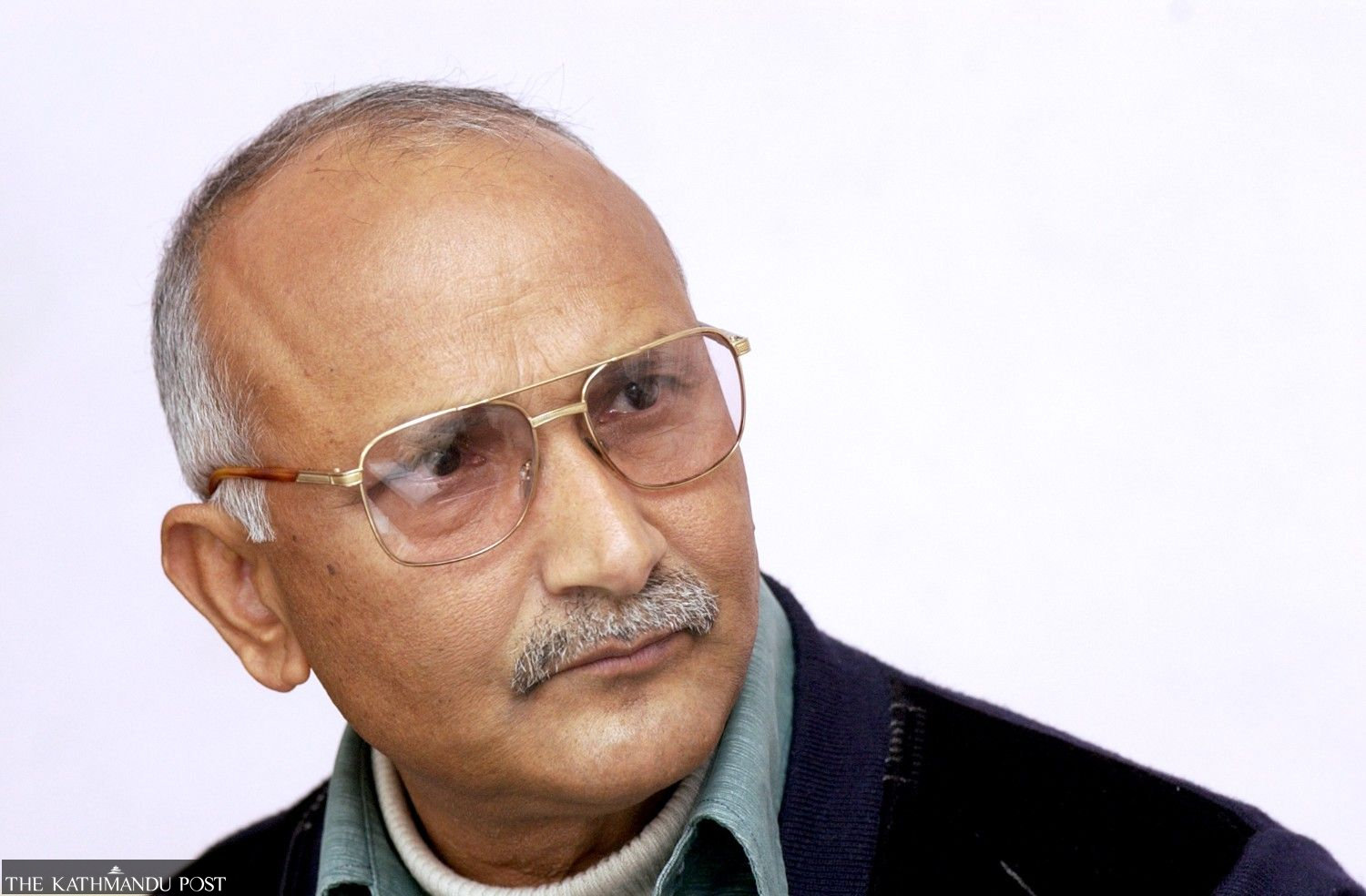
Oli was among a cohort, including Mohan Chandra Adhikari and CP Mainali, deeply influenced by what became known as the Naxalbari movement. They resolved to launch a revolt, with the elimination of “class enemies” as its goal. It was the height of the Panchayat era, a partyless system installed by King Mahendra following the 1960 coup.
Oli had been born on February 23, 1952, into a poor working family, the kind the Naxalbari movement claimed to speak for. He lost his mother at four and was raised by his grandmother. Formal higher education was beyond his reach. In 1963, his family moved to Jhapa, where he first encountered organised politics. He was 13. At 15, he joined a Marxist study group; two years later, he became a full-time cadre.
In an interview with Nepal Television, he once recalled those early years. “In our family, there were no daughters. When grandmother swept the floor, I felt like doing so. I learned that. Whatever my grandmother did, I would do,” he said at the time. It is a detail he has offered repeatedly over the years — the self-made man who learned discipline from a grandmother, not a classroom. The image of his humble origins has always been central to his political persona.
Oli entered communist politics in 1969, went underground in 1970 after joining the Nepal Communist Party, and was arrested the same year for anti-Panchayat activities. He was 18. The detention was brief. Upon release, he threw himself into what became the Jhapa Uprising. The Panchayat regime responded swiftly. On October 9, 1973, he was arrested again, this time, putting him in prison for 14 years.
In prison, according to Radha Krishna Mainali’s memoir Nalekhiyeko Itihas, Oli developed ulcers and tuberculosis. “He would not eat what was available — rice and turnip soup,” Mainali writes. “He became so ill that he could not even stand up properly. He was a frame of bones.”
Those years left a permanent mark. He underwent a kidney transplant in New Delhi in 2007 — a condition some attribute to his deteriorated health in prison — and another in 2020 at Tribhuvan University Teaching Hospital while serving as prime minister.
But the prison years gave him something, too: a moral self-narrative that would prove more durable than any political alliance he’d ever formed. Nilambar Acharya, a former ambassador who describes Oli as “a man with will” wrote in KP Oli — Sapana, Sangharsh ra Sankalp: “The Panchayati regime robbed his 14 years of youth by sending him to jail. But he never let his energy extinguish. He never let his dreams die.”
In a 2015 Kantipur article, Oli himself wrote: “I have survived after almost dying multiple times. As a matter of fact, death walks along with life, always… I don’t think much about death. To die does not require planning.”
That self-image — the survivor who cannot be broken — would sustain him through every subsequent crisis. It would also, in the end, make him unable to recognise when endurance had curdled into obstinacy, and when the fight he was refusing to concede was one he had already lost.
After the restoration of democracy in 1990, Oli’s rise was swift. In 1994, he became home minister. But he remained, for a long time, a figure of the second rank. He is remembered — for better or worse — for endorsing and defending the Mahakali Treaty with India in 1996, an episode that earned him the sobriquet “Man of India.” Leadership of the UML remained out of reach. He preserved the image of a dissenter from within — opposition inside the party.
His struggle for control lasted nearly 15 years. It paid off in 2014 when he defeated Madhav Kumar Nepal to become party chairman.
The timing was not incidental. Nepal was then passing through one of the most consequential periods in its modern history. The first Constituent Assembly had failed. The second was under immense pressure to deliver. Then the earthquake of April 2015 killed nearly 9,000 people and created overwhelming pressure on political parties to demonstrate unity.
Oli agreed to move ahead with the new constitution. In return, he expected to lead the country once it was promulgated. A month after the constitution was announced, he was sworn in as prime minister.
A man who had spent decades surviving on the margins had arrived at the apex of state power — and the ironies were not lost on those watching. A conservative politician who had been dismissive of Madheshi and Tharu demands during constitution-making was now responsible for implementing a charter he had done little to make inclusive. Detractors accused him of defending the dominance of traditional power structures while showing little concern for historically marginalised communities.
New Delhi was not happy. Its reservations about the new constitution translated into a border blockade that caused acute hardships for ordinary Nepalis.
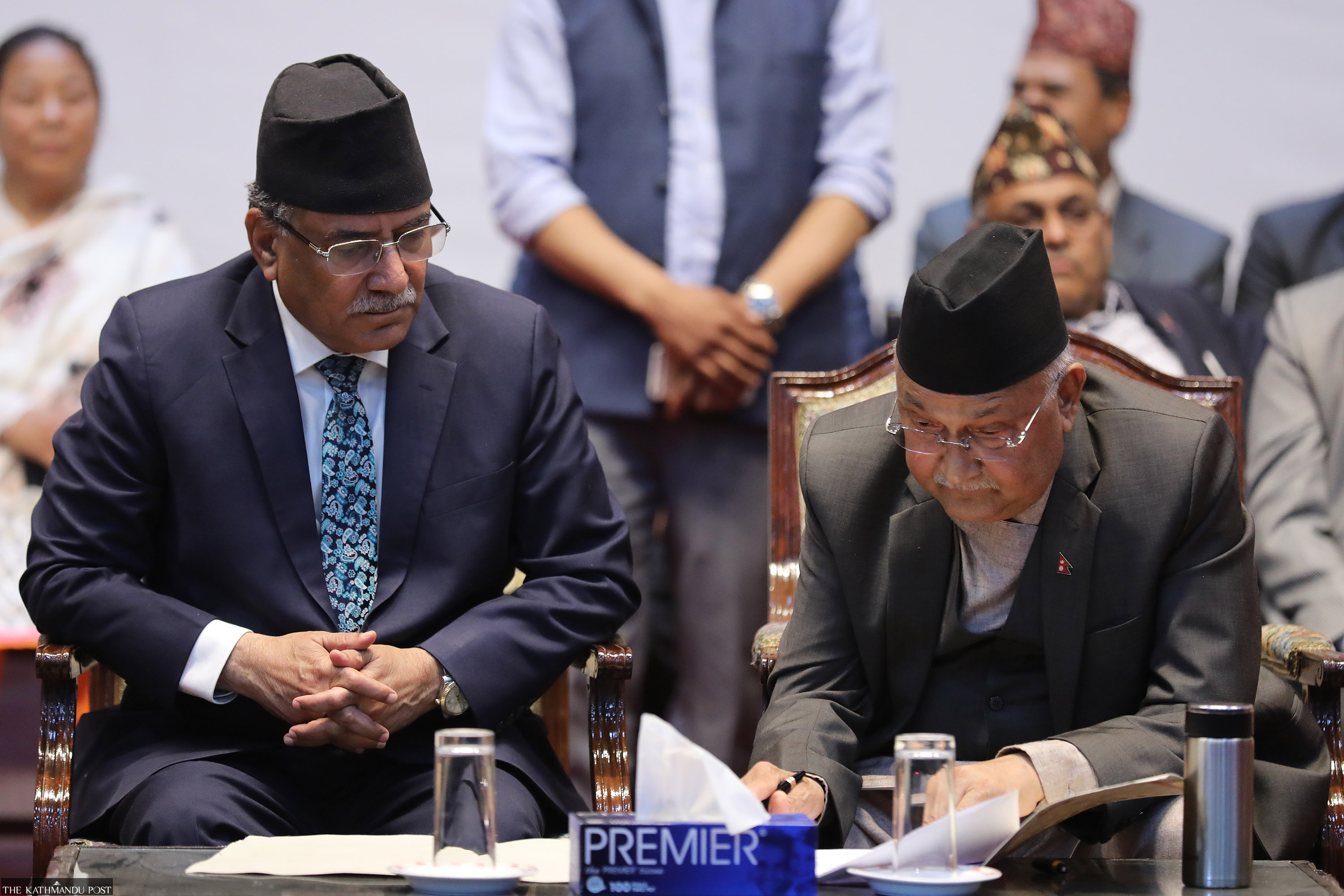
The blockade turned out to be Oli’s most unlikely political gift. The man once derided as the "Man of India" reinvented himself as one of the country's loudest nationalist voices. The politician who had spent years attacking the Maoists now joined hands with them to contest elections. He swept to a decisive electoral victory. In 2018, he and Pushpa Kamal Dahal unified their parties into the Nepal Communist Party, creating the most formidable political machine Nepal had seen in years.
The question was what he would do with it.
Krishna Pokharel, a professor of political science, puts it directly. “When Madhav Nepal was general secretary, he fought for internal democracy. But when he came into party leadership, an authoritarian character emerged,” Pokharel told Kanitpur. “Oli failed to properly utilise the nearly two-thirds majority that the party had in Parliament.”
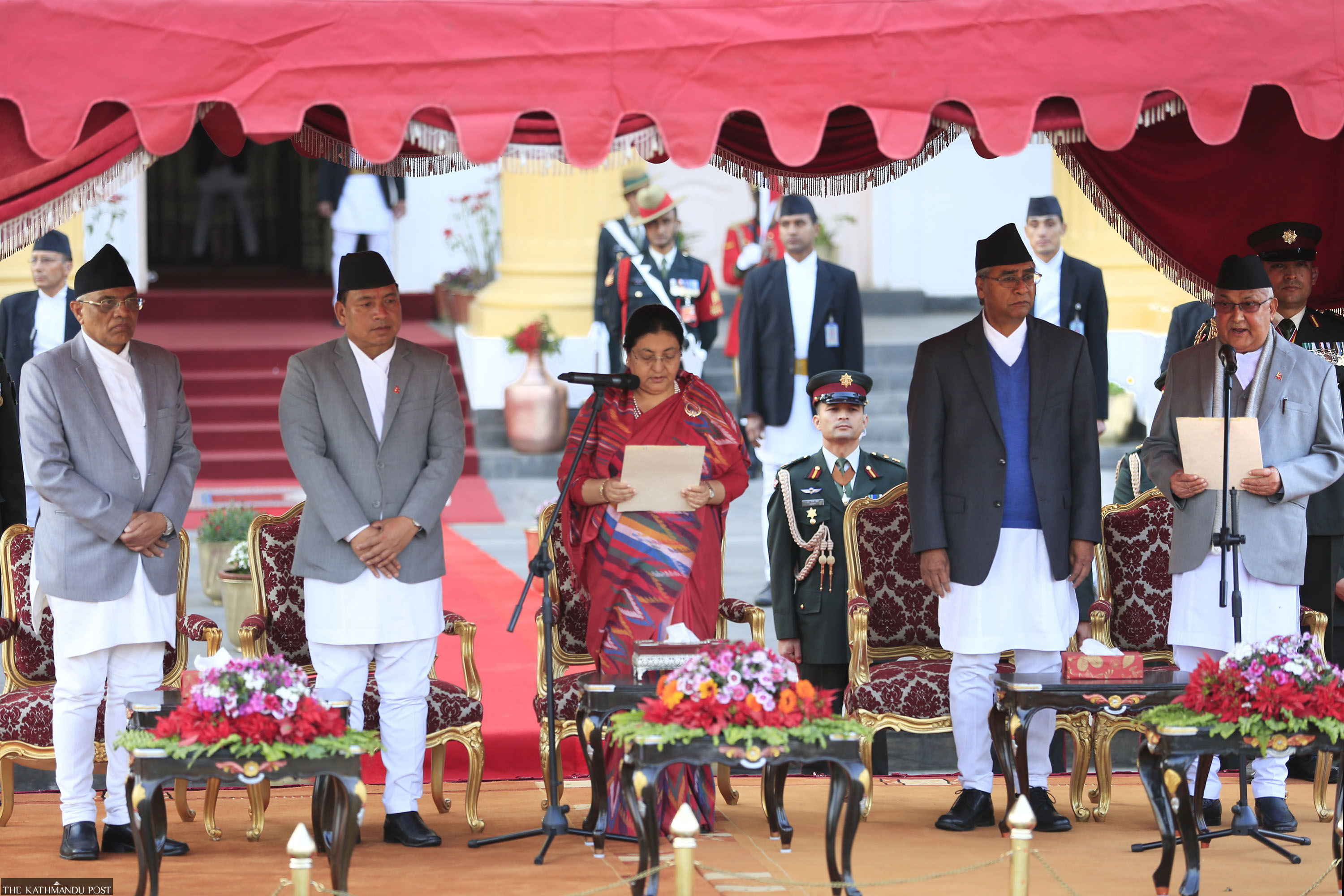
The unity deal envisioned Oli and Dahal as co-chairs. Ego corroded it quickly. In May 2020, amid the Covid pandemic, Oli’s government unveiled a new national map incorporating the Kalapani–Lipulekh–Limpiyadhura region, triggering fresh tensions with India. He pushed a constitutional amendment to adopt the map. He derided India's national emblem from the floor of Parliament.
In December 2020, he dissolved the House of Representatives. The Supreme Court reinstated it. The left unity imploded in March 2021. He dissolved the House again in May. The Supreme Court reinstated it a second time and ordered Sher Bahadur Deuba to become prime minister.
Over the course of two years, Oli had taken the most powerful parliamentary majority in Nepal's democratic history and burned it to the ground.
He survived anyway. After his ouster, he persuaded Dahal to break from his post-2022 alliance with Deuba, offering him the premiership. Dahal agreed. That arrangement collapsed too. By 2024, Oli had joined hands with Deuba to unseat Dahal — the man he had just rescued from political isolation. Each manoeuvre was tactically brilliant and strategically hollow — buying time, burning trust, and gradually exhausting the patience of the one constituency he could not afford to lose: the public.
The UML-Congress government unsettled analysts, who viewed the two largest parties sharing power as a structural distortion of parliamentary norms. But Oli appeared untroubled by the optics. Public frustration was building — over corruption, unemployment, and political detachment — and his government's response was to move against the social media platforms that had become vehicles for that frustration..
For Nepal’s young, that was the breaking point.
They poured into the streets. The protests escalated rapidly, resulting in the deaths of 19 youths in police firing. The following day, demonstrations spiraled out of control — the Supreme Court, Parliament, the presidential house, businesses, and politicians’ homes were set ablaze.
A week later, Pradip Poudel, then health minister and a Nepali Congress leader, told Kantipur that Oli showed little sensitivity in Cabinet after the deaths. “Instead, the Prime Minister displayed more arrogance and pride,” Poudel said. Oli, he added, viewed the event as a conspiracy against him rather than as a tragedy unfolding in real time.
An emergency meeting of the National Security Council was never called. Security agencies had underestimated the scale of the protests. So had the man at the top.
In the lead up to the March 5 elections, Oli maintained a confident public posture. The fact that he focused much of his campaign on Jhapa-5, where Balendra Shah was contesting, told a different story.
This was only his second major electoral defeat since 1991, the first having come in 2008. But the manner of it was new: a non-politician had defeated him in his own stronghold by nearly 50,000 votes. The margin was seen by political analysts as less of a number, and more of a verdict.
Gokul Baskota, once a close aide, has emerged as one of his most vocal critics. “The UML cannot move forward under Oli now,” he said on Himalayan Television. “He disregarded collective decision-making. There are no meaningful discussions in the party.”
Insiders say Oli, convalescing from gallbladder surgery and largely in isolation, has shown no inclination to relinquish control.
On June 3, in his first public address months after his defeat, he appeared in familiar form.
“The current government is a bundle of prejudices,” he said at a programme in Kathmandu. He described the recent elections as a “farce” and a “drama.” He warned those in power: “Do not be arrogant. Time and circumstance do not remain the same.”
The irony was characteristic: a man whose career had been defined by the accumulation of personal authority, cautioning others about its dangers.
To his critics within his own party, he was unambiguous. “I am not going to step down,” he told them.
Jhal Nath Khanal, a former UML chair and former prime minister, acknowledges Oli’s political resilience, but is unsparing in his assessment. “History had offered him a chance when he led a two-thirds majority after the 2017 elections, but he missed that opportunity,” Khanal told Kantipur. “Oli is a failure now. He is someone who argues and counter-argues. That’s it.”
To his supporters, Oli still remains the nationalist who stood up to India when others bent, the survivor from Jhapa jails who outlasted every rival. To his critics, he is the man who squandered Nepal’s best democratic moment because he could not imagine power being held by anyone other than himself.
Whether history ultimately agrees remains an open question. What is no longer in question is that, for Oli, time and circumstance have at last begun to change.